The Universal Tech Tree
Final reminder about our Brooklyn event
In this week’s newsletter:
Philosophy Club x Princeton UP x NBN
The Universal Tech Tree with Étienne Fortier-Dubois
Fast Five with former Johns Hopkins president Bill Brody
Philosophy Club x Princeton UP x NBN

We are co-hosting a special event with The New York Philosophy Club and Princeton University Press!
Join us at the Brooklyn Masonic Temple in New York City on May 20 from 7:00-10:00pm for an event featuring author Steve Ramirez, a leading neuroscientist at Boston University. He will share his research on the science of memories, and his book How to Change a Memory: One Neuroscientist’s Quest to Alter the Past. This event will include New York Philosophy Club-style discussion throughout so come ready to chat!
Over 220 people have registered, so sign up here to reserve your spot before we run out of space!
Can’t make the event? Listen to Steve’s NBN interview below, and read his Fast Five from our January 30th newsletter here.
The Universal Tech Tree with Étienne Fortier-Dubois
We tend to tell the story of technological innovation through dramatic breakthroughs. We think of people like Archimedes jumping from his bathtub, shouting “Eureka!”, and running naked through Syracuse upon realizing that an object’s volume could be determined by the amount of water it displaces when submerged. We picture Robert Oppenheimer quoting the Bhagavad Gita after witnessing the first-ever nuclear explosion: “Now I am become Death, the destroyer of worlds.” Or we remember Francis Crick’s (very likely untrue) story that he visualized DNA’s double helix while high on LSD. These stories are grist for the cinematic mill, but they obscure the real nature of most technological advances. For every thrilling lightbulb moment, there were hundreds of failed attempts hardly worth a mention. Innovations are not bolts from the blue; they are built on top of previous works, mistakes, and marginalia. As Isaac Newton once acknowledged about his own discoveries, “If I have seen further, it is by standing on the shoulders of giants.”

AI evaluations specialist Étienne Fortier-Dubois became fascinated by this interconnected web of invention, so much so that he created an online database dubbed “the historical tech tree.” Scanning the tree, we can see the innovations and discoveries that triggered, like dominoes, other novel ideas. Without the loom, we wouldn’t have the computer; without the gun, we wouldn’t have the camera.
For Asterisk Magazine, Étienne wrote about his quest to create a “universal tech tree.” The connections between innovations aren’t always obvious, and the value of a project like this is in uncovering links we haven’t yet noticed. Étienne’s interactive map helps us see history’s scope from a bird’s-eye view, making an unwieldy subject accessible.
Read our interview with Étienne below, where we discuss the tech tree and his work as a researcher:
Q: What problem were you trying to solve when you first started building the historical tech tree?
A: This will sound grand, but: I wanted to tackle the problem that history is too big.
The full span of historical events is huge across both time and space. As a result, all historical accounts are extremely compressed. Often this means writing a narrative that focuses on a particular place (“the history of Venice”), period (“the world on the eve of World War II”), or theme (“the history of women’s rights”), or a combination of those. This is fine, but I’ve always been interested in trying to grasp the whole thing at once, because this is how you can see patterns and develop a sense of how everything fits together. That requires a compression of another kind: you eschew detail in favor of some kind of more abstract representation, such as a multidimensional timeline or map.
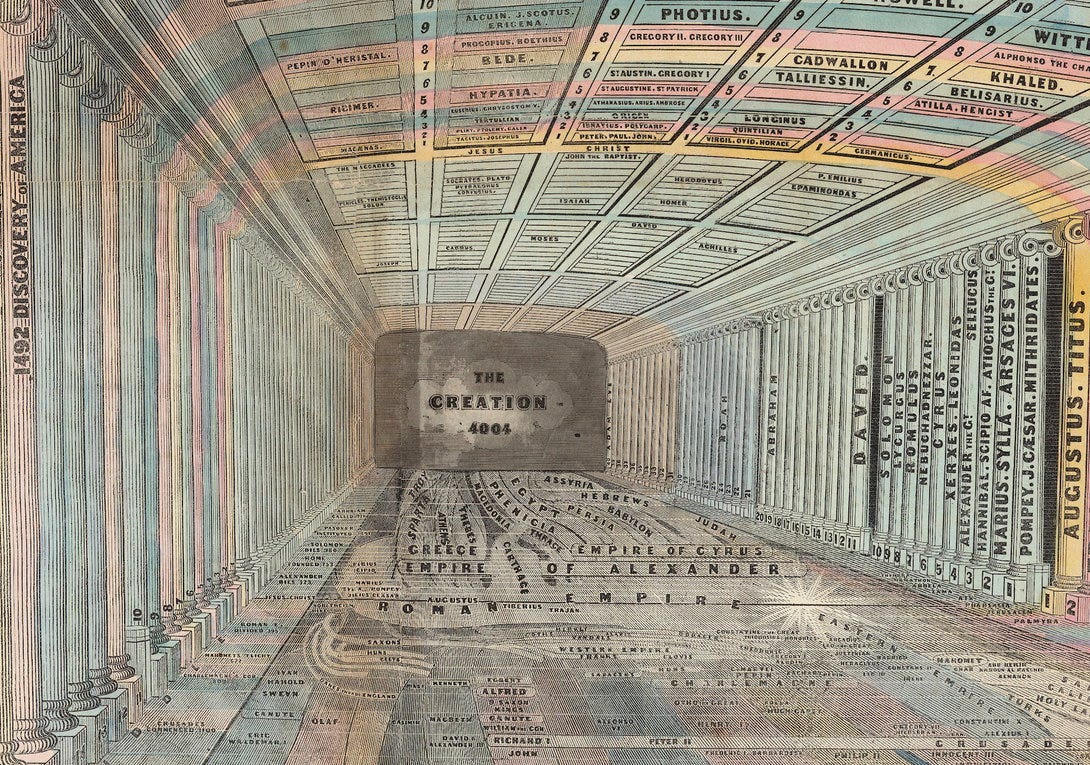
There have been many attempts at creating such artifacts, such as Emma Willard’s Temple of Time, which tries to summarize all of history in a beautiful building-shaped diagram. For the specific subfield of technological history, however, I found that nobody had created a visualization to my satisfaction. There are basic timelines out there, like Our World In Data’s long-term timeline of technology, but they don’t usually display the one piece of information that is key to understanding the historical processes: the connections between different points on the line. The only kind of visualization that explicitly shows these connections is the tech tree, which is an idea that comes from video games. But most tech trees in existence are just that: game objects, not rigorous and certainly not comprehensive. Sometimes specialized versions of them are drawn as cute figures in books about the history of wireless technology or something. I decided that nothing was preventing me from compiling a list of innovations and connections, and then (using AI coding agents) building an interactive way to display them.
I’m not sure if it has “solved” the problem for others, but it did for me: I now have a much better grasp of the whole thing, so to speak.
Q: If you had to summarize the “core argument” of the tech tree in one sentence, what is it?
A: The apparent complexity of the technology around you is a bit of an illusion; you just don’t know the story well, and an interconnected timeline of inventions and discoveries will help you make sense of it.
Q: Which invention do you think is the most underrated in human history?
A: There are many candidates for this, but I’d have to go with the humble Geissler tube. This was a vial of blown glass, containing a gas at low pressure, that would emit light when an electric current passed through it. It was invented by Heinrich Geißler, a glassblower who specialized in scientific instruments, in Bonn in 1857.

Geissler tubes were originally novelty items, kind of like plasma globe lamps today. They were made in a variety of shapes and colors. But the principle of exciting a gas with an electric current turned out to be key to a huge number of advances in lighting (e.g. fluorescent and neon lights), physics (e.g. the discovery of x-rays), and especially electronics. Indeed, the entire field of electronics descends from it: the electron was discovered in 1897 by using a Crookes tube, which is a variant of the Geissler tube. Devices such as the cathode-ray tube and the thermionic diode (or vacuum tube) descend from this lineage, and these in turn enabled radio, television, and computers, among other key 20th-century technologies.
Of course, since everything is connected, you could equally name predecessors like glass blowing (1st century BC in the Roman Levant) or successors like the vacuum tube itself (1904, London) as the most important nodes, but I like the story of the Geissler tube as a random curiosity that turned out to play a huge, unexpected role.
Q: What’s the biggest misconception people have about how technological progress happens?
A: I think we’re prone to seeing inventions as miraculous, and that’s bad.
Nobody will come out and say that a particular technology arose due to divine or supernatural intervention. But since most of us haven’t taken the time to understand all the work and iteration that went into inventing anything remotely complex, we end up with a mental model in which new things arise fully formed, springing from the genius of an inventor in seemingly discrete, unpredictable events. We don’t see the unsuccessful prior attempts, the false starts, the gradual addition of small improvements, the unexpected combination of ideas from different people or cultures. What we see is “the printing press,” “the airplane,” “the transistor.” Things that seem to have just “happened.”
This view of progress as supernatural manifests when we discuss current problems. For example, I commonly hear that we shouldn’t expect a technological solution to climate change, because this would be akin to hoping for a miracle. But this is a failure of understanding how invention actually occurs. No invention in the tech tree was a magical event that just “happened”; all were the work of specific people trying to devise solutions to specific problems.
By definition, we can’t predict which solutions we’ll find to currently unsolved problems, and it’s understandable that this uncertainty makes us nervous. But we have a pretty good track record at finding solutions! And more importantly, progress only occurs when we believe in our ability to control it, rather than being at the whim of miraculous events. I hope that the tech tree helps with this — even if, as a constraint of the format, it discretizes inventions more than would be ideal.
Q: Do you have a favorite invention story that most people don’t know?
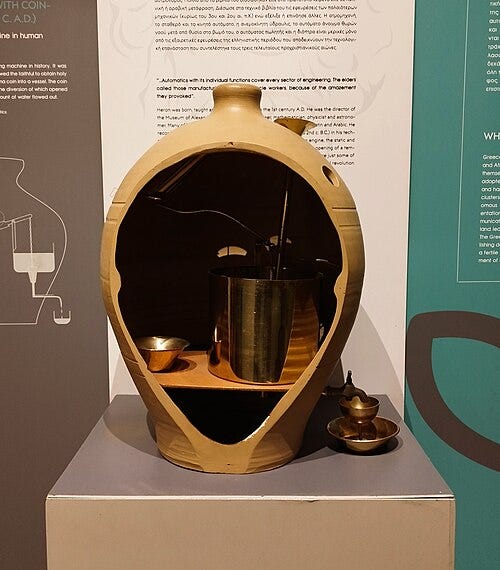
A: I’m a fan of stories of the “this was invented way earlier than you thought” kind. The tech tree dates the vending machine to AD 60: the inventor Hero of Alexandria wrote of a device that accepted a coin to dispense wine or holy water in a temple. (Hero is also known for creating the aeolipile, the first steam engine, though it was a curiosity and not a practical invention.) In a similar vein, I like to tell people that mechanical clocks may be more ancient than hourglasses — both date to the High Middle Ages, with the first known reference to an hourglass being from 1338.
Q: What do you see as the biggest risk(s) to technological progress in the next decade?
A: Cultural forces, perhaps? Much of the developed world has become increasingly technophobic in the last half century or so, and if this keeps going then progress will slow down, improving our lives far less than it should. Fighting this cultural battle is what the “progress movement” (and especially the Roots of Progress Institute, where I’ve been a fellow) is for, and I wholeheartedly agree.
This effect is furthermore made worse by the interconnectedness of the modern world. We live, increasingly, in a monoculture. It’s rare that scientists or inventors work in an isolated way, separated from the influence of their peers. The reasons for this are obvious — you can quickly learn from the successes and failures of others — but it does mean that if a single bad idea becomes fashionable, or if a good idea becomes unpopular, progress can stall everywhere instead of just in some isolated pocket. Similarly, at the political scale, technophobic ideas can become contagious and spread across industries and countries to put us on the wrong path.
One specific cultural force that I expect to have a big negative impact in the long run (though that’s outside the scope of this question, since this won’t be apparent until a few more decades) is our declining worldwide fertility rate. A smaller population will mean fewer new ideas and less motivation for growth. Hopefully it encourages automation enough that we won’t feel the effects for a long time.
Q: What’s the best book you read last year and why?
A: I really enjoyed Antimemetics by Nadia Asparouhova. The mechanics of the rise, spread, and mutation of ideas (memes) is obviously something I care about, and her book is a nice and short exploration of an important trend: memes that remain hidden for a while until they become “ripe” and tear through our hyperconnected networks. We can see technology as a subset of this phenomenon. A technological solution to a problem might remain “antimemetic” for years or decades before it suddenly becomes viable and, within a short time, ubiquitous.
Q: How is AI changing how scientists conduct research?
A: I’m not directly clued into formal research environments, so I don’t know exactly. What I do know is that AI research assistants like Elicit, where I work, as well as general-purpose language models, are going to speed up a lot of components of the process of research and invention. It will lower the barrier to entry, and will simultaneously raise the bar for truly novel contributions. My friend Alexander Kustov writes that “AI can already do social science research better than most professors”. One example of a trend is that it is now far easier to do things like custom software and data analysis for research purposes, removing a bottleneck in the exploration of ideas. Other bottlenecks will remain for the foreseeable future, but there will be more opportunity for fast progress as we solve more of them.
Q: What’s next for the tech tree?
A: This is a great question. I released it about a year ago, in May 2025, and since then I’ve been using it as… my main form of productive procrastination. I’ve recently implemented a working zooming mechanism (finally!) and am adding new content every week (recently, color printing, paint, industrial robots, and diapers). At 2,250 technologies and 3,000 connections, the database doesn’t feel complete at all yet, so I’ll probably keep doing this for some time.
Still, I do wonder about ways to take the project to another level. It’s still an amateur software project, maintained and paid for solely by me. Perhaps it would be good to partner with someone to help maintain it, sponsor it, or publicize it more. I’m open to ideas — please reach out if you’d like to help!
Fast Five with former Johns Hopkins president Bill Brody

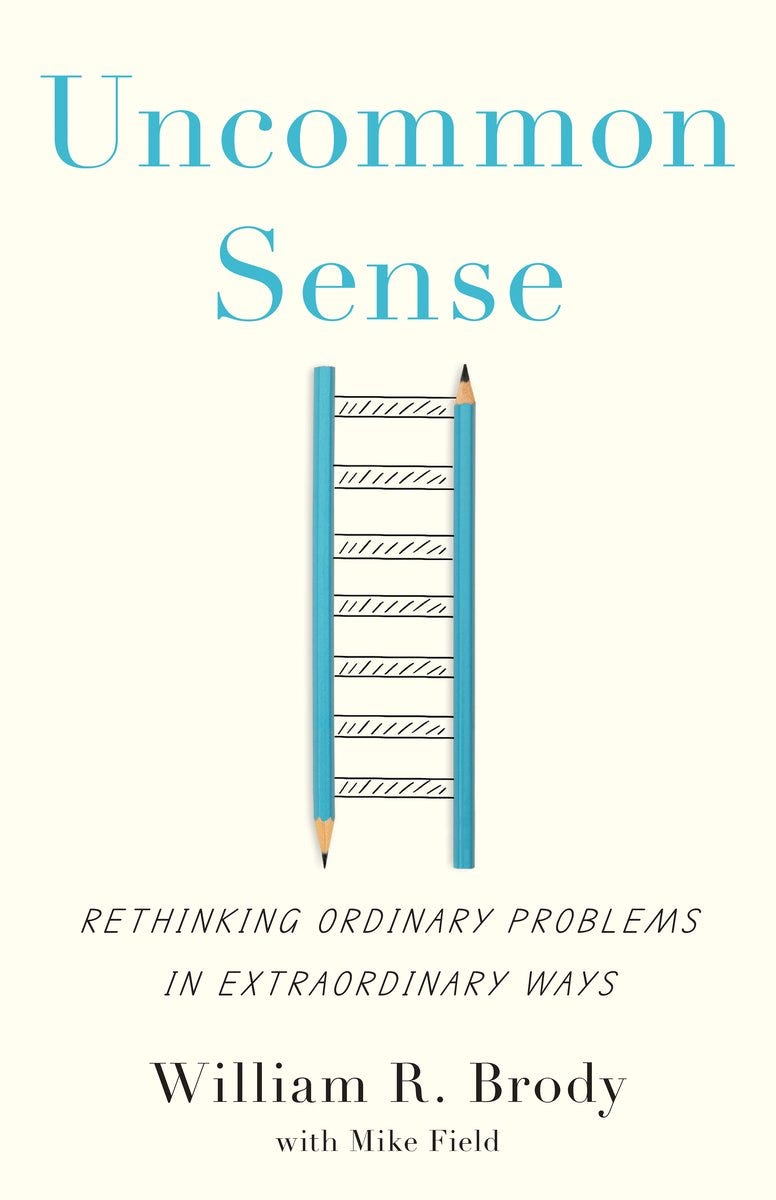
Bill Brody is an interventional radiologist who served as the President of Johns Hopkins University, from 1996 to 2009, and President of the Salk Institute from 2009 to 2015. When he became president of Johns Hopkins University, Bill set out to teach a course to juniors and seniors that would serve as a crash course for dealing with the messy realities of life. His latest book, Uncommon Sense: Rethinking Ordinary Problems in Extraordinary Ways, brings his famous course to readers everywhere.
Listen to the interview about the book:
In the book’s appendix, Bill shares dozens of books that inspired him. Below are five of his favorites:
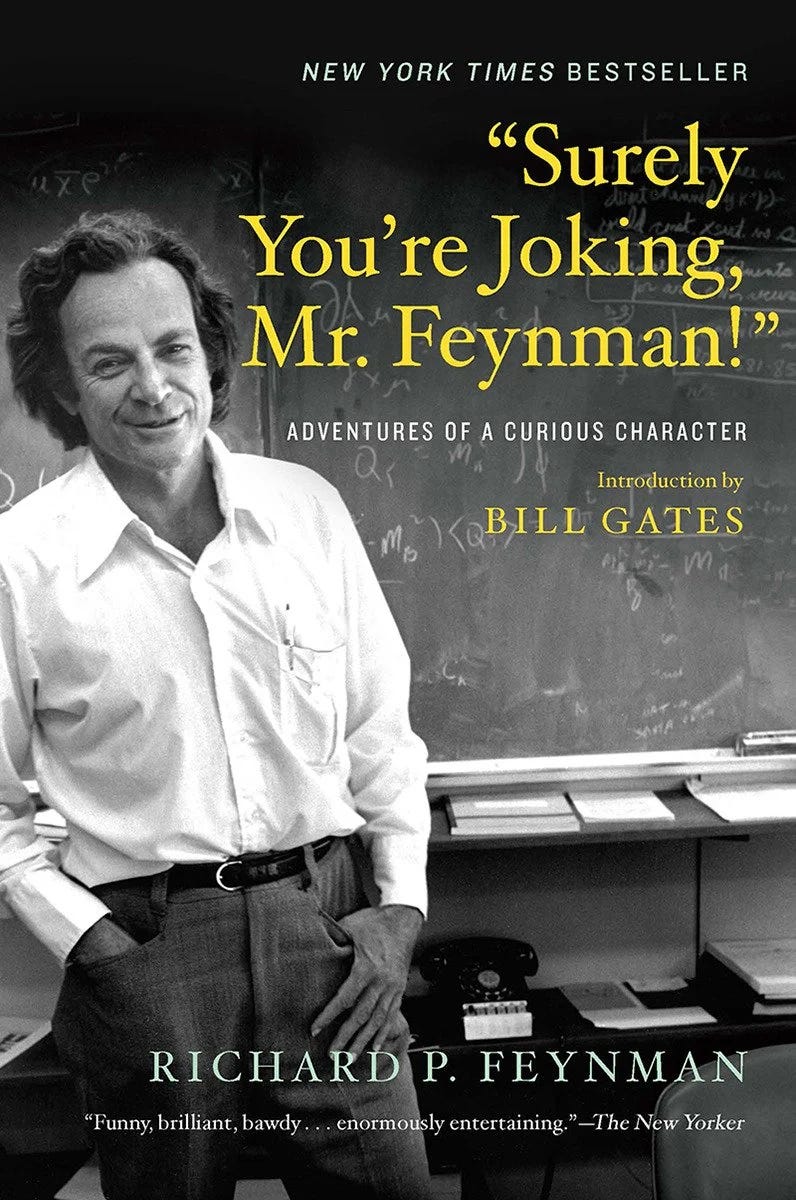
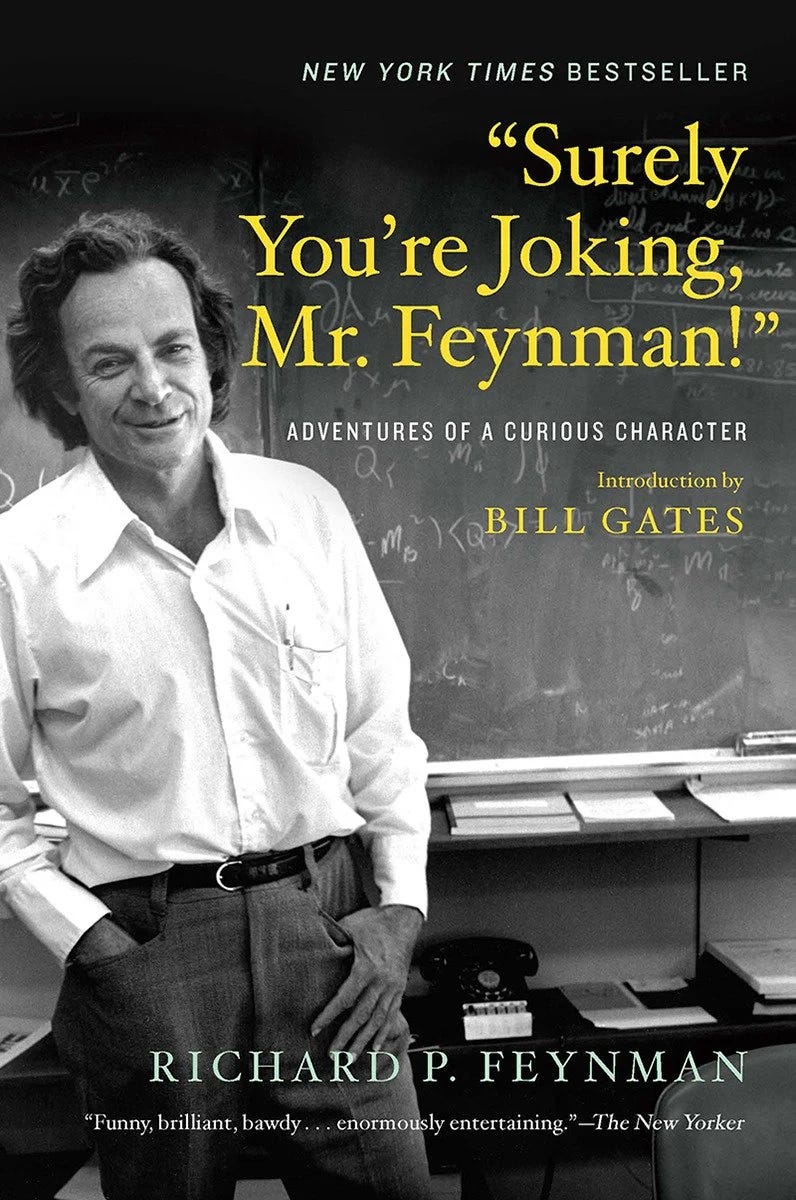
Richard Feynman, “Surely You’re Joking, Mr. Feynman!”: Adventures of a Curious Character
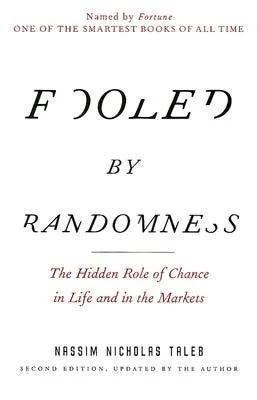
Nassim Nicholas Taleb, Fooled by Randomness: The Hidden Role of Chance in the Markets and in Life
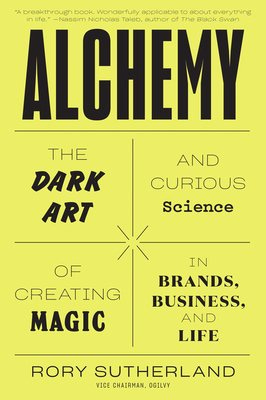
Rory Sutherland, Alchemy: The Dark Art and Curious Science of Creating Magic in Brands, Business, and Life
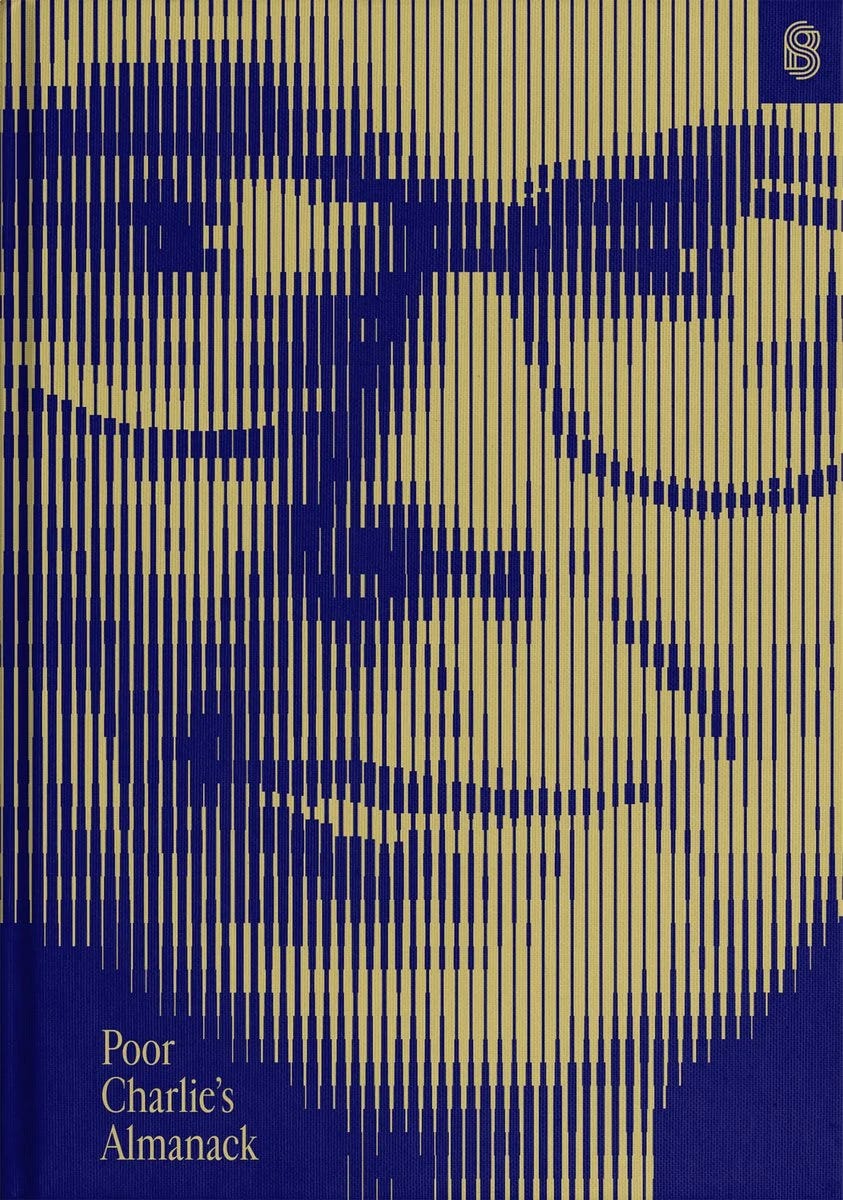
Charles T. Munger & Peter D. Kaufman, Poor Charlie’s Almanack: The Essential Wit and Wisdom of Charles T. Munger — especially the chapter “The Psychology of Human Misjudgment”
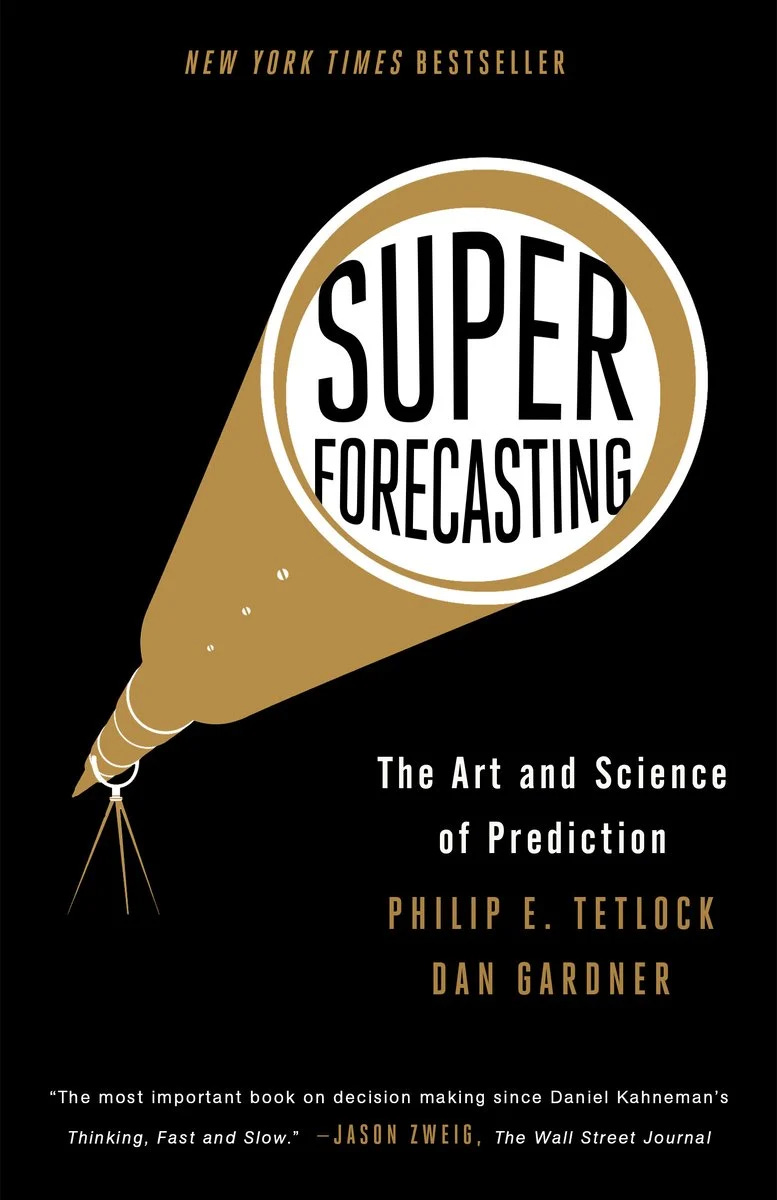
Philip E. Tetlock & Dan Gardner, Superforecasting: The Art and Science of Prediction