
Where Scholarly Books Actually Find Their Readers
Veteran book publicist Sarah Russo shares the playbook in her new podcast series
“If you’re not 100% sure that your writing is as great as it can possibly be, I would invest in a developmental editor. A book can’t go any further if the writing isn’t outstanding.”
-Sarah Russo
In this week’s newsletter
The Publishing Playbook
Channel Spotlight: The Scholarly Communication Podcast
Graduate Student Corner: Job Application Tips
The Publishing Playbook with Sarah Russo
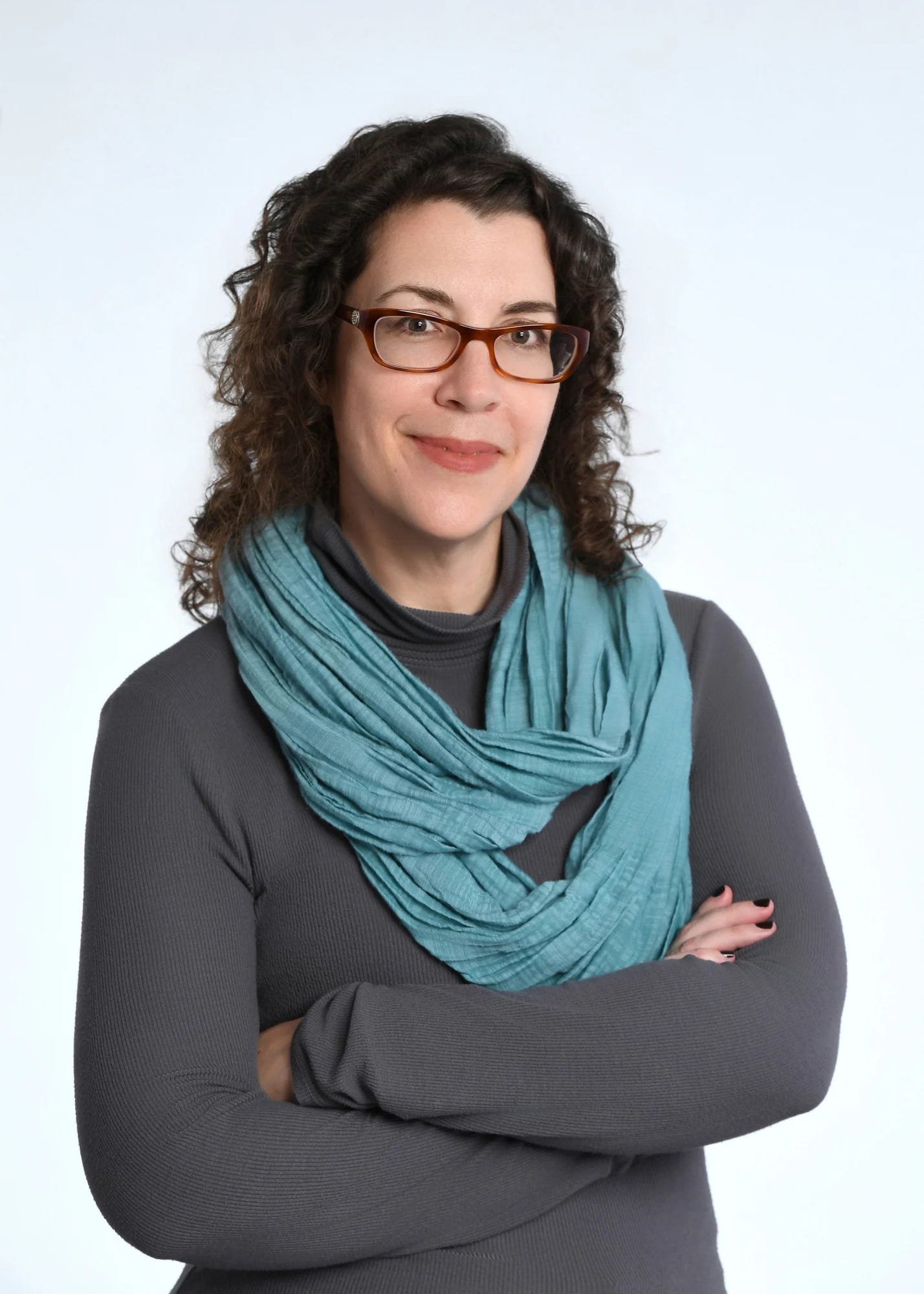
Sarah Russo is a publishing professional with over twenty-five years of experience working across the spectrum of publicity, communications, traditional marketing, social media marketing, branding, and business development. She is the host of The Publishing Playbook, a podcast that offers listeners a behind-the-scenes look at how book publishing works today and how to break through the noise in today’s publishing and media landscapes.
Q: Can you tell us a bit about your career in book marketing and author publicity?
A: I got my start in the publicity department at Knopf right out of college. I often call those years my PhD in publishing because I learned so much. I went on to work at Doubleday, Scribner, Other Press, Farrar, Straus & Giroux, and most recently I was the Global Head of Audience Engagement for Oxford University Press, where I led the trade marketing, publicity, social media, and corporate comms teams across books, breaking news from the journals division, dictionaries, and online resources.
Q: You recently launched The Publishing Playbook podcast. What topics do you cover on the podcast?
A: Our goal with The Publishing Playbook is to be a resource for authors at all stages of their careers. We want to pull back the curtain so authors can better understand the inner workings at publishing houses and ultimately be better partners in getting their books out into the world.
Q: Who would benefit the most from listening to The Publishing Playbook?
A: We hope the show will be informative for anyone who has a book on the horizon and possibly also for folks who want to be working in publishing.
Q: What’s the biggest misconception people have about book publicity?
A: I think the biggest misconception is that many authors think that it just sort of happens or that their book will be the exception. We publish nearly half a million books annually through traditional publishers in the U.S.; that’s a lot of competition. Every media hit we achieve is the result of hours of work, years of relationships and learning the craft of writing an outstanding pitch, understanding the media timelines and how they sync up with the publishing timeline, and then executing on all of that at just the right moment.
Q: For an author with a limited marketing budget, where should their first dollar go?
A: That’s a hard question because it can be different for each author. If you’re not 100% sure that your writing is as great as it can possibly be, I would invest in a developmental editor. A book can’t go any further if the writing isn’t outstanding.
Q: Scholarly books are often overlooked by the mainstream media. How can books without an obvious news hook still find their niche?
A: That’s also a question that needs a nuanced answer. Mainstream media will overlook a scholarly book because they don’t think it has a general audience or because the writing is dense or dry, or simply because of the other competition sitting in their inbox on that day. Understanding the readership is the first step; if you can do that then you have a chance of discovering where they are learning about books and seeking out those outlets. You don’t have to be covered by The Atlantic or The New York Times to find a book’s readership. Subject-specific podcasts, websites, blogs, and Substacks are a great way to find readers.

Q: Can you describe a book campaign you’re particularly proud of?
A: Gosh, there are so many of them. As a publicist, I worked on Why This World: A Biography of Clarice Lispector by Ben Moser. That was a really phenomenal PR campaign and it relaunched Lispector’s canon with new translations of her books and some translated into English for the first time after the success of the biography. There is now a different level of visibility for an incredibly talented author who was relatively unknown in the U.S. before Ben’s book, and it feels great to be a part of that.
Q: How long does a successful campaign usually take? How long before the date of publication should an author start promoting their book?
A: In-house sales, marketing and publicity teams usually get started about 12 months in advance with creating the catalog, writing copy, gathering and entering metadata, drafting publicity and marketing plans. The sales team sells in 6–7 months in advance of publication and publicity usually gets started around then. As an independent PR firm, we usually start 8 months in advance. We can work on a shorter timeline than that, but the more time we have, the better. Authors are usually working on edits or copyedits when we’re starting on promotion, so it can be hard for them to balance doing the work of getting the book finished with gearing up to promote their own work. If they can carve out even 20–30 minutes each day to engage on social media, make a few phone calls for things like events and lectures, and coordinating with their team, it will go a long way.
Q: Prior to founding your own PR firm, Page One Media, you led marketing and publicity for Oxford University Press. What can authors do to get the most out of their press’ marketing team, and when should they consider hiring outside support?
A: Well, that’s a big question and I hope the new podcast will teach that. But a couple of things that will definitely help:
Keep a running list of any interviews, speaking, and media connections you’ve done and share it with the in-house team.
If awards are important to you, make a list (with due dates) and provide that list early and check in about it periodically.
Don’t be afraid to check-in. Offer your help, and be willing to write if you have the time to do so.
You are the expert in your subject area in a way we never will be. We do our best to become an expert for the short period of time we’re working together, but if there is a show or media outlet that seems like a perfect fit, start a running list of those programs and share them with your publicist.
The best outside publicists book up 9–12 months in advance. If you’re looking to engage one of them, reach out a year in advance.
Q: Are there any books on marketing that you think every author should read?
A: That’s a great question. It’s not a marketing book, but I think every author who has any trouble with public speaking or would like to improve their interview skills should grab a copy of Amanda Hennessey’s Your Guide to Public Speaking. There aren’t any books that I know of specifically about book PR and marketing. But there is a marketing book that I think works for just about anyone who is marketing anything, called They Ask, You Answer by Marcus Sheridan. SEO (and now AEO/GEO for artificial intelligence) is vitally important in marketing. If an author has their own website, and every scholar and expert with a book should, then they need to be findable on the internet. This book will teach you how.

Q: What’s the best book you’ve read this year and why?
A: Oh sure, why don’t you just ask me to choose my favorite child. :D
This is a genuinely hard question. We work with the smartest authors anywhere, and we don’t take on a book unless we’re incredibly excited about it. But I can’t pick one by our authors without causing offense, so I’m going to say Prophet Song by Paul Lynch. The Dayton Literary Peace Prize is a client and Prophet Song was the winner of the fiction prize. It is writing of terrible beauty and deep anxiety in a moment when the world he has built, in a near-future Ireland, feels uncomfortably close.
Subscribe to The Publishing Playbook to listen to Sarah’s epsiodes and learn more about book publishing!
The Scholarly Communication Podcast
Scholarly Communication is our podcast about how scholarly knowledge reaches others. Check out three interesting episodes to learn more about podcasting and narrative audio, archival research, and book conservation.
On October 10, 2025, NYU’s Journalism Institute hosted a day-long conference titled Podcast Intellectuals: Producing Original Scholarship with Audio. Over the course of three panels, scholars, podcasters, and journalists discuss how academics might employ the techniques of narrative audio as part of their research. Tune in to the first panel with Benjamen Walker, Mara Mills, and Fanny Gribenski and check out the NYIH Conversations podcast to listen to all of the panels.
Listen to this interesting interview about Archival Research in Historical Organisation Studies: Theorising Silences. Gabrielle Durepos and Amy Thurlow push back against the narrow definitions of the archive and think beyond this space as a repository of documents. They examine how business archives have marginalized various populations and themes to remedy these absences and contribute to a better future.
Editor Abigail Bainbridge and contributing author Sonja Schwoll join this discussion of Conservation of Books, the highly anticipated reference work on global book structures and their conservation. Written by over 70 specialists in conservation and conservation science based in 19 countries, its 26 chapters cover traditional book structures from around the world, the materials from which they are made and how they degrade, and how to preserve and conserve them.
Subscribe to Scholarly Communication to listen to conversations about the process of academic research and how people disseminate their findings.
Graduate Student Corner: Job Application Tips
Applying for jobs this Fall? Revisit our 2024 newsletter featuring a Q&A with Lauren Sperandio Phelps, Graduate Students of Arts and Sciences Writing Studio Director at Columbia University. Or send this to someone you know on the job market!
