
Headstrong
In this week’s newsletter:
Scholarly Sources with Laurian Bowles
Fast Five: Art & War with Christopher C. Gorham
Meet a Host: Jenna Pittman
Scholarly Sources with Laurian Bowles
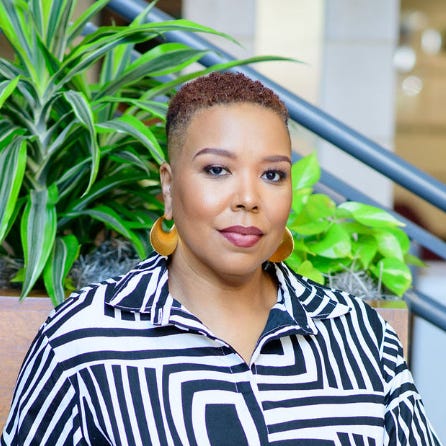
Laurian Bowles is the Vann Professor of Racial Justice and Associate Professor & Chair of the Anthropology Department at Davidson College. Her book Headstrong: Women Porters, Blackness and Modernity in Accra, is out now with the University of Pennsylvania Press.
Q: What are you reading right now?
A: I’m currently reading Survival Is a Promise: The Eternal Life of Audre Lorde by Alexis Pauline Gumbs, which I believe is especially necessary right now. Lorde’s life and work are so dynamic and cosmic. However, it sometimes feels like Lorde’s words have been distilled into quips and half-references, such as “the master’s tool will never dismantle the master’s house,” often used as quick takedowns on social media. Gumbs’ lyrical biography is a pyramid of community tenderness, earthen prose, and reflections on unpublished manuscripts and artifacts. It is a much-needed scholarly resource as well as a profound meditation.
Q: What is your favorite book or essay to assign or give to people, and why?
A: Tough question—it depends on context. Sometimes I like to give people Paul Coelho’s Manuscripts Found in Accra, which imagines a mythical manuscript uncovered in Accra that offers insight and wisdom in parables and proverbs. I like the whimsy of the prose which is both imaginative and relevant. I also like to assign the satirical essay, “How to Write About Africa” by Binyavanga Wainaina and pair that with a conversation about the Willie Lynch letter and other hoaxes and stereotypes and their enduring material, ephemeral, and symbolic relevance in narratives of Black people.
Q: Is there a book that you read as a student that has had a particularly profound impact on your trajectory as a scholar?
A: There were three notable works: Walter Rodney’s How Europe Underdeveloped Africa, Manning Marable’s How Capitalism Underdeveloped Black America, and Elaine Brown’s A Taste of Power: A Black Woman’s Story.
Marable’s book was explicitly modeled after and influenced by Rodney’s classic; both texts use structural analyses of capitalism to explain the economic, social, and political marginalization of Black people in Africa and the US.
Brown’s memoir traces her upbringing in Philadelphia-- also my hometown-- and her ascent to leadership in the Black Panther Party, where she was the only woman to hold that role. I also attended the same high school as Brown, the Philadelphia High School for Girls, and grew up in the same neighborhoods as her, so it was inspiring to read about her survivance and leadership in one of the most influential political movements and organizations in the US in the 20th century.
Q: Which deceased writer would you most like to meet and why?
A: Without question, Zora Neale Hurston. She is my anthropological muse due to her deep commitment to understanding the interiority of Black people’s lives through a disciplinarily, disobedient writing practice of literary ethnography.
Q: What's the best book you’ve read in the past year?
A: Honorée Fanonne Jeffers’s novel, The Love Songs of W.E.B. Du Bois. Her book is a sweeping, multigenerational feminist saga that blends epic storytelling and lyrical reflection to explore Black family history, ancestral trauma, belonging, and resilience.
Q: Have you seen any films, documentaries or museum exhibitions that left an impression on you recently?
A: Grandpa Was an Emperor is a documentary about the life of Yeshi Kassa, a great-granddaughter of Emperor Haile Selassie that uses autoethnography to uncover family history amidst Ethiopia’s political transitions. The way the film confronts Ethiopia’s imperial history, highlights the global discourse of Black activists, scholars and political figures is a spectacular meditation on liberation, justice, and reconciliation.

Earlier this year, I also saw OSGEMEOS exhibition, “Endless Story,” at the Hirshhorn in DC. It is a sprawling, immersive show of identical twin brothers Gustavo and Otavio Pandolfo. Their show brilliantly combines narrative, playful energy, and visual spectacle, weaving together paintings, sculptures, installations with music and light, sketches, and documentation of outdoor murals. OSGEMEOS’s work is a creative dialogue about street art, and the violent yet beautiful tension of guerrilla urbanism and displacement.
Q: What do you plan on reading next?
A: I love a good mystery. I just picked up Coded Justice by Stacey Abrams. With the return of the protagonist, Avery Keene, I look forward to reading how Abrams’ novel will help somehow take me away from frenetic pace of life right now, while also taking me down a couple of rabbit holes about legit scary stuff like judiciary responsibility, AI, and medical ethics.
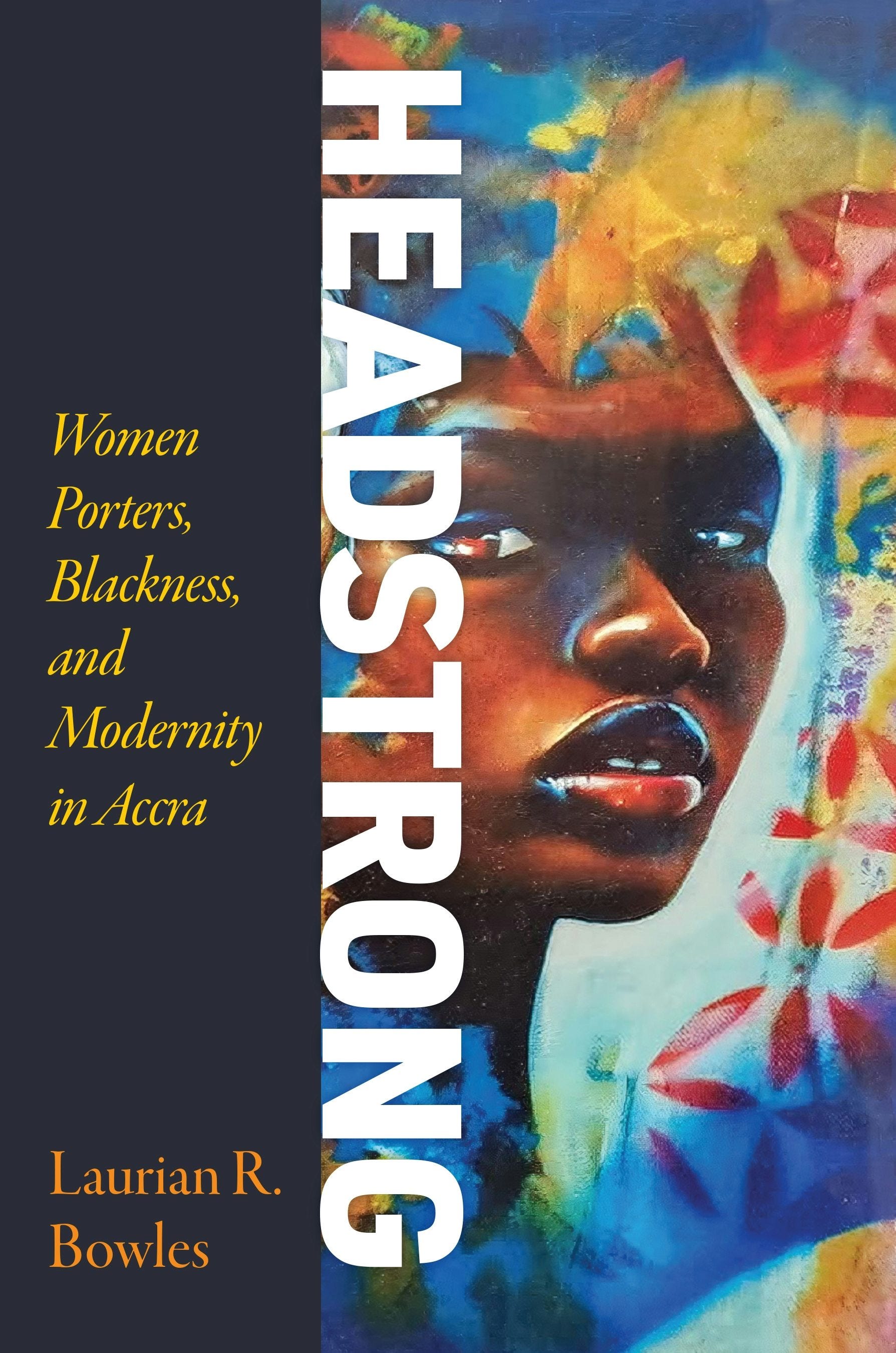
Listen to Laurian’s wonderful NBN interview, and subscribe to the New Books in African Studies channel to hear more great discussions with scholars of Africa.
Fast Five: Art & War with Christopher C. Gorham
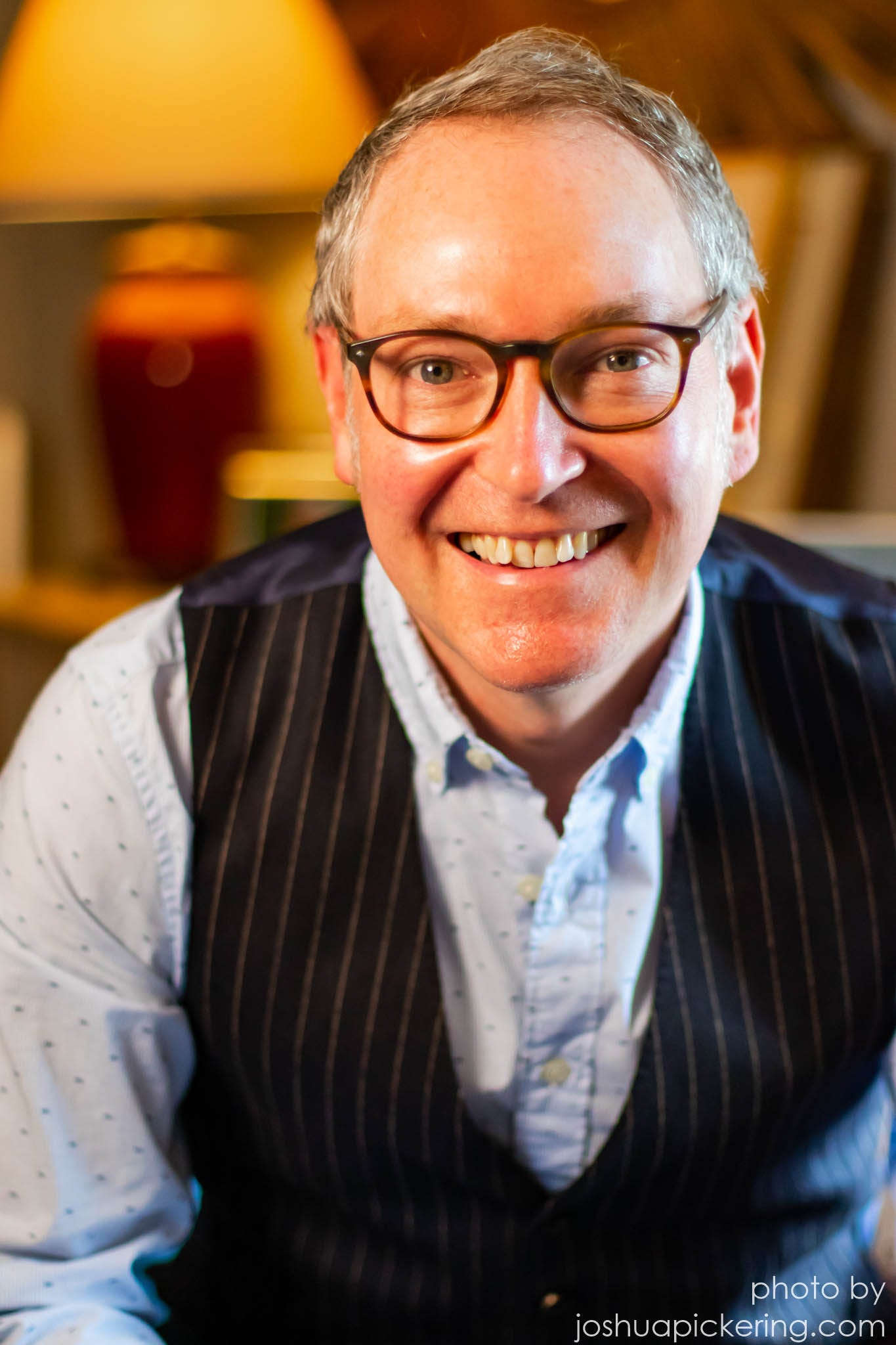
Christopher C. Gorham is a lawyer, educator, and acclaimed author of The Confidante: The Untold Story of the Woman Who Helped Win WWII and Shape Modern America, a Goodreads Choice Award nominee in History/Biography and Matisse At War. He is a frequent speaker at conferences, literary events, and book club gatherings. He lives in Boston, and can be found on social media @christophercgorham
The Art Spy: The Extraordinary Untold Tale of WWII Resistance Hero Rose Valland by Michelle Young— The Art Spy puts readers in the front row as a long-overlooked treasure is uncrated. Michelle Young brushes the dust away, page by page, to reveal a WWII hero of quiet brilliance and considerable sang-froid. Rose Valland, patriotic protector of France's patrimony, deserves this fine showcase.
Paris in Ruins: Love, War, and the Birth of Impressionism by Sebastian Smee— It is not easy to balance war and art in a narrative; war being terrestrial and temporal and art existing on a different plane, but Paris in Ruins, which follows the lives and careers of Manet, Degas and Berthe Morisot during the Franco-Prussian war, does this finely. With pace and style, Smee contextualizes the forces that led to new ways of interpreting the world.
Five Came Back: A Story of Hollywood and the Second World War, by Mark Harris— Among the robust library of Hollywood-at-War books, this stands out. In telling the story of the wartime experiences (and sacrifices) of five of Hollywood's best directors, among them John Ford, Frank Capra, and John Huston, Harris also tells the story of how a democracy countered on film the monolithic myth of the Nazi enemy: Leni Reifenstahl’s chilling Triumph of the Will.
The World Broke in Two: Virginia Woolf, T. S. Eliot, D. H. Lawrence, E. M. Forster, and the Year That Changed Literature by Bill Goldstein— Not a book about art during wartime, but one about the profound aftershocks of the First World War on English literature. Goldstein’s interweaving narrative takes place four years after the end of the war, when the senseless slaughter of millions in the trenches still reverberated. By 1922, the authors in the subtitle realized that there was no going back to the world of vicars and village life: they were in the modern world.
Regeneration by Pat Barker— This wonderful (and widely acclaimed) fictionalized account of the intersecting lives of World War I soldier-poets Siegfried Sassoon and Wilfred Owen had a profound impact on me. I had always been interested in history, but this story of creation amidst destruction–of class, psychology, and tragedy–sparked in me an interest in how artists respond to war. I hope my new book, Matisse at War, humanizes the great artist while also sparking in readers this same interest.
Listen to Christopher’s NBN interview about his new book, Matisse At War, with Jenna Pittman, featured in this week’s Meet A Host segment.

Meet a Host with Jenna Pittman
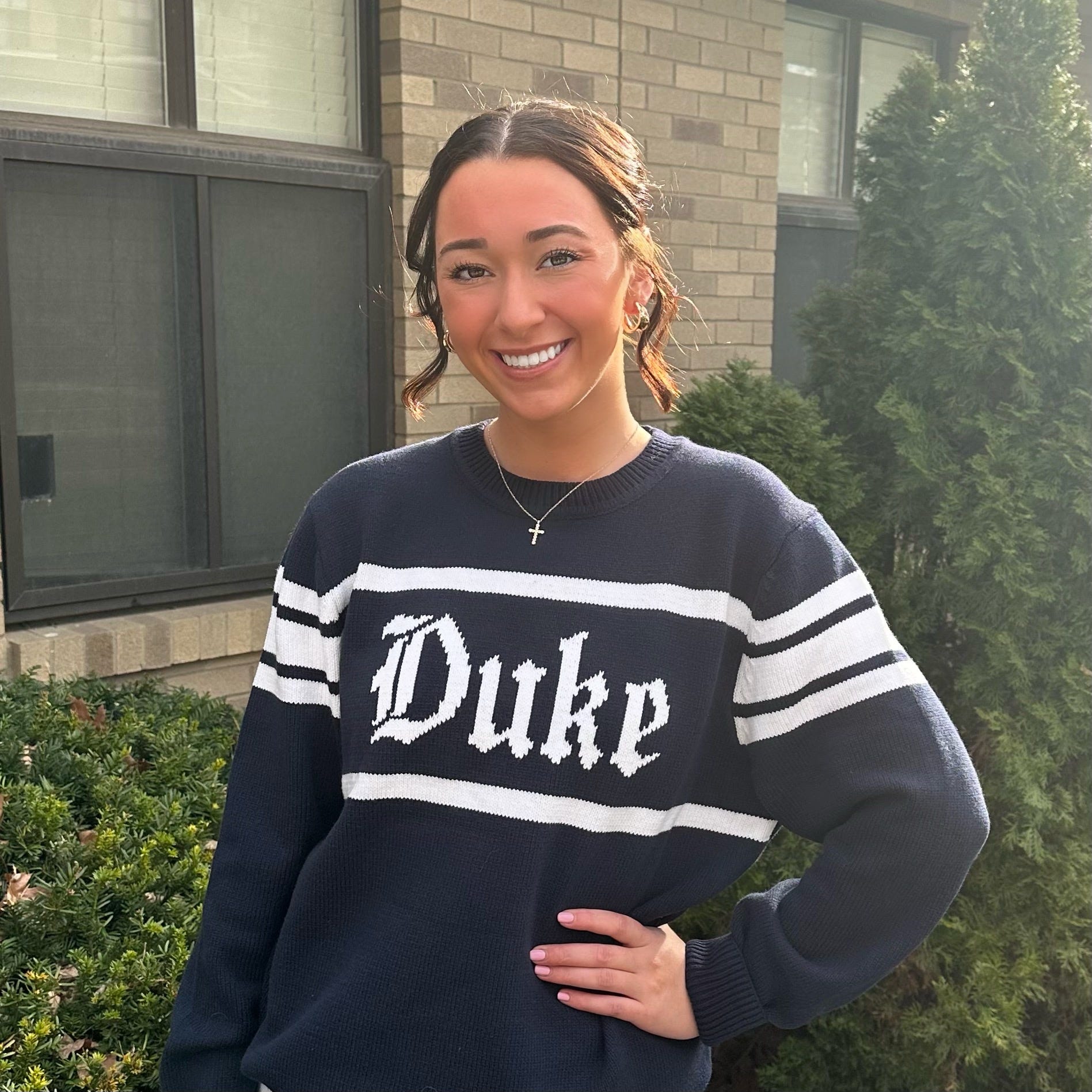
Jenna Pittman (she/her) is a Ph.D. student in the Department of History at Duke University. Before beginning graduate studies at Duke University, Jenna received her Bachelor of Arts in History and Bachelor of Education in Social Studies Education from the University of Toledo.
Q: Can you briefly introduce yourself to our readers?
A: I am a Ph.D. student in the Department of History at Duke University, where I focus on modern European history, political economy, and 20th century Germany. Using the relationship between industries, my current research explores the planned economy in the German Democratic Republic from 1952-1989. Broadly speaking, I am interested in understanding how my work relates to fields outside of modern German history, as well as contemporary political and socioeconomic conditions in Europe.
Q: What channels do you contribute to?
A: I mostly contribute to the General History channel, but always enjoy when I can work with the German Studies, Eastern European Studies, and Russian and Eurasian Studies channels.
Q: How did you first hear about the New Books Network?
A: I think I first encountered the New Books Network in an undergraduate teacher education course, “Technology And Multimedia In Educational Environments” while working towards my Bachelor of Education at the University of Toledo. In my degree concentration of Adolescent and Young Adult Social Studies Education, the NBN was always discussed as a reliable teacher tool because of how accessible the episodes are. When I began lesson planning and teaching, I found the episodes to be a really great way to reach the diverse learning needs in my classrooms.
As a graduate student, I began regularly listening to episodes that related to my fields as a way to stay informed on emerging scholarship, historiographical trends, and to introduce myself to scholarly discussions and academia more generally.
Engaging with the New Books Network from so many different listener perspectives– an undergraduate student, a social studies educator, and now a graduate student– has really helped me appreciate the broad audience that the episodes reach.
Q: What made you want to be a host for the NBN?
A: I feel passionate about the New Books Network’s mission of public accessibility and felt that it was a professionally constructive way to push myself to read a bit more broadly than I sometimes do. I generally just enjoy reading, but felt that the coursework-routine of graduate school made it really easy for me to deprioritize reading outside of my fields and courses. The NBN makes hosting a pretty low-commitment and flexible role, so it seemed like a reasonable way to engage with scholarship in a slightly different way and from a slightly different perspective.
Q: What do you enjoy most about being an NBN host?
A: There are so many aspects of hosting that I really enjoy. Most importantly, I enjoy meeting with expert scholars and talking for an hour or so about a topic that they have dedicated a significant amount of time and energy to understanding. I really enjoy hearing what makes people passionate about their work, and have felt that hosting provides an opportunity for me to engage in serious scholarly conversations about a wide range of topics. I view hosting as a way for me to give scholars a platform to talk about their work (to give them the microphone, per se) and have found hosting to be a very fulfilling role. I am very grateful for the kindness and interest in my work that guests have shown, and I look forward to maintaining these professional relationships in the years to come.
Q: What episode has been your favorite to record?
A: It’s hard to choose which single episode has been my favorite to record, but one that stands out is Michael Stauch, “Wildcat of the Streets: Detroit in the Age of Community Policing.”
I was first introduced to Professor Stauch as a second-year undergraduate student in his Ohio History course at the University of Toledo, where he is an Associate Professor of History. When I received my acceptance to the Department of History Ph.D. program at Duke University, Michael kindly met with me to share his experience as a graduate student in the Department of History at Duke University. When we recorded the episode discussing Wildcat of the Streets, we shared a laugh about how, as a reader, I was able to recognize influences over his writing style from certain faculty in the Department of History at Duke University. Michael’s episode marks roughly three years from our original introduction, so our recording meeting was a full-circle moment.
Q: Other than your own, what has been your favorite episode (or channel) to listen to?
A: One of my favorite episodes as a listener has definitely been Thomas Fleischman, “Communist Pigs: An Animal History of East Germany’s Rise and Fall” (U Washington Press, 2020). Communist Pigs was a really big turning point in developing some of the questions that I’ve been pursuing recently, and I find myself referencing some conceptual and methodological aspects of Fleischman’s work quite a bit. I really enjoyed listening to his conversation with Steven Seegel and felt that it provided a little bit of insight to Fleischman’s research and writing process.
Q: If you could record an NBN interview with anyone, who would it be?
A: While some field-specific names stand out to me, I think it’s less because I would like to talk about one specific book and more that I would enjoy the opportunity to have an in-depth conversation about some of the abstract and theoretical concepts that I’ve been working through lately.
That said, I really enjoy recording with scholars that I know personally or have some overlapping mutual connections with. While reading, I enjoy noting influences over writing styles and linguistic choices, methodological and intellectual approaches, and just generally the conditions and context in which books are published, so it’s hard not to really enjoy reading and discussing some of the works that I know a little more about.
Q: What advice would you give to anyone interested in becoming a host at NBN?
A: I made a joke about this in a recent episode, but I choose to be ignorant of the intimidatingly large listener audience that the New Books Network has. I think it is absolutely wonderful that the NBN reaches so many people but… I don’t really want to think about people listening to my voice while walking their dog or commuting to work. For those interested in becoming a host at NBN but hesitant about the process of recording or the idea of their voice being published, I would recommend thinking of hosting as nothing more than a really great conversation and ignoring the network’s audience statistics.
Q: Any book recommendations for our readers?
A: I’ve found a lot of interest in the history of science and technology under socialism, and have really enjoyed:
Julie Ault’s Saving Nature Under Socialism: Transnational Environmentalism in East Germany, 1968-1990
Thomas Fleischman’s Communist Pigs: An Animal History of East Germany’s Rise and Fall
Aaron Todd Hale-Dorrell’s Corn Crusade: Khrushchev’s Farming Revolution in the Post-Stalin Soviet Union
Maria Fedorova’s Seeds of Exchange: Soviets, Americans, and Cooperation in Agriculture, 1921–1935 (forthcoming October 2025).
I’m also looking forward to reading Tatiana Voronina’s Collective Farmers, Master Science! Youth, Education, and Inequality in the Russian Countryside, 1960s–1970s (forthcoming October 2025).