
Is a River Alive?
“Using NBN in my teaching reminds students that scholarship is a living, ongoing conversation rather than just a set of static texts. Podcasts help them see academics as real people grappling with big questions – exactly the mindset I hope they carry into their own studies.”
-Ursula Hackett
In this week’s newsletter:
3 Episodes On: Rivers
Scholarly Sources with Joanne Yao
NBN in the Classroom with Ursula Hackett
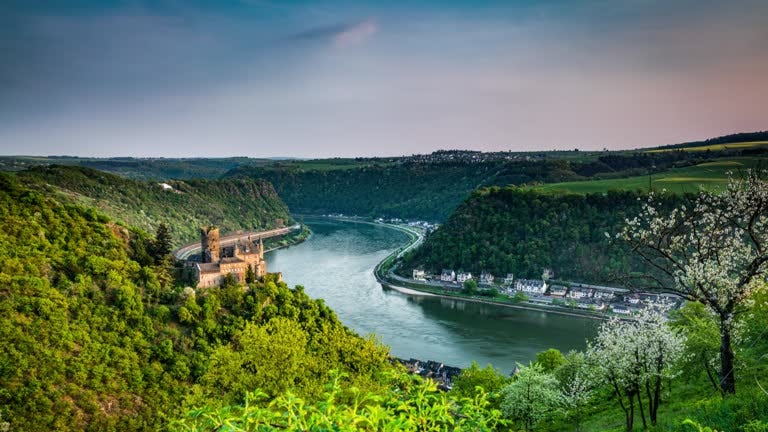
Rhine River
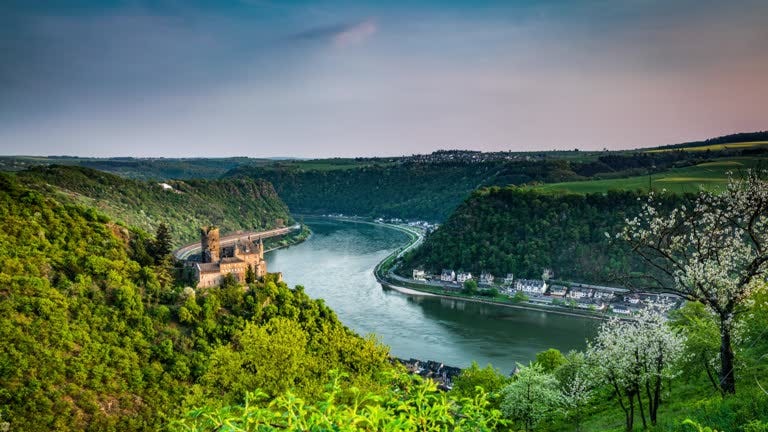
3 Episodes On: Rivers
This week is all about rivers! Check out three great interviews about the significance of rivers in politics, history, and environmental care.
In Rivers of the Sultan: The Tigris and Euphrates in the Ottoman Empire, learn about the a history of the Ottoman Empire's management of the Tigris and Euphrates rivers in the early modern period.
Listen to Azra Hromadžić discuss her book Riverine Citizenship: A Bosnian City in Love with the River. She shows how in the Bosnian city of Bihać, people’s connection to the river Una has shaped not only the river itself but also its citizens.
Is a river alive? Naturalist Robert Macfarlane speaks with Darius Cuplinskas about the legal fights waged in India, Canada, and Ecuador to classify rivers as living beings with rights.
Scholarly Sources with Joanne Yao

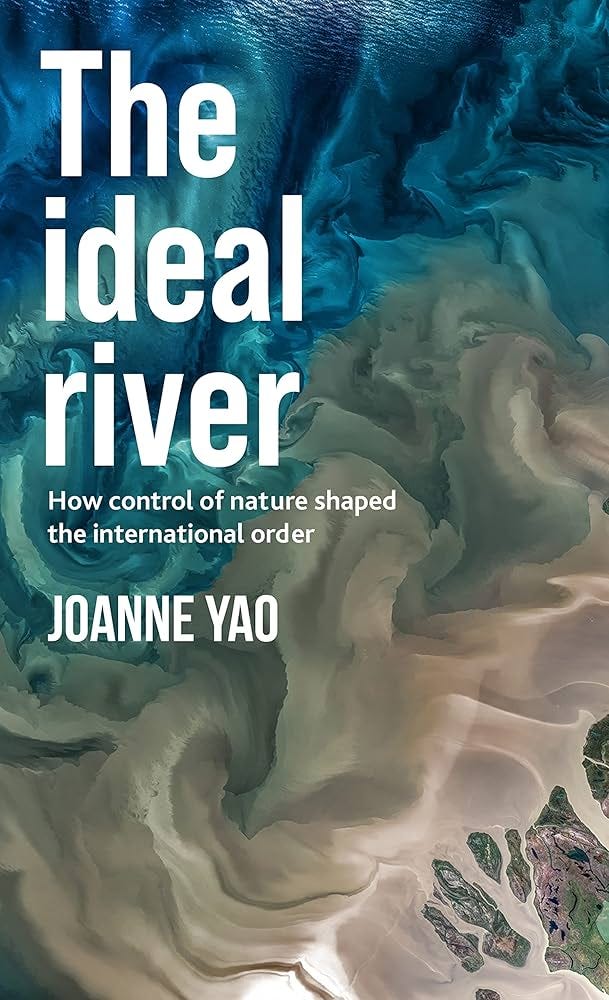
Dr. Joanne Yao is a Reader (Associate Professor) in International Relations at Queen Mary University of London. Her research focuses on environmental history and politics, the legacies of empire and historical international relations, and the development of early international organizations. Her first book, The Ideal River: How Control of Nature Shaped the International Order, on the first international organizations created in the 19th century to govern transboundary rivers, was the winner of the 2023 British International Studies Association’s Outstanding First Book Prize and the 2024 International Studies Association Environmental Studies Section’s Best Book Award. Her current project focuses on the international governance of Antarctica and early outer space exploration.
Q: What are you reading right now?
A: Another Science is Possible: A Manifesto for Slow Science by Isabelle Stenger
Q: What is your favorite book to assign or give to people and why?
A: Braiding Sweetgrass by Robin Wall Kimmerer is a book I like to assign to students because it is poetic and accessible, while also introducing students to important themes in global environmental politics - particularly how we understand our place in the natural world; navigate ideas such as ‘efficiency’, ‘productivity’, and ‘waste’; and come to terms with the fraught relationship between ‘Western’ science and Indigenous and other ways of knowing. Kimmerer is optimistic about the potential flourishing of these relationships – between human societies and nature, between science and Indigenous knowledge – which is perhaps a welcome contrast to other texts on the syllabus and a good jumping off point for discussion and perhaps disagreement. The book is also a slow unfolding of stories and ideas, and in a world of succinct soundbites and AI produced summaries, it is a journey that I hope my students will still be interested in making.
Q: Is there a book you read as a student that had a particularly profound impact on your trajectory as a scholar?
A: Dark Continent: Europe’s Twentieth Century by Mark Mazower. I read this book as an undergraduate at the University of Chicago studying history, and it stayed with me for two main reasons. First, Mazower’s prose is so evocative and compelling. It showed me that good academic writing did not have to be dry or inscrutable, and beautiful prose can exist alongside and enhance serious scholarship. Second, the book told a story that challenged liberal assumptions about history and political progress – the Enlightenment myth of ever unfolding reason and ever broadening freedoms and equality. Instead, it narrated history in a way that made me realize the importance of contingency – the idea that things could have turned out otherwise – and showed me that questions of success and progress depend on where you stand. Standing in Europe in the late-1930s, with fascism and authoritarianism making gains at every turn, it very much looked like democracy and liberalism were failed experiments. And perhaps from where we stand right now, this insight is increasingly relevant.
Q: Which writer, deceased or alive, would you most like to meet and why?
A: This is a hard one, but probably Ursula Le Guin. I love her work for thinking about human and more-than-human entanglements and how we grapple with difference. Her work is also wonderful at challenging narratives of masculine adventure, mastery, and conquest of the unknown that often dominate science fiction. I am always so impressed with the expansiveness of her world-making and the brilliant way she subverts bedrock beliefs and core assumptions. I would love to know more about what inspired her work.
Q: What’s the best book you’ve read in the past year?
A: This is also difficult. Two books I’ve gone around recommending to everyone in the past year are: Venomous Lumpsucker (by Ned Bauman) and The Last Murder at the End of the World (by Stuart Turton). Both are classified as cli-fi (climate fiction) and just so thought-provoking in thinking through the political implications of our planetary crises coupled with the always Janus-faced consequences of technological acceleration. On top of that, the first is wickedly funny and the second a twisting whodunit.
Q: Have you seen any plays or museum exhibitions that left an impression on you recently?
A: Yes, many. I constantly find inspiration in the arts and museum exhibitions. But since I live in London, I also love theatre, and the play that has left the deepest impression on me in the last year was Kyoto. Produced by the Royal Shakespeare Company, the play follows the negotiation of the United Nations Framework Convention on Climate Change (UNFCCC) and the Kyoto Protocol at the third Conference of the Parties (COP 3) through the eyes of antihero Don Pearlman, a cunning lobbyist hired by a group of oil companies known as the ‘seven sisters’ to protect their interests. The play shows what excellent writing, staging, and pacing can do – it can transform something as nitty-gritty and dull as international negotiations and arguments about small changes in text into fast-paced, edge-of-your-seat excitement. It expertly blends the Machiavellianism often associated with international politics with moments of idealism and human connection. The story reminds us that as imperfect and frustrating as the UNFCCC process might be, intelligent and committed people fought hard to achieve it. Finally, the play also inspires provocative reflections on what it means to be on the ‘right side’ of history – it is easy to judge in retrospect (and from the audience) but how does anyone know with certainty in the moment?
Q: What do you plan on reading next?
A: Botany of Empire: Plant Worlds and the Scientific Legacies of Colonialism by Banu Subramaniam and Unthinking Mastery: Dehumanism and Decolonial Entanglements by Julietta Singh.
Q: Who should read The Ideal River and why?
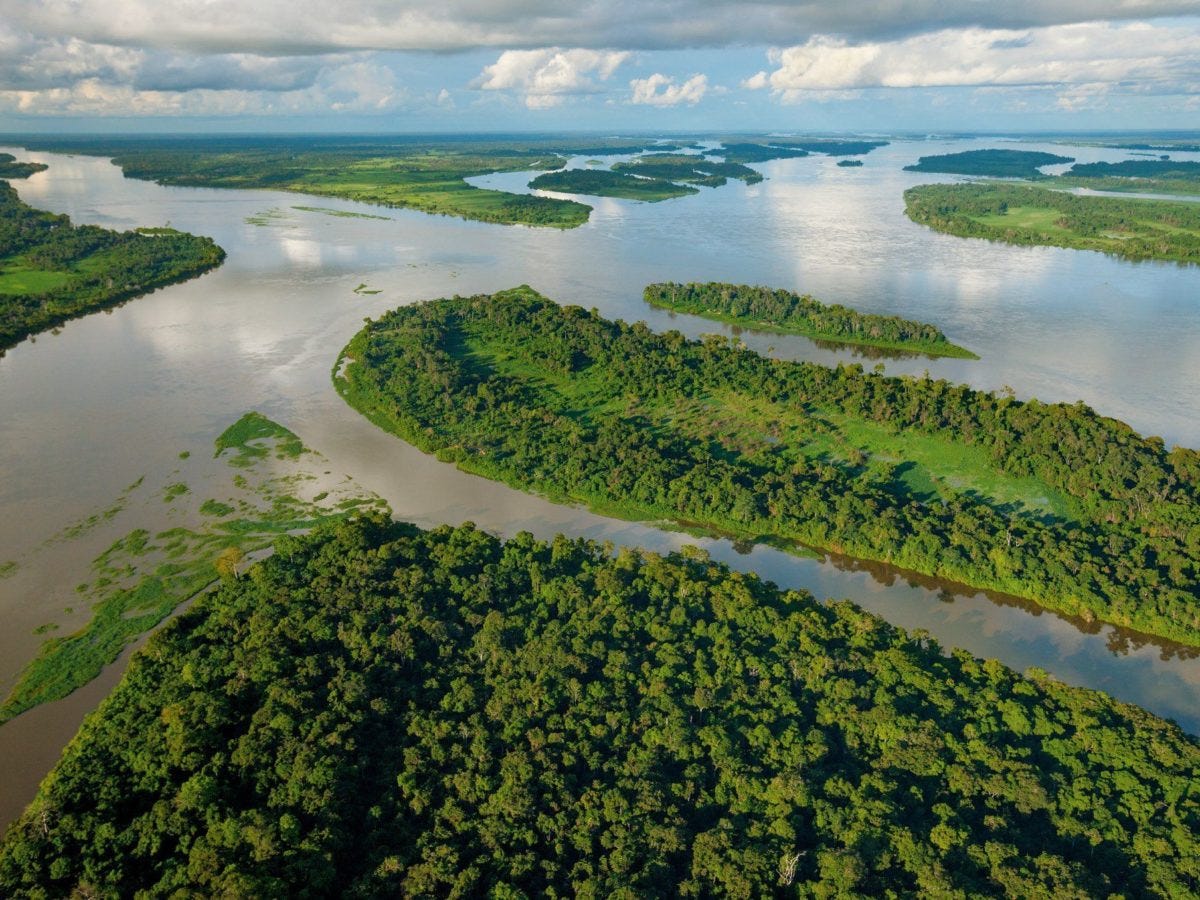
A: Anyone who is curious about the origins of global governance and the creation of the first international organizations (IOs); anyone who is curious about rivers and how they shaped and continue to shape international politics; anyone who has wondered about environmental justice and its relationship to imperialism; and anyone concerned about the troubled relationship between human society and the natural world and why it is so difficult to diagnose and address. The book focuses on European imaginaries of three transboundary rivers - the Rhine, the Danube, and the Congo – and how efforts to tame these rivers and transform them into efficient highways for global commerce led to the creation of the first IOs. It integrates archival material and diplomatic correspondence with travelogues, novels (Frankenstein and Dracula both make important cameos), poetry, and art to show how imaginaries shaped key diplomatic decisions and helped embed ideas about domination over nature into the way we think about international cooperation and governance.
Q: Your next project focusing on the history of Antarctica and early outer space exploration sounds fascinating. Is there anything you can share with us about this?
A: I’m currently in the process of writing my next book!
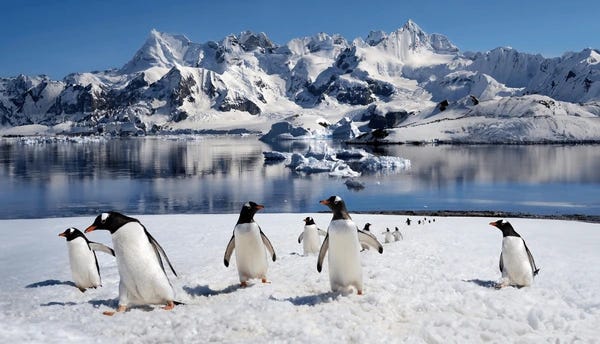
Building on my previous work, this book investigates our imaginaries of Antarctica and outer space – as cold, pure, and exceptional spaces that test our character as individuals and societies – and how these imaginaries enabled cooperation in the midst of the Cold War through the negotiation of two multilateral treaties – the 1959 Antarctica Treaty System and the 1967 Outer Space Treaty. Both agreements rely on scientific exploration as a unifying force, but I aim to move beyond conceptualizing Antarctica and outer space as merely sites where science-led international collaboration triumphed over conflict. Instead, I investigate how glorifying scientific exploration and celebrating scientist-heroes as the representative of humanity can reinforce and reinscribe colonial, racialized, and gendered hierarchies of the late-19th and early-20th centuries. Here, I develop what I call ‘epistemic completion’ – the quest to know the earth in its entirety and complete our scientific knowledge of the global as an unitary and integrated whole – and show its relationship first to empire-building and then to the creation of the liberal international order.
At the same time, I also want to destabilize these dominant imaginaries by exploring the anxieties that lurk behind the construction of these spaces as sites of rational science, and through first hand accounts and speculative fiction consider what monsters from within and beyond might emerge in our quest for epistemic completion. But I want to explore the possibility that not all these monsters are to be met with panic and terror, but entertain the possibility that encountering the alien might inspire imagined futures that recognize the generative possibilities of an entangled, more-than-human universe. Now this, I think, requires us to reject not only the search for epistemic completion, but also the longing for purity that Antarctica and outer space often inspires.
Q: Anything else you’d like to share about ideas you have for other projects?
A: At some point in the not too distant future, I would like to write a planetary political history from the perspective of the AMOC (Atlantic Meridional Overturning Circulation) - perhaps more popularly known by a section of it, the Gulf Stream. We are beginning to realize how central it is to earth and climate systems and wringing our hands about its potential collapse, but imagine all the things it has witnessed and done; all the ships, people, and ideas it has carried across the centuries; all the violence it has facilitated through colonialism and the slave trade; and all the politics it has destroyed and made possible.
Listen to Joanne’s wonderful interview and check out her book, The Ideal River!
Subscribe to New Books in Environmental Studies for more great interviews like this one!
NBN in the Classroom: Ursula Hackett
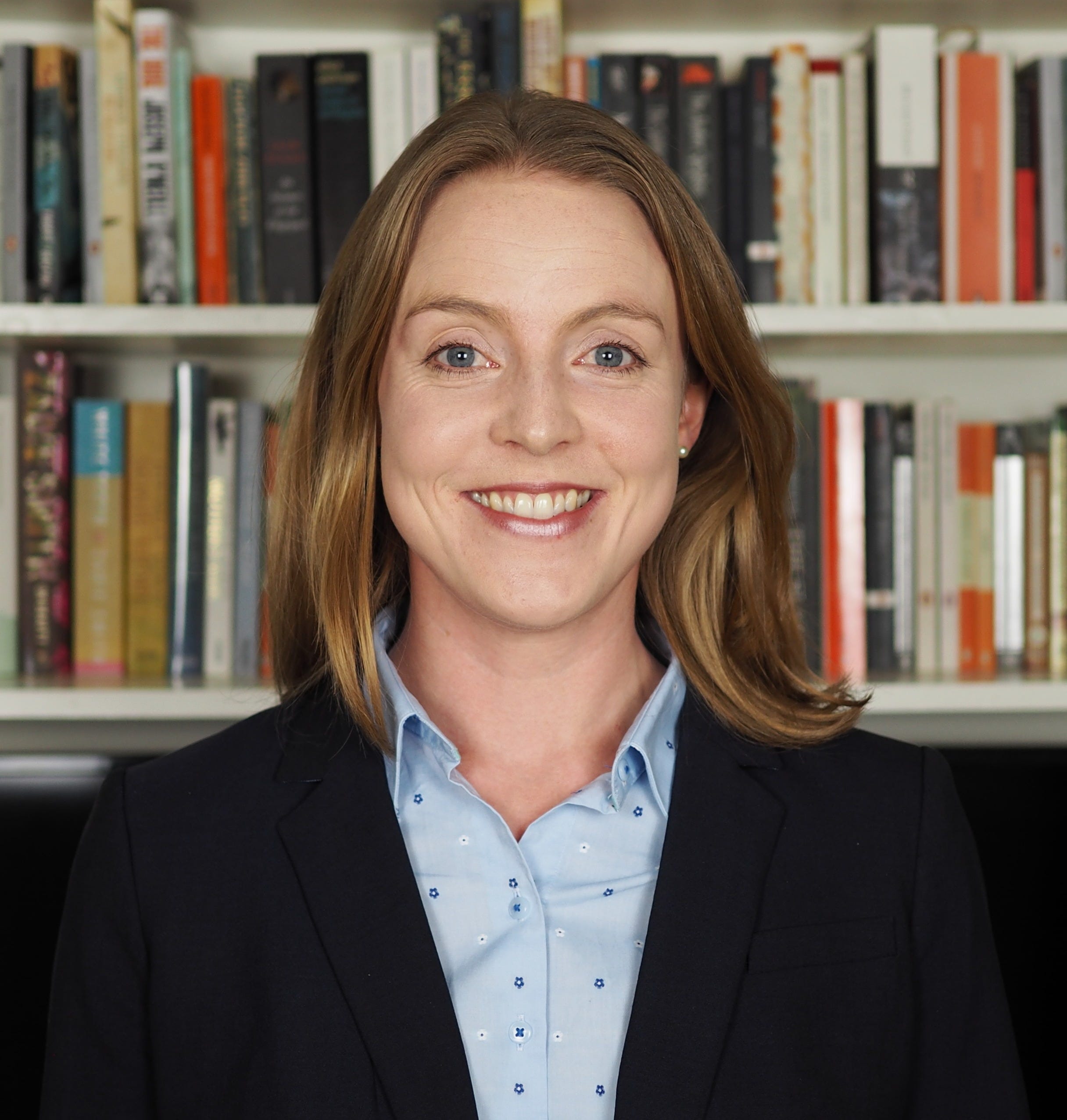
Ursula Hackett is Reader in Politics at Royal Holloway, University of London, where she specializes in U.S. public policy, politics, and litigation. A former British Academy Mid-Career Fellow, she is the author of the award-winning book, America’s Voucher Politics: How Elites Learned to Hide the State.
Q: First, can you tell us how you learned about the New Books Network?
A: I learned about the New Books Network when I published my first book in 2020. Host Lilly Goren invited me for an interview, and I enjoyed the experience so much that I later joined NBN as a host myself.
I became an especially devoted listener during my maternity leaves. NBN allowed me to stay connected to political science while also exploring a wide range of topics – from the neuroscience of smell to the history of the Iron Age Mediterranean. It helped me remain curious, intellectually engaged, and connected to the scholarly world at a time when attending talks and conferences was impossible.
Q: Can you share a bit about how you use NBN episodes in your classroom?
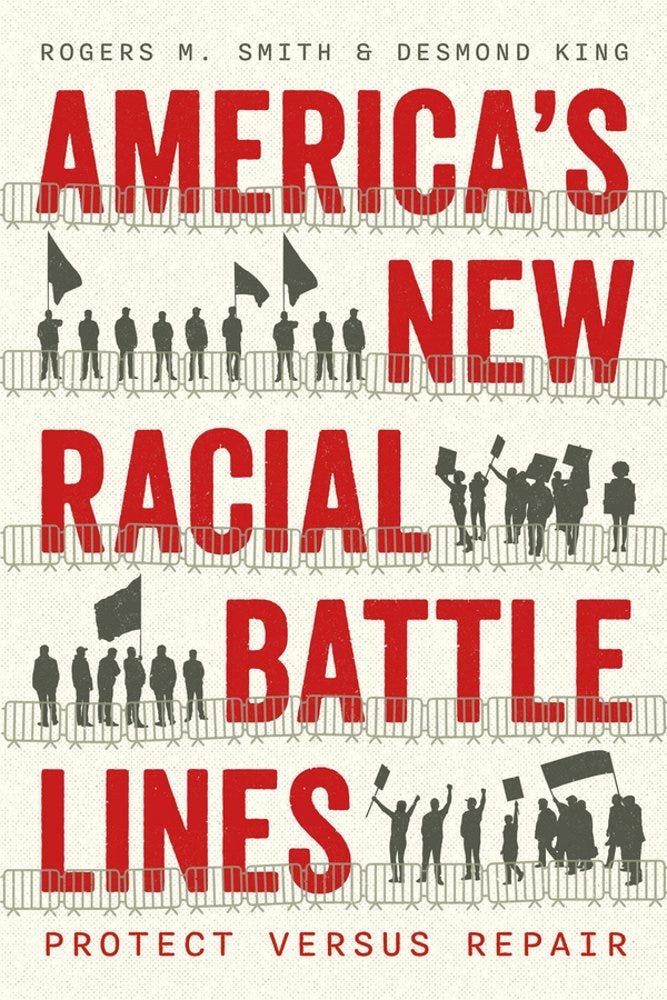
A: I maximize the availability of my NBN episodes by hosting every link on my personal website here and adding relevant episodes to the Moodle pages for my Introduction to US Politics class. I feature some of the podcasts during lectures and encourage my students to listen to the podcasts in addition to their readings each week. For instance, when we discuss civil rights and the expansion of the suffrage in the U.S., I direct them to my discussion of America’s New Racial Battle Lines: Protect Versus Repair with Desmond King and Rogers Smith. Students draw parallels between the themes in the podcast and the items they read about in the news.
Q: In what ways do you think including NBN episodes in your classroom enhances student engagement?
A: NBN podcasting introduces students to a wide variety of research in an accessible format which extends and enriches their understanding. For students who struggle with long-form academic reading, podcasts provide an alternative route into complex material, supporting accessibility and inclusion.
I use my podcasts to model the norms of high-quality scholarly discussion – frank, cordial, substantive intellectual exchange – which helps induct students into academic culture. Perhaps more important than any specific information that is conveyed, my podcasts also introduce students to a vital skill: how to summarize complex material and get to the heart of an issue quickly.
Q: What feedback have you received from students about using NBN episodes in class?
A: Students describe the NBN podcasts as “genuinely thought-provoking and incredibly informative”. They say the podcasts are “easy to listen to” and that it is “fascinating to hear from the authors of books such as these as it makes it…effortless to understand in-depth topics like America’s history”, They appreciate how the NBN podcast “enriches the context for our upcoming seminars”.
Q: Do you have any tips for professors interested in using NBN episodes in their classroom?
A: I have two main tips!
Start small and be strategic. Rather than assigning whole series of episodes, pick one or two podcasts that directly connect to a specific week’s topic and frame them with clear guiding questions.
Treat podcasts as a complement, not a replacement, for readings. I find they work best when paired with a short presentation assignment – such as asking students to identify the author’s main argument, evidence, and implications for recent developments in the news.
Q: Is there anything else you want to share about how you use NBN in the classroom?
A: Using NBN in my teaching reminds students that scholarship is a living, ongoing conversation rather than just a set of static texts. Podcasts help them see academics as real people grappling with big questions – exactly the mindset I hope they carry into their own studies.