
Gist Books and the Future of Print-on-Demand
Ramona Liberoff and Liz Fried share their book picks
In this week’s newsletter:
Fast Five with Gist Books
Where in the World: Vietnam
Scholarly Sources with Emily Dufton
Fast Five with Gist Books
Ramona Liberoff and Liz Fried are cofounders of the new publisher, Gist Books. Gist allows readers to pick the topics they want, creating a unique and up-to-date collection in a personalized volume. Gist is positioning itself to change the nature of books, offering a wikipedia like experience in physical form.


Their Fast Five choices are all upcoming “books of the week!” from Gist Books! All of these books are written in a clear and engaging way, include both current information and relevant context, and come from people with deep connections to the subjects and systems they explore.
We are Eating the Earth: The Race to Fix Our Food System and Save Our Climate by Michael Grunwald — Grunwald chronicles the challenge to feeding a growing, warming planet. He looks deep into the barriers to change of entrenched interests. This book reads like a political thriller and a horror story, while also incorporating a lot of good technical insight on our food system.
Short Circuiting Policy: Interest Groups and the Battle Over Clean Energy and Climate Policy in the American States by Leah Stokes — Why is the US so schizophrenic about renewables? Stokes unpacks the power structures (pun intended) that keep the US from committing fully to renewables, including shining a light on the conduct and culpability of utilities. It could be dull in other hands, but Stokes (also the co-host of the excellent podcast A Matter of Degrees) makes this riveting reading. Listen to her NBN interview here!
Barons: Money, Power, and the Corruption of America’s Food Industry by Austin Frerick — Frerick, who was recently profiled on the popular Bloomberg podcast Odd Lots, has reached into the tradition of Ida Tarbell’s muckraking journalism to lay bare some festering ills of the United States’ food system, showing how consolidation has entrenched new-style “Barons” and the effects on all of us. A timely read for anyone who buys or consumes food— otherwise known as all of us.
Reaping What She Sows: How Women Are Rebuilding Our Broken Food System by Nancy Matsumoto — When people think farmer, they often think man. Matsumoto shows us that there are many brilliant female farmers around the world using ethics and sustainability to show us a better way to respect food production and decolonize agriculture.
Going Nuclear: How the Atom Will Save The World by Tim Gregory — Tim Gregory is an unrepentant booster of nuclear energy. In surgical prose, he fillets the myths, presents the facts, and issues a call to action for those in charge of our energy system to implement nuclear at scale. It’s a very timely book in a field that doesn’t have many on offer to non-specialists.
Listen to Ramona and Liz’s interview about Gist Books! They discuss the new possibilities available to the publishing industry with print-on-demand and more.
Where in the World: Vietnam
This week, listen to 3 great episodes about Vietnam! Our guests will take you through Vietnamese history and thought in the realm of politics and social life!

Tune in to Tana Li’s discussion of A Maritime Vietnam: From the Earliest Times to the Nineteenth Century. She examines Vietnam as a maritime state with a long history of dynamic commercial relations with the outside world, from China to Southeast Asia, India, and the Middle East.
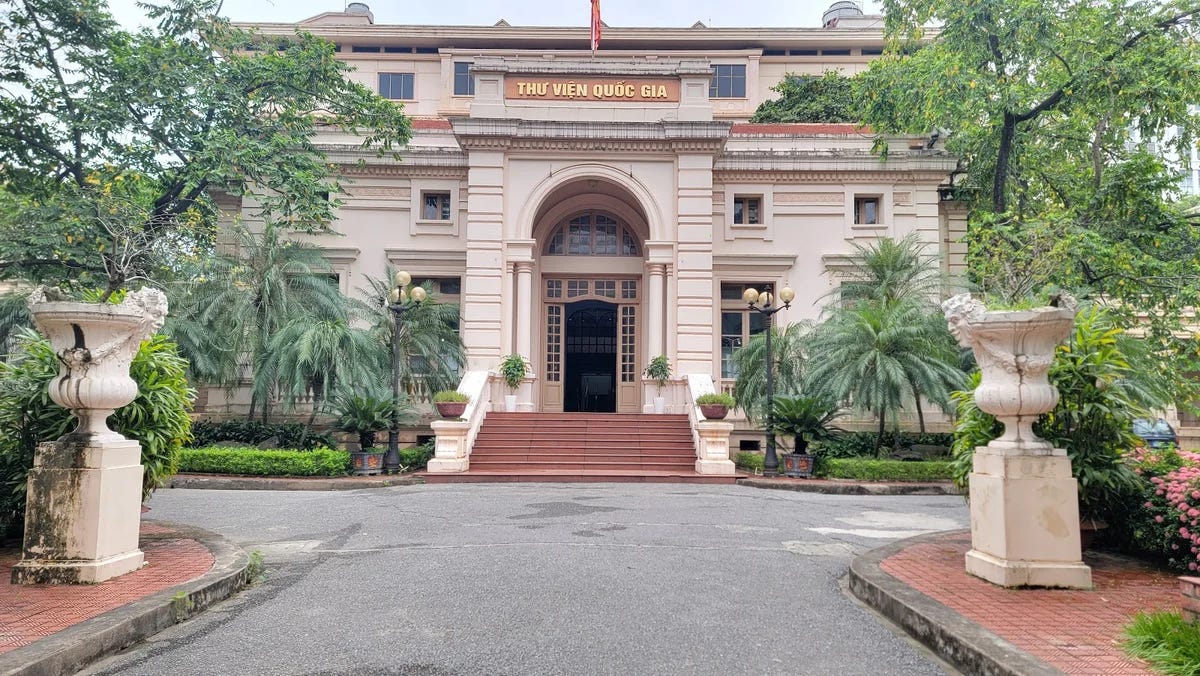
Listen to Cindy Anh Nguyen’s interview about Bibliotactics: Libraries and the Colonial Public in Vietnam. She analyzes the Hanoi and Saigon state libraries in colonial and postcolonial Vietnam, demonstrating the emergence of a colonial public who reimagined the political meaning and social space of the library through public critique and day-to-day practice.
While Ho Chi Minh’s anti-imperialism is much discussed, we know much less about the anticommunist nationalism of South Vietnam, the Republic of Vietnam (RVN).Listen to Nu-Anh Tran’s interview about her book Disunion: Anticommunist Nationalism and the Making of the Republic of Vietnam to hear her analyze the RVN as the heir to a revolutionary tradition that developed out of the anti-French resistance.
Scholarly Sources with Emily Dufton
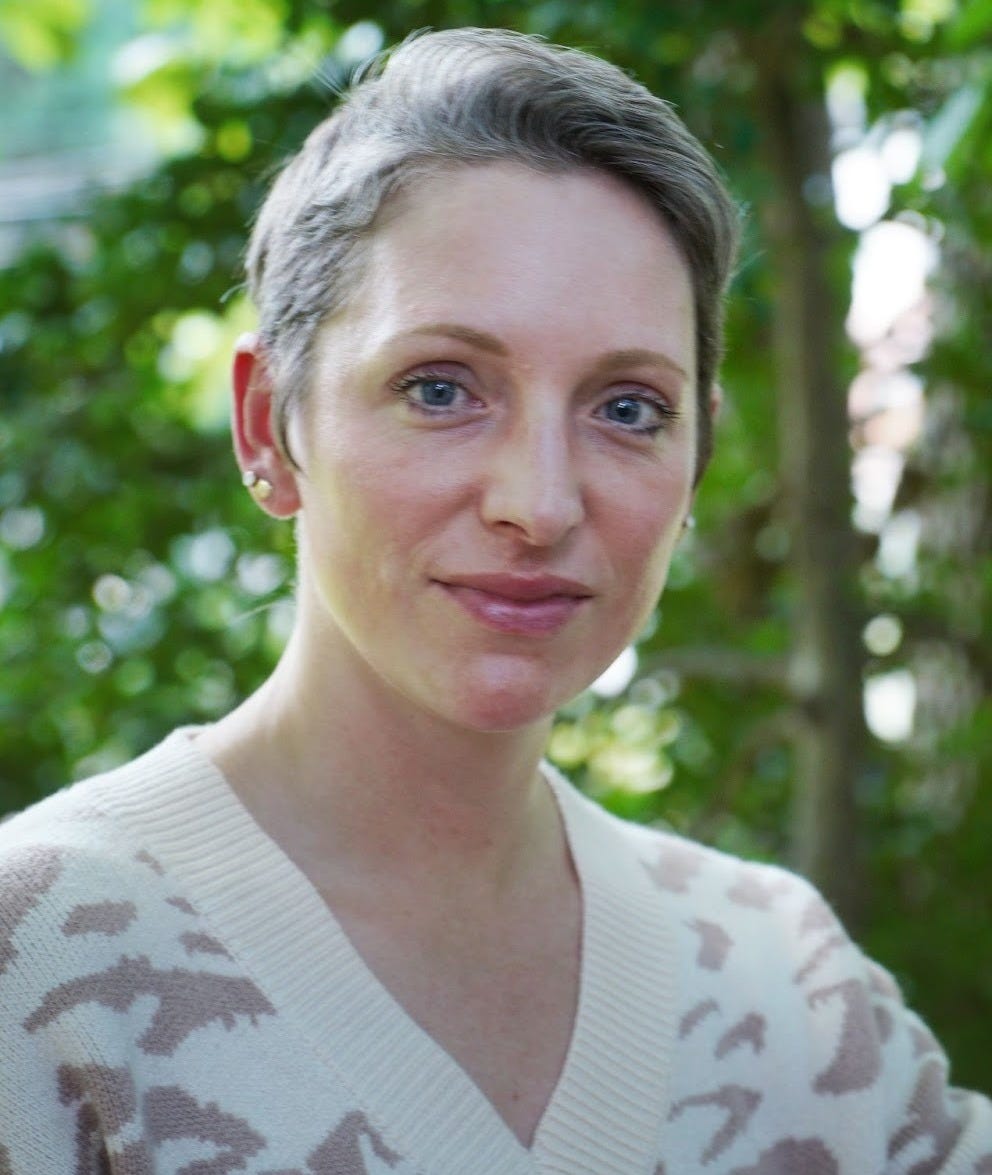
Emily Dufton is the author of Addiction, Inc.: Medication-Assisted Treatment and America’s Forgotten War on Drugs and Grass Roots: The Rise and Fall and Rise of Marijuana in America. The recipient of a Whiting Creative Nonfiction Grant, her work has been featured in the Washington Post, Smithsonian magazine, and other publications. A writer and drug historian, she lives outside Washington, DC.
Q: What are you reading right now?
A: For a long time, I was reading almost exclusively nonfiction, mostly for research. Lately, I’ve been sprinkling in some novels again and it’s great. I started Rachel Cusk’s Outline trilogy, and I re-devoured one of my favorite books from when I was a kid, Mrs. Frisby and the Rats of NIMH, when I found an old copy in a Little Free Library.
Q: What is your favorite book or essay to assign and why?
A: If I were teaching a drug history course, I’d assign David Courtwright’s “A Century of Narcotic Policy,” an essay in the Institute of Medicine’s Treating Drug Problems: Volume 2. Courtwright is the godfather of American drug history, and his essay presents a smart, compelling, and even-handed introduction to the pivotal policy shifts of the twentieth century.
If I were teaching a writing course, I’d assign Umberto Eco’s How to Write a Thesis. I love his concept of academic humility: “Listen with respect to anyone, without this exempting us from pronouncing our value judgments.”
Q: Is there a book you read as a student that had a particularly profound impact on your trajectory as a scholar?
A: Two books had a significant impact on me:
The first is Martin Torgoff’s Can’t Find My Way Home: America in the Great Stoned Age, 1945-2000. I discovered it in college and was blown away by how fun Torgoff made history. He turned drugs into a really compelling vehicle for cultural analysis. I thought, “I want to do that.”

The second is Michael Massing’s The Fix, which has now prompted two books of my own. In it, Massing wrote about the origins of the parent movement in the 1970s, and I used my dissertation and Grass Roots to explain what happened to those activists afterward. Massing also wrote about the Nixon administration’s pivot toward treatment, and I used Addiction, Inc. to explore what happened to the methadone clinics the administration funded.
Q: If you could meet anyone, which writer would you most like to meet and why?
A: I actually already met the writer I most wanted to meet. Or I kind of met him.
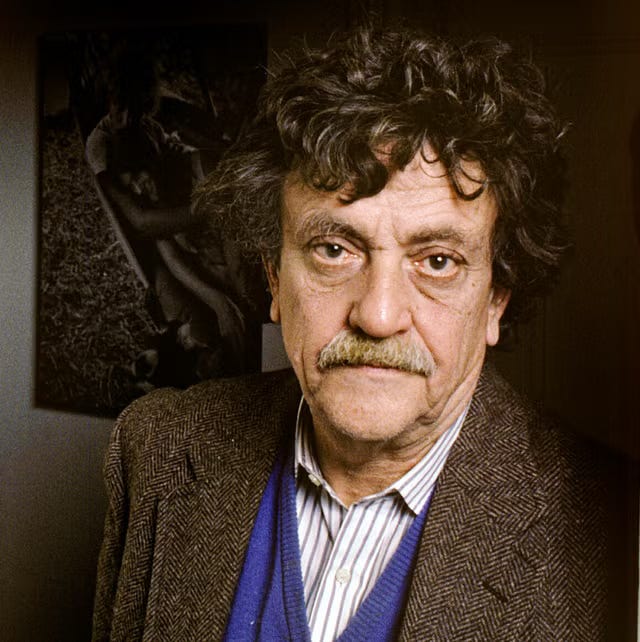
In 2004, Kurt Vonnegut was the commencement speaker at Lehigh University in Bethlehem, Pennsylvania. I had just graduated from NYU, but lied and told officials at Lehigh that I was a writer for the student newspaper doing an article on New Yorkers giving commencement speeches nationwide. Lehigh gave me press credentials, and I took the bus to Bethlehem.
I was picking up my badge from the press table behind the football stadium when Vonnegut rambled up to us. Words cannot describe how much I loved Kurt Vonnegut when I was in college. I regularly laced my comments with quotes from his books. I was probably very annoying.
Turns out it’s actually terrifying to be confronted with your hero. Vonnegut stood three feet away from me and said hello to the students manning the table, and I stood stock still, a deer in headlights, until he walked away.
So yes, I’ve already met my favorite writer.
Q: What’s the best book you’ve read in the past year?
A: John Steinbeck’s The Moon is Down. A useful meditation on fascism and control in troubling times.
Q: Have you seen any museum exhibitions that left an impression on you recently?
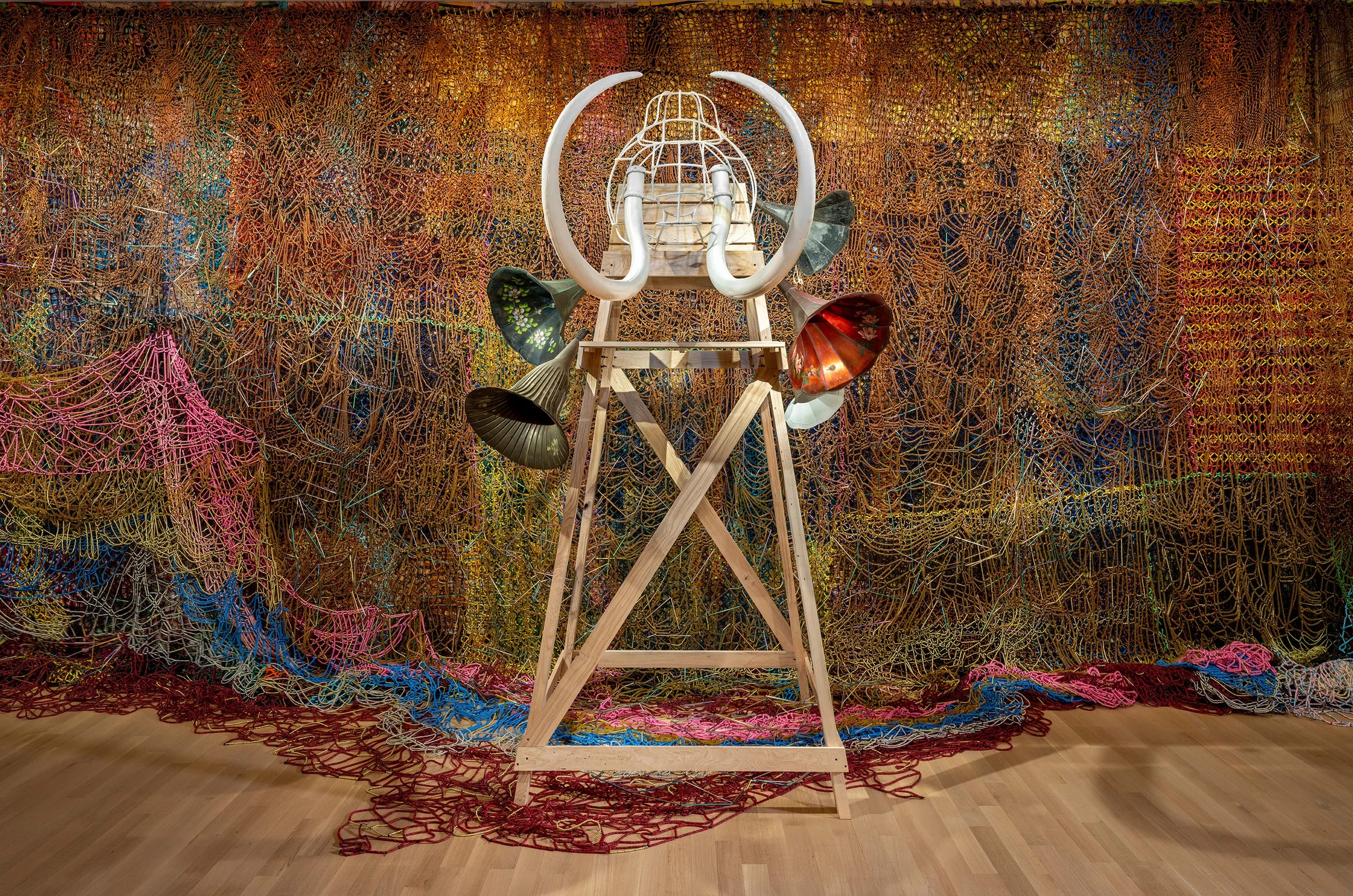
A: Nick Cave’s new exhibit Mammoth at the Smithsonian American Art Museum is so exciting and compelling and thoughtful. I’ve already seen it twice and want to go back again. I see something new every time, and being with his installations fills me with joy.
Q: What do you plan on reading next?
A: I realize I’m way behind the times but my book club’s next assignment is Hamnet.
Q: Who should read your book and why?
A: Anyone whose life has been touched by opioid addiction and wants to understand how our systems came to be in their current, troubled state.
Q: Anything else you’d like to share? Either about your academic work or creative endeavors?
A: I’m so excited that Addiction, Inc. is almost out in the world! I have some speaking engagements coming up in DC, Baltimore, New York, and Chicago. People can follow me on my website or Instagram as the book rolls out.

Listen to Emily’s interview about her book Addiction, Inc.: Medication-Assisted Treatment and America’s Forgotten War on Drugs and order it now!