
Additions to the Archive
In this week’s newsletter:
Additions to the Archive with Sullivan Summer
Where in the World: Hong Kong
The Hong Kong Research Hub with Florence Mok
Additions to the Archive with Sullivan Summer
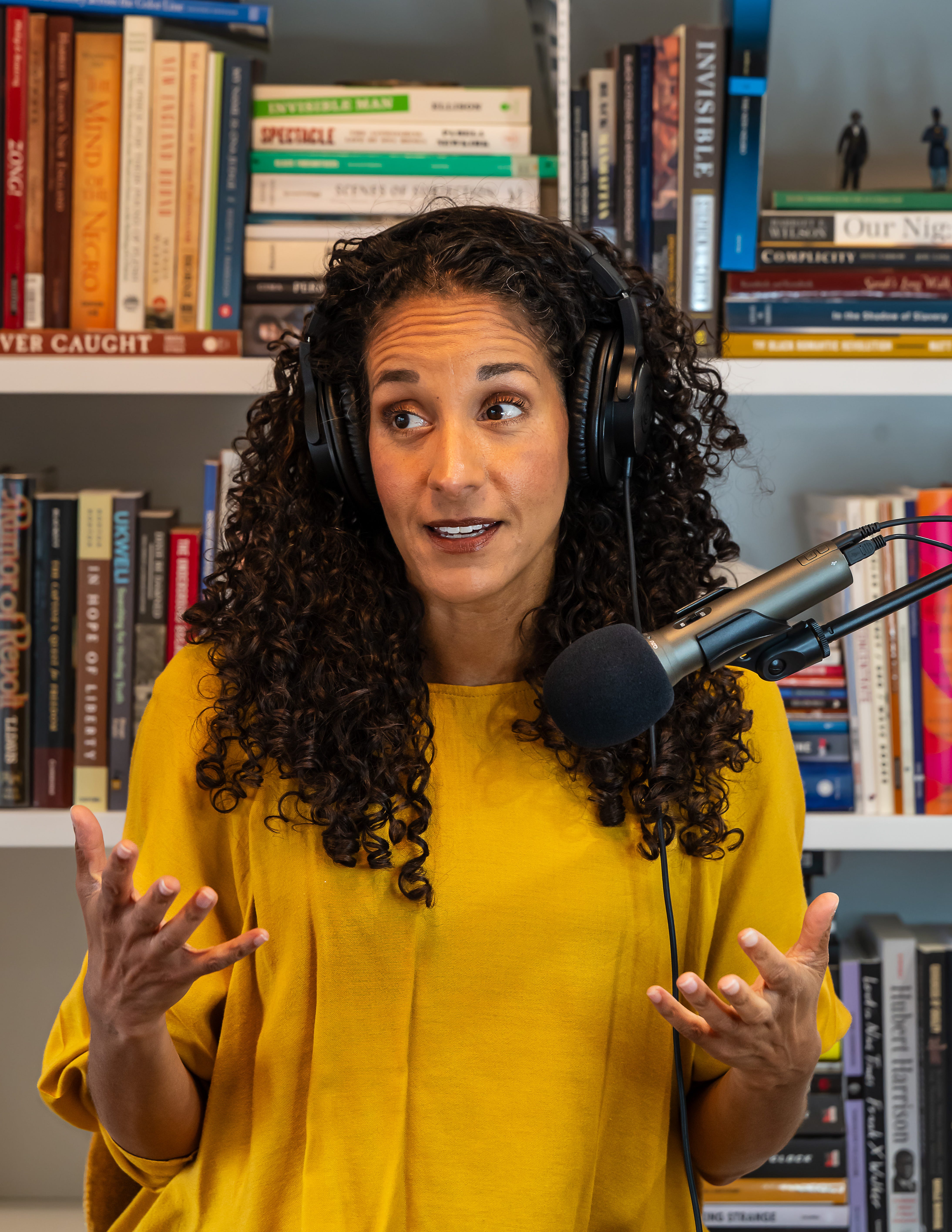
Sullivan Summer is an independent scholar, critic, essayist, poet, podcaster, and adoptee rights advocate. She holds a JD, as well as an undergraduate degree in Communications/Journalism. Sullivan’s work across genres has been published in trade, literary, and academic outlets, and she is a 2025 “Best of the Net” anthology nominee. When not reading, writing, and podcasting about reading and writing, you can find Sullivan engaging with visitors to The New York Historical, where she is a Docent.
Q: Can you share a bit about yourself and how you decided to go into podcasting?
A: I spent two decades in corporate leadership roles and, in the late stages of the pandemic, left for what I intended would be one year off to pursue a lifelong writing passion. That was three years ago! I discovered the New Books Network while working on various manuscript projects (I am currently shopping an archivally researched novel, as well as a Civil War-era biography proposal) and thought hosting was an amazing way to be in community with US History scholars in particular, since I am not in academia myself.
Q: What inspired you to start Additions to the Archive?
A: I began hosting with a very clear vision: I wanted to interview Black authors exclusively. While working on my own research and writing projects, I observed that many of the Black history texts I was encountering were by white authors. This is not to say there was anything “wrong” with the texts. The majority—especially those more contemporary—were thoughtfully and compassionately written. But still, I felt like there was what I call a Jurassic Park problem: some authors spend too much time thinking about whether they can tell a story, and not enough time thinking about whether they should. I am sensitive about this, not just as a woman and a Black American, but also as an adopted person (as most adoption-related texts in the US are created by non-adopted people purporting to speak on our behalf). While I think we can all acknowledge and celebrate the tremendous contributions of scholars and thinkers of all backgrounds and identities, one hundred percent of the guests on Additions to the Archive identify as part of the African diaspora.
Q: Your podcast description mentions the collective archive. Can you say more about this?
A: As a person with a largely unknown background and lineage, I am obsessed with the idea of having an archive. And knowing that academic and other institutions have in the past, and continue in the present, to devalue work produced by those from marginalized communities, I love the idea that I can create something that might be part of a larger story. I see every interview I conduct as being an important addition to the archive of my interview subject, the archive of the Black community, and the archive of US history more generally.
Q: And following up on that, what kinds of interviews can listeners expect on your new channel?
A: The pod’s tagline is: Black authors. Black history. That said, I take a very expansive view of “history,” to include academic and narrative nonfiction, but also literary fiction, essays, criticism, and poetry. I believe there is just as much truth to be gleaned from fiction and poetry as there is in nonfiction, especially in this time of misinformation and erasure.
Moreover, listeners can expect in-depth interviews and discussions they can’t hear elsewhere. At the risk of being cringey, guests have complimented my skills as a “close reader” and, honestly, nothing makes me prouder! New Books Network listeners are smart; they can all read a press kit or watch a social reel in a fraction of the time it would take to listen to an episode of Additions to the Archive. I’m not interested in wasting listeners’ time. Nor am I interested in providing authors and scholars with another platform to repeat rehearsed talking points. I want guests to have the space to really say something. And several have shared with me offline that having such a space outside their institution has never been more critical.
I’m also excited to push the bounds of “authorship.” Books are my first love, but I’m fortunate to live in a city with thousands of cultural institutions—museums, gallery spaces, theaters, and more. Having grown up in an area that was both homogeneous and rural, I don’t take that for granted. I’m excited also to bring to the pod curators, gallerists, playwrights, and other storytellers challenging assumptions and building community. If I can help bring the substance of a museum exhibit or play to someone who is unable to experience it for themselves, I think that is really valuable.
Q: Can you share any upcoming interviews that we can look forward to?
A: I’m excited to have my first curator on the pod! Es-pranza Humphrey is the Assistant Curator of Collections at Poster House, the first museum in the US devoted exclusively to posters. We’re going to talk about her latest exhibit, Act Black: Posters from Black American Stage & Screen. I can’t wait for this discussion, as it hits on everything I love: US history, writing, popular culture, and art. The exhibit is also in conversation with several of the authors I’ve interviewed on the pod. (This interview has since been published. Listen below!)
I’m also looking forward to interviewing award-winning author and public historian Eric K. Washington about Where Harlem Rests, a project of the Woodlawn Cemetery and Conservancy examining the lives of 25 notable Harlem Renaissance figures interred in the famed Bronx cemetery that, according to the National Parks Service, is “a popular resting place for the famous and powerful.”
Q: Any book recommendations for our readers?
A: What to read in the approach to the Semiquincentennial: Entangled Alliances: Racialized Freedom and Atlantic Diplomacy During the American Revolution by Ronald Angelo Johnson, and not just because he taught me the word, semiquincentennial. It is a reinterpretation of the American Revolution through diplomatic analysis from the perspectives of Black and white founders in the United States and Saint-Domingue. If you like CLR James or Michel-Rolph Trouillot, this one is for you.
A new perspective of someone you thought you knew: Young King: The Making of Martin Luther King Jr. by Lerone Martin. This has become my go-to recommendation for everyone regardless of their genre preference. While there are many King biographies out there, this is the only one focused solely on his adolescent years. I have a great interview with Lerone coming to the pod in May 2026. (This interview has since been published. Listen below!)
Something to read on a lawn chair or beach blanket: The Great Mann by Kyra Davis Lurie. This creative retelling of F. Scott Fitzgerald’s The Great Gatsby is set in 1944 among LA’s Black elite, and mixes deeply researched history with incisive social commentary still relevant today. Kyra and I recorded a compelling, spoiler-free interview that will drop this spring.

Q: Is there anywhere else our readers can find and connect with you?
A: The Additions to the Archive Substack! Like the podcast, the Substack is a free resource, and it features Q&A style interviews with authors, many of whom also appear on the pod. There is something magical that happens during these interviews. Maybe it’s because we tackle topics outside of guests’ books, and maybe it’s because by the time we’re engaged in this conversation we’ve already spoken for an hour or more, but these conversations get deep, and they get provocative. These wind up being some of my favorite conversations, and ones I find myself turning back to. I would encourage readers to subscribe and follow or, if they don’t want more things delivered to their inbox (which I totally get), following Additions to the Archive on Instagram is the best way to see what is published and forthcoming on both Substack and the podcast.
Subscribe to the Additions to the Archive channel to listen to all of Sullivan’s insightful interviews.
Where in the World: Hong Kong
This week, we’re sharing a few interesting interviews about Hong Kong!
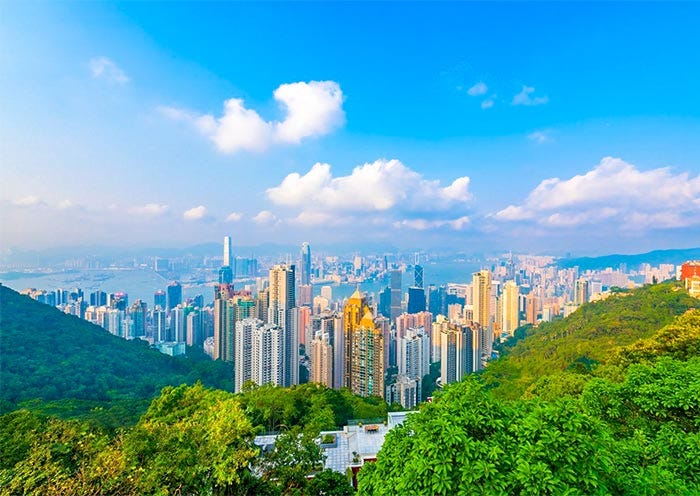
Listen to our interview about Po-Shek Fu’s book Hong Kong Media and Asia’s Cold War, which examines the fight between Communist China, Nationalist Taiwan, and the United States to win over the ethnic Chinese population through media. A large influx of filmmakers, writers, and intellectuals to British Hong Kong made the colony a hub of mass entertainment and popular publications in the region.
Going to a theme park this summer? Tune in to Jenny Banh’s interview about her book Fantasies of Hong Kong Disneyland: Attempted Indigenizations of Space, Labor, and Consumption . She examines how the Communist state of China and corporate behemoth Disney, came together for a project in the third space of Hong Kong to try to bring Disney's “happiest place on Earth” ethos to Hong Kong.
In Made in Hong Kong: Transpacific Networks and a New History of Globalization, Peter E. Hamilton explores how Hong Kong transformed from a struggling British colonial outpost into a global financial capital. He argues that Hong Kong has been vital to the remaking of postwar global capitalism and the linchpin of Sino-U.S. trade since the 1970s.
The Hong Kong Research Hub with Florence Mok
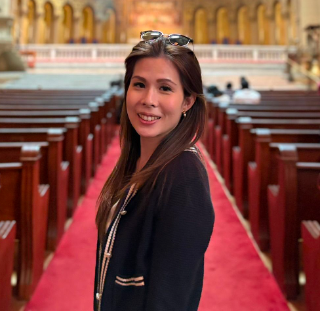
Dr. Florence Mok is a Nanyang Assistant Professor of History at Nanyang Technological University and the founder of the Hong Kong Research Hub. She is a historian of colonial Hong Kong, modern China and British colonialism.
The Hong Kong Research Hub is affiliated with Nanyang Technological University in Singapore. We aim to build a research network in Southeast Asia to complement and collaborate with existing initiatives in Hong Kong and elsewhere in the world. The hub hosts seminar series and other scholarly events that would be of interest to both academics and non-academics, the scope of which is intended to be broadly interdisciplinary, welcoming a range of methodologies and areas of study which shed new light on Hong Kong’s past, present, and future.
Q: First, can you tell me a little bit about yourself? Your research, and what led you to study Hong Kong?
A: I have always wanted to become a historian since I was a child. I read my first history book when I was nine, and from then on, I became fascinated by history. I went on to complete both my BA and MA degrees at the University of Durham, where I specialized in early modern history. That period gave me a strong foundation in political and social transformations in early modern England. In 2014, after finishing my MA, I took a year off before applying for my PhD. During that year, the Umbrella Movement happened in Hong Kong. That moment made me rethink my relationship with my hometown and how I might contribute to discussions around Hong Kong’s history. I grew up in Hong Kong, and I had always been intrigued by how much everything had changed—from its political culture to the city’s landscapes.
Influenced by these developments, I made a significant shift from early modern English history to modern Hong Kong history. It was a big leap, but it felt necessary. That is why you will find that my first monograph focused on state-society relations. In particular, I focus on how the colonial government communicated with Chinese society, and how, in a period when it was impossible to introduce democratic reforms, public opinion and political activism could still affect policymaking. (In fact, this project about Covert Colonialism, which was originally published by Manchester University Press, has recently been translated into Chinese by Lions Ink Books, a publisher in Hong Kong!) Moving into Hong Kong studies has probably been one of the best decisions I have made. It combines my interests, my language skills, and my personal background, and it also gives me strong motivation, since many of the topics I study are still closely connected to Hong Kong today.

Q: What inspired you and the team to start The Hong Kong Research Hub?
A: I began my postdoctoral fellowship at Nanyang Technological University (NTU) in Singapore in 2019, a time when Hong Kong was experiencing another major political upheaval. During that period, my peers and I strongly felt that, as historians, we have a responsibility to present accurate historical narratives—especially because the misuse of history can create serious problems and even be dangerous to society. Hence, before establishing the Hong Kong Research Hub, I actually started a small study group with my friend Charles Fung (currently PhD student at Stony Brook). That experience was incredibly valuable. It showed me the importance of solidarity and collaboration, particularly in academia, which can often feel very isolating.
In 2021, I was awarded the Nanyang Assistant Professorship at NTU, which came with a generous start-up research grant. This gave me the opportunity to think more ambitiously about building something collaborative. At the same time, some colleagues and I had often discussed how limited Hong Kong studies are in Southeast Asia. Much of the existing scholarship tends to focus on Hong Kong’s relationships with China, or on Anglo-American and Sino-British contexts. We felt there was a real gap—and an exciting opportunity—to explore the important but under-examined connections between Hong Kong and Southeast Asia.
With the support of this grant, I was able to turn these ideas into something concrete. That is how the Hong Kong Research Hub was founded—as a collaborative platform that not only advances new research agendas, but also brings scholars together, fosters mutual support, and builds a stronger academic community around Hong Kong studies in the region.
Q: Can you tell me a bit about the team members and how all of you collaborate on this project?
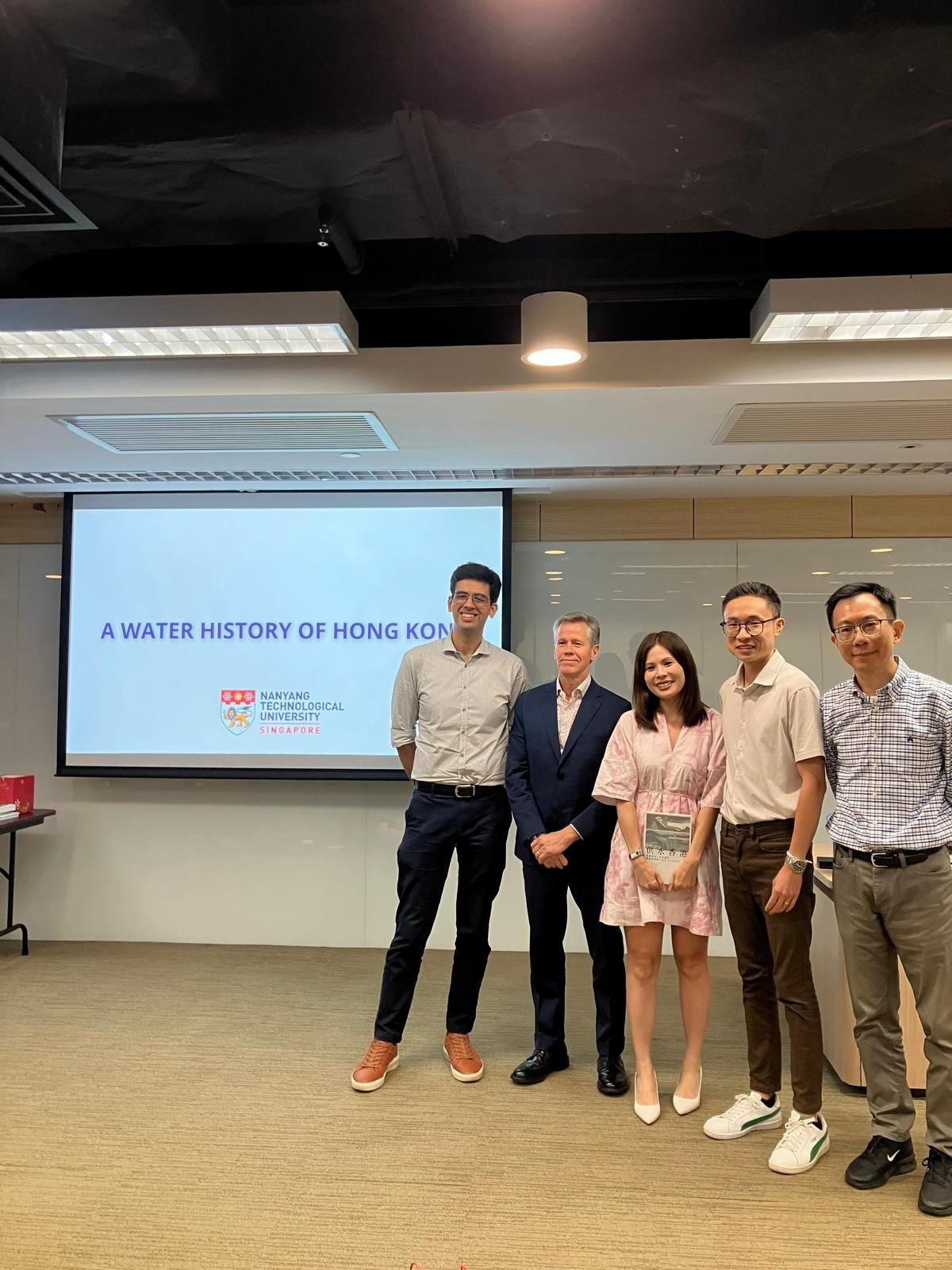
A: Our team is built very much around a shared research focus as well as a collaborative spirit. Inspired by my experiences during COVID—especially observing how different governments and societies responded to crises—I became increasingly interested in the history of crisis management. In the Hong Kong context, issues like water shortage and supply particularly intrigued me, and this became a central project that many of us in the Hub now work on together.
The project initially began in 2022 with me, three postdoctoral fellows, and a PhD student. Since then, two of them have moved on to tenure-track positions in Singapore and Thailand, and the PhD student has also recently started working as a postdoctoral fellow in the UK. The project is now led by myself alongside three research associates: Sahil Bhagat, Niklas Fung, and Howard Hong. In addition, my colleague Kiu-wai Chu from the Chinese Department is closely involved, helping to foster interdisciplinary conversations within the initiative.
One of the defining strengths of our team is its diversity in both disciplinary training and personal background, while maintaining strong connections to Hong Kong. Our members come from fields such as history and anthropology, and bring different regional and methodological expertise. For example, Siu-hei Lai, now a lecturer at Chiang Mai University, is an anthropologist who works on youth culture and urban history in Northern Thailand. Having grown up in Hong Kong, he brings both linguistic strengths and an anthropological perspective to our work. Doris Chan, my former PhD student, was educated in Hong Kong and the UK, whose research focuses on the connections between Hong Kong, North Borneo, and Singapore, with particular interest in labor and migration. Sahil Bhagat is a historian of the Indian Ocean world whose research focuses on the mobility and political organizations of Indian plantation labor. His personal and educational background in Hong Kong adds another layer to how he approaches these questions. Niklas Fung, trained in the UK and Germany, specializes in colonial exhibitions within the French Empire, with particular expertise in colonial Indochina. He also grew up in Hong Kong and contributes a transregional perspective. Our newest member, Howard Hong, completed his training in Hong Kong and Taiwan and works more closely with Hong Kong history, particularly food policies and agricultural development from the perspective of land.
Because of these varied disciplines, research interests, and lived experiences, our collaboration is highly dynamic and intellectually stimulating. We are constantly learning from one another, and this interdisciplinarity allows us to generate new questions and approaches that might not emerge within a single field. A good example of this collaboration is our work on a 43-minute documentary on the history of water in Hong Kong. This project reflects our shared commitment to turning academic research into something more accessible and engaging. It allows us to reach audiences beyond academia, while also serving as a form of pedagogical innovation—demonstrating how historical research can be translated into visual storytelling.
Q: What are your goals with the Hub?
A: At a broader level, our goal is to build a strong research network in Southeast Asia that both complements and collaborates with existing Hong Kong–focused initiatives around the world. Through the Hub, we organize seminar series and a range of scholarly events that are designed to engage not only academics but also a wider public audience. We are particularly committed to fostering an interdisciplinary space—one that brings together different methodologies and areas of expertise to generate fresh perspectives.
On a more personal level, I hope the Hub can contribute to producing new academic knowledge while also ensuring that this work remains accessible and meaningful beyond academia. At the same time, I see the Hub as a platform for nurturing early career scholars and supporting their professional development. An important aim is for the project to generate high-quality research outputs that help our members progress to the next stage of their careers.
Q: Can you share a few of your favorite collaborations the Hub has done with its members and other scholars?
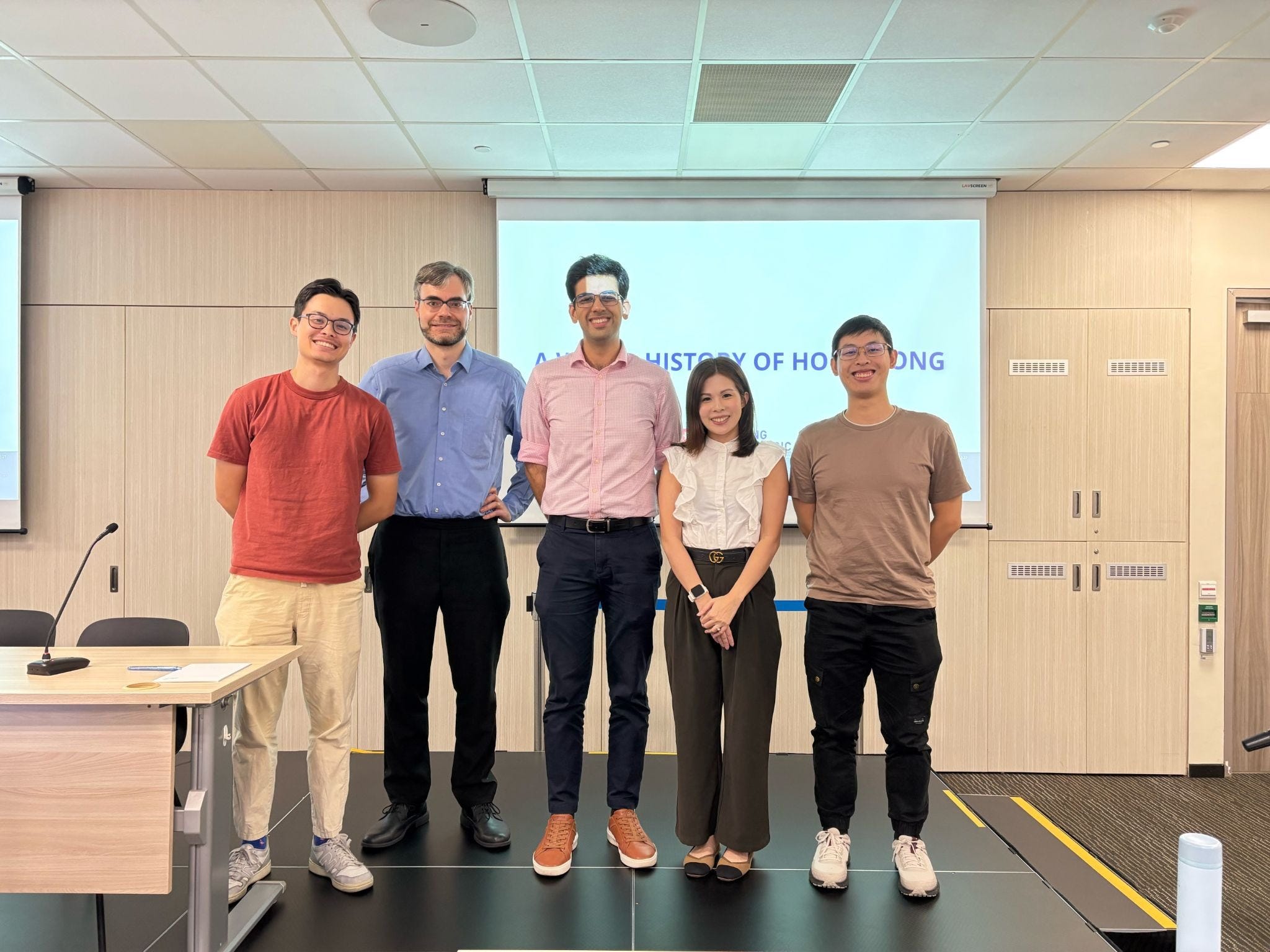
A: If I had to highlight a favorite collaboration within the Hub, it would definitely be our documentary, A Water History of Hong Kong. It was a challenging but deeply rewarding experience to be involved as a producer. The process pushed us to think beyond conventional academic writing—how to translate archival research and complex historical arguments into a compelling visual narrative. It required constant dialogue within the team, from shaping the storyline to deciding how best to present evidence on screen. At times it was demanding, but it was also incredibly fulfilling to see how our collective efforts could bring history to life and reach a much wider audience beyond academia.
In terms of collaborations outside the Hub, I would point to A New Documentary History of Hong Kong, 1945–1997, a sourcebook published by HKU Press. That project was particularly meaningful because it brought together scholars working on different aspects of Hong Kong history to produce a resource that is both academically rigorous and widely accessible. It reflects a shared commitment to making primary sources available and usable, which is essential for both research and teaching. Being part of such a collective endeavor was inspiring, as it demonstrated how collaborative scholarship can have a lasting impact on the field.
Q: Do you have any recommendations for our newsletter readers interested in learning more about Hong Kong?
A: A Concise History of Hong Kong and A Modern History of Hong Kong. For beginners, these two are always an excellent starting point—clear, accessible, and concise, while still covering the key developments in Hong Kong’s history. They remain all-time classics in the field. A New Documentary History of Hong Kong, 1945–1997: a slightly shameless plug—but I would recommend this. This is a great starting point because it brings together a wide range of primary sources that introduce both familiar and less-discussed aspects of Hong Kong’s past. It covers topics such as political culture, constitutional change, governance, migration, as well as gender, family, and healthcare—so readers can get a more comprehensive and nuanced understanding of the city through the voices and materials of the time.

Q: You host seminars and scholarly events, are there any events coming up that you’d like to share here?
A: A Water History of Hong Kong will be screened at the University of Hong Kong and the Asia Research Institute, National University of Singapore in late April. In the UK, we will be visiting several institutions: University of Sheffield (26 May), University of Leeds (27 May), University of York (28 May), and University of Oxford (29 May). These events are a great opportunity not only to watch the documentary, but also to engage in discussion with the team about Hong Kong’s water history and the broader questions it raises.
In addition, the Hub is organizing a workshop titled ‘Cold War in Hong Kong, Asia and Beyond’, which will take place on 20–21 May at NTU. This will be an in-person event featuring 16 scholars from different institutions and disciplines, and we are really excited about the range of perspectives it will bring together.