
Why is Women's Basketball More Popular Than Ever?
The WNBA, B-ball data, Claudia Goldin, and expansion teams
Reminder: Registration is live for our May 20th event in Brooklyn, NY with the New York Philosophy Club and Princeton UP. Space is limited. Click to Register Now!
In this week’s newsletter:
3 Episodes On: The WNBA and Women’s Basketball
Graduate Student Spotlight: WNBA Data with Maddy Brown
The WNBA and Equality
Where in the World: Portland and Toronto
A little known fact about the NBN editorial team is that we all love basketball (Marshall Poe notably played pick-up with Barack Obama when they overlapped at Harvard for a few years). In honor of the WNBA’s regular season kicking off tomorrow, we put together a special newsletter on the WNBA and women’s basketball! With young talent like Paige Bueckers, Caitlin Clark, Azzi Fudd, Flau’jae Johnson and Angel Reese leading a new generation, the fan frenzy has reached new heights as they join league veterans like Chelsea Gray, Breanna Stewart, Nneka Ogwumike, and A’ja Wilson.
The growth of the sport in the past 5 years has been phenomenal. The Golden State Valkyries, only in their second year as a team, were just announced as the first WNBA team with a 1 Billion USD valuation, and the average WNBA team valuation is up to $460M USD. Read the full list here.
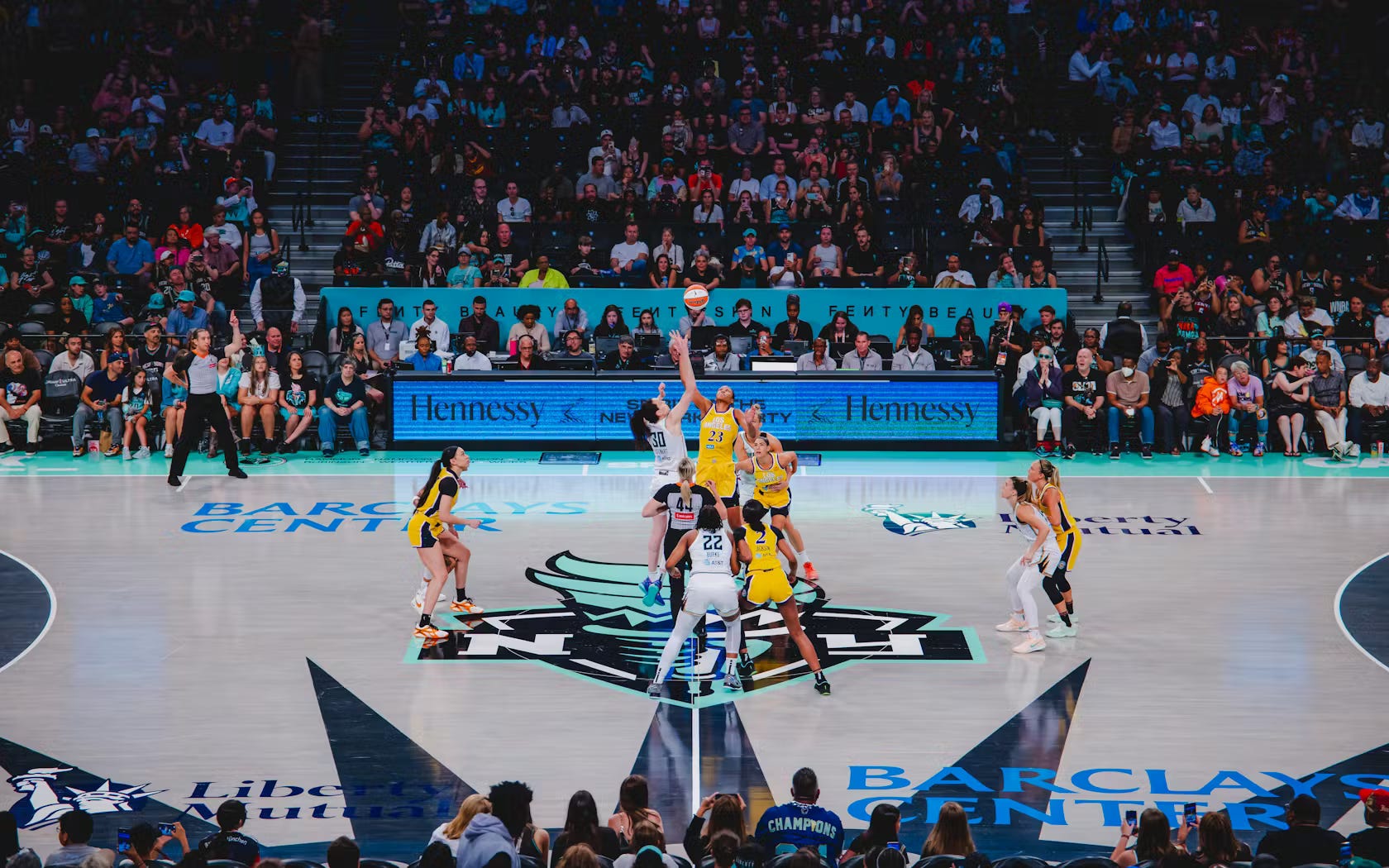
The league will kick off its 30th season with the New York Liberty, which won the first-ever WNBA game in 1997, playing the Connecticut Sun. Liberty star Breanna Stewart and team owner Clara Wu Tsai joined Robin Roberts on Good Morning America to celebrate this milestone and the growth of the league here. Check the full WNBA schedule here and mark your calendar.
3 Episodes On: The WNBA and Women’s Basketball
We have 3 great NBN interviews with scholars who have examined the WNBA in their recent scholarship. In these fascinating interviews, they examine race, gender, and activism within the sport.
Double Crossover: Gender, Media, and Politics in Global Basketball takes readers into the world of women’s basketball to highlight the struggles, triumphs, and contributions of today’s players and those around them. Throughout the book, Courtney M. Cox explores the intersection of race and gender against the backdrop of the WNBA, NCAA, and other leagues within the United States and around the world.
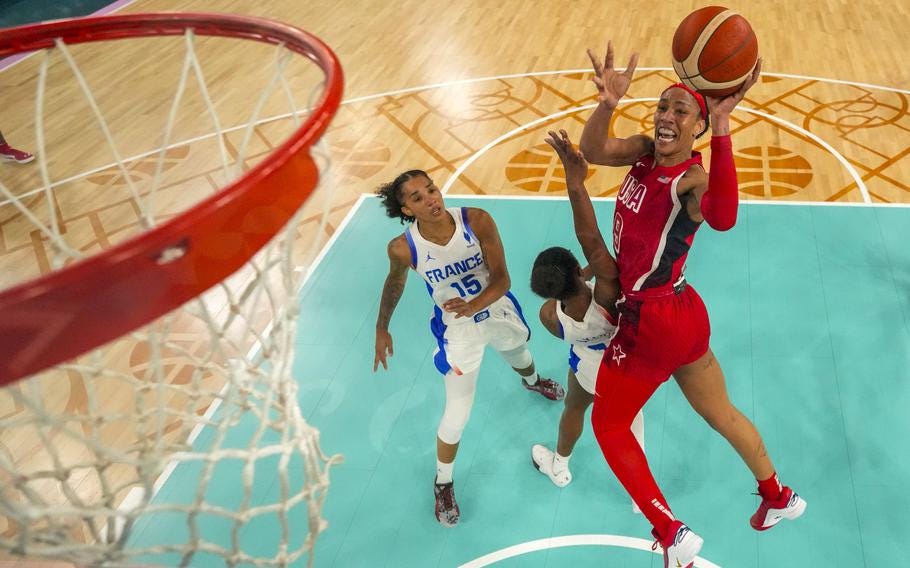
In Basketball Empire: France and the Making of a Global NBA and WNBA, Lindsay Krasnoff examines the rise of basketball in France. She investigates how French basketball developed from a low point in the middle of the 20th century to a global powerhouse contributing players to the NBA and the WNBA almost every year.
A former college athlete herself, Michelle J. Manno spent a full season with a highly competitive NCAA Division I women’s basketball program as one of the team’s managers. She shows that athletes face immense pressure to be more than successful at their sport and to conform to expectations about gender, sexuality, and race.
Subscribe to New Books in Sports to hear more great interviews with scholars of sports!
Grad Student Spotlight: WNBA Data with Maddy Brown
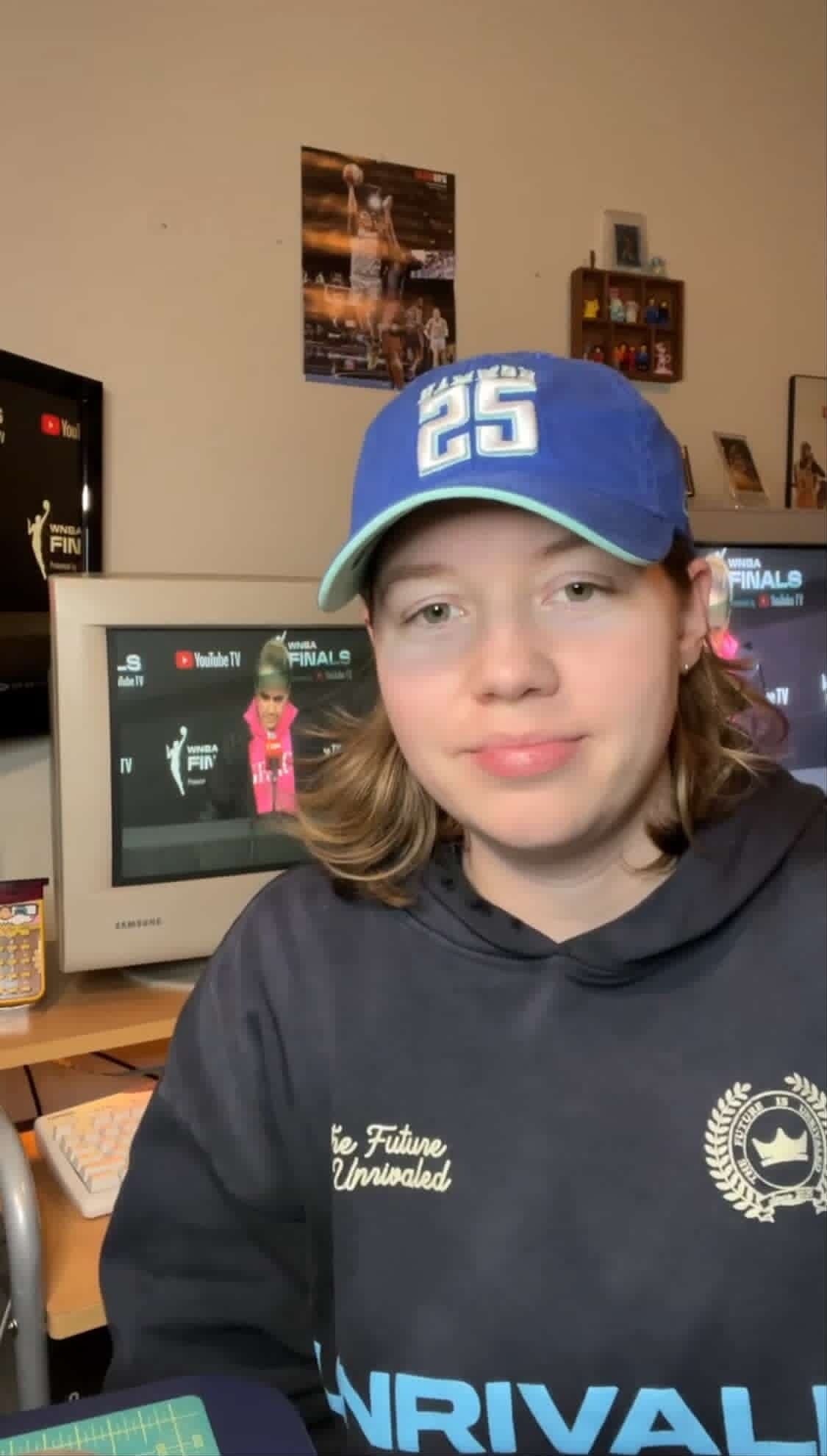
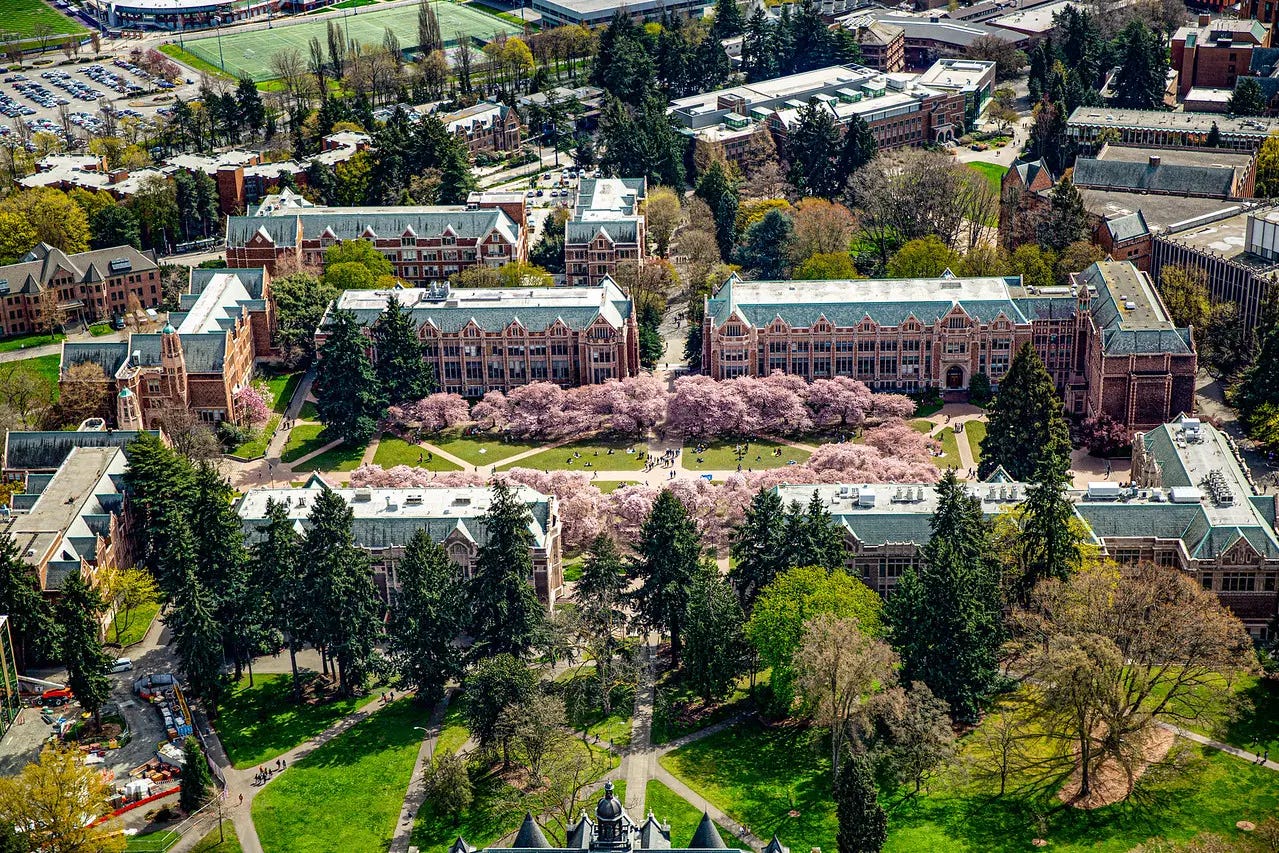
My name is Maddy Brown and I’m a 6th year PhD student in the mathematics department at the University of Washington (UW). My research focus is on probability and stochastic processes. I also completed my undergraduate degree at UW, where I majored in both math and physics. Outside of research, I make videos online (@wnbadata on Instagram and TikTok), where I create data‑driven content about the WNBA and women’s college basketball. I also recently designed and taught a course on communicating mathematics through sports data at UW!
Q: Can you share a bit about your academic interests? What led you to grad school and your research topic?
A: When I started undergrad, I genuinely didn’t know what I wanted to do with my life, and that was still true when I was about to graduate. I liked probability a lot and thought being a professor sounded fun, so a math PhD felt like a reasonable next step. I was lucky enough to get into the PhD program at UW and stay home for grad school (especially since it was 2020).
My PhD research is in activated random walk, a stochastic process connected to questions about self‑organized criticality, wildfires, and avalanches, mainly because that’s what my advisor, Chris Hoffman, works on! Outside of my formal research, I’m really interested in math communication, data visualization, and sports analytics, especially making WNBA and women’s basketball data more accessible for fans who might not think of themselves as “math people.” I’m also lucky that my advisor doesn’t get too mad at me if I spend too much time working on my WNBA stuff instead of activated random walk stuff.
Q: What have you found rewarding about graduate school so far?
A: Teaching! I especially love teaching Math 111, a business algebra class, because so many students come in convinced they’re bad at math, but are trying their best anyway. It’s really fun to help them realize they can actually do it, and to see college through their eyes again when they’re so hyped to be here in their first fall quarter.
I’ve also found it really rewarding (and challenging) to design my own course from scratch, because it confirmed that I want teaching and math communication to be a big part of my future.
Q: Are there any books, papers, or other media that have been influential in your evolution as a scholar?
A: There are a ton of books, articles, and YouTube videos that nudged me toward sports analytics during grad school, but a few really stand out. I basically started my sports‑analytics journey by reading books like Wayne Winston’s Mathletics: How Gamblers, Managers, and Sports Enthusiasts Use Mathematics in Professional Sports and Seth Partnow’s The Midrange Theory: Basketball’s Evolution in the Age of Analytics, then trying to recreate their methods on my own using WNBA data instead of NBA data. Papers like Gilovich, Vallone, and Tversky’s “The Hot Hand in Basketball: On the Misperception of Random Sequences” opened my eyes to the fact that there’s a whole world of academic work that takes sports seriously as a data source, and that some statistical questions or debates don’t have a perfect answer.

Q: How long have you followed the WNBA?
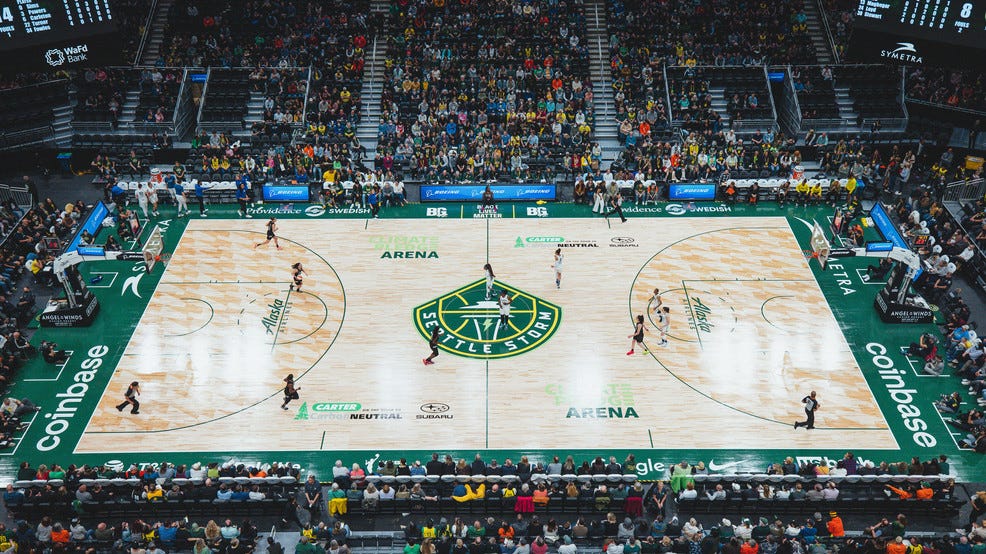
A: Even though I attended some Seattle Storm games as a kid, I didn’t really get into watching the WNBA closely until the beginning of the 2022 season when the Storm’s arena reopened!
Q: When did you create your popular account @wnbadata? And what have you learned about communicating academic information to the public from running this account?
A: I decided to create the TikTok account for @wnbadata near the end of the 2022 WNBA season. At the time I had been creating content on another TikTok account for almost a year, mostly personal vlogs and videos related to the UW campus. But as I got more and more into the WNBA during the 2022 season, I noticed there wasn’t a lot of statistical or analytical WNBA content out there, so I decided to make it myself! I wasn’t too knowledgeable about data science or mathematical communication at the time, so it has been a huge learning experience for sure.
Running @wnbadata has taught me to keep things simple and centered on storytelling, even when the underlying ideas are technical. My biggest takeaway is that you can spend forever polishing a script, and people will still latch onto something you didn’t expect, like a pronunciation or a tiny technical detail, so you have to care about being clear and honest, but also be willing to let go once you’ve done your best. It is a tough balance to distill a research paper’s worth of content into a 90 second TikTok video!

Q: Do you have any advice for other academics who are interested in social media or other public facing work?
A: I don’t think everyone needs to be a full‑time “content creator,” but I do think most academics (or people in general) would benefit from some kind of public‑facing online presence. You don’t have to make videos or share your entire life, but having a place online where your work and perspective show up in your own words makes it easier for people to see you as a real person (not AI) and to trust your expertise.
I’ve been surprised by how many people with actual WNBA jobs have connected with me just from posting on Instagram and how often sharing small wins and updates on LinkedIn has led to conversations about opportunities and connection requests from important people in the sports analytics industry. Even if nothing “big” comes from posting, it’s good practice talking about yourself and your work clearly, and that’s a skill you need for everything from grant proposals to job interviews.
Q: Are there any New Books Network interviews that you have listened to and really enjoyed?
A: I have listened to a few! My favorites are:
Let Us Play: Winning the Battle for Gender Diverse Athletes
How are Sports Teams Using Data Science?
Disneyland and the Rise of Automation: How Technology Created the Happiest Place on Earth
Q: Any predictions for the 2026 season?
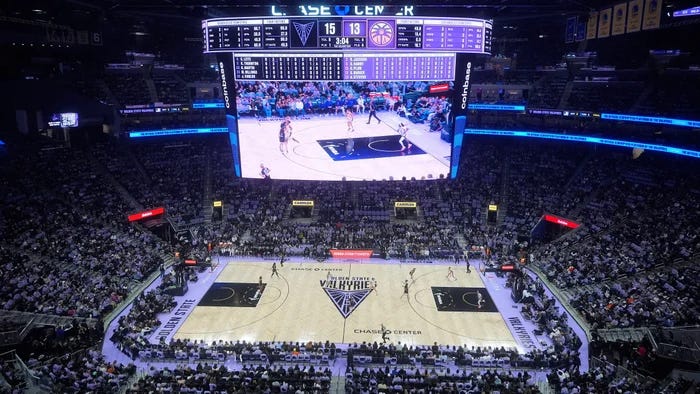
A: With the new CBA and the trajectory of women’s basketball, I think it’s going to be a huge season publicity-wise. On the court, I honestly think the Golden State Valkyries, who are in their second season, could really go far in the playoffs. (My favorite player Gabby Williams is there now, so I have to be a fan)
Q: Anything else that you want to share with our readers?
A: I’m about to finally graduate after many, many years at UW, and I’m excited to keep finding ways to combine math, teaching, and women’s basketball in whatever comes next. If you’re curious about the WNBA or sports analytics, you’re always welcome to come say hi on @wnbadata!
The WNBA and Equality
The WNBA Player’s Association came to an agreement with the WNBA on a new Collective Bargaining Agreement. This historic deal secured significantly higher salaries for players, revenue sharing between players and the league, and a salary cap increase from $1.5 million USD to $7 million USD. Nobel prize-winning economist Claudia Goldin made headlines as an advisor in these negotiations. Listen to her 2021 NBN interview about her book Career and Family: Women’s Century-Long Journey Toward Equity to learn more about her research on women’s fight to close the gender wage gap and efforts to achieve equity between couples at home.
To learn more about women in the workforce, check out our interview with Naomi Cahn about her book. Fair Shake: Women and the Fight to Build a Just Economy. She provides a comprehensive look at the state of women in the workforce: why women’s progress has stalled, how our economy fosters unproductive competition, and how we can fix the systems that holds women back.
Beyond the fight for their own CBA, players in the WNBA are notable their activism on a wide variety of issues including gender equality, Black Lives Matter, voting rights, and LGBTQ+ advocacy.
David Steele puts this activism in context in his book, It Was Always a Choice: Picking up the Baton of Athlete Activism, which explores the beginnings of black athlete activism in the 20th century. He points out the ways that athlete activists have succeeded and failed to change the broader culture and suggests that the WNBA might be the most progressive league.
Learn more about the fight for girls and women’s athletics in our interview with Sheri Brenden about her book Break Point: Two Minnesota Athletes and the Road to Title IX. She examines how two teenage girls in Minnesota jump-started a revolution in high school athletics by taking on the unequal system of high school athletics and set a legal precedent for schools nationwide before the passage of Title IX.
Where in the World: Portland and Toronto
The 2026 WNBA season is special because there will be 2 new expansion teams: The Portland Fire based in Oregon and the Toronto Tempo in Ontario, Canada. The Fire was previously a WNBA team from 2000-2002, and will rejoin the league this season. Fred Armisen and Carrie Brownstein of Portlandia fame even starred in a commercial celebrating the revival of the team. Meanwhile the Toronto Tempo is a brand-new addition to the WNBA. Tune in to a few NBN interviews about these great cities.


Although Portland, Oregon, is sometimes called “America’s Whitest city,” Black residents who grew up there made it their own. The neighborhoods of Northeast Portland, also called “Albina,” were a haven for and a hub of Black community life. But between 1990 and 2010, Albina changed dramatically—it became majority white. In We Belong Here: Gentrification, White Spacemaking, and a Black Sense of Place, sociologist Shani Adia Evans offers an intimate look at gentrification from the inside, documenting the reactions of Albina residents as the racial demographics of their neighborhood shifted.
The coastal areas of Oregon, Washington, and Vancouver Island are known as the “Graveyard of the Pacific” due to the unforgiving coastlines, powerful currents, unpredictable weather, and dangerous geographic features along the Northwest Coast of North America. In Wrecked: Unsettling Histories from the Graveyard of the Pacific, Coll Thrush includes stories of many vessels that met their fate along the rugged coast and the meanings made of these events by both Indigenous and settler survivors and observers.
From 1968 to 1975 one high-rise was the heart of Canada’s counterculture. Rochdale College in Toronto was jammed full with leftist organizers, hippies, draft dodgers, students, artists, and others just looking for a good time. Today, like much of the counterculture, it’s often remembered for its problems: its ideological contradictions, drug-addled hedonism, bourgeois individualism, sexism, suicide, and more. However, is that the whole story? Listen to The Hippie High-Rise: Rochdale College, Toronto’s Communal Living High Rise Free Education Experiment
You've probably heard of Telegraph Avenue (Berkeley), Harvard Square, The Village, and Haight-Ashbury. That's where "the scene" was in the late 1960s, right? But have you heard of Yorkville? Stuart Henderson‘s social history Making the Scene: Yorkville and Hip Toronto in the 1960s traces the rise and fall of the Yorkville district of Toronto as a kind of “counter-cultural” capital.
You might find interesting how the women basketball looks from 3×3 perspective and why the gender inequalities are almost non existing there - that’s one of the main topics in our latest post.