
The World's Greatest Museums
Some musings on Museum Studies and more!

In this week’s newsletter
3 Episodes On: Museums
Inside Jobs: NBN Guests
New Books in Taiwan Studies
Meet a Host: Krzysztof (Chris) Odyniec
3 Episodes On: Museums
Earlier this month, The Grand Egyptian Museum opened in Giza. This billion-dollar project showcases the marvels of Ancient Egyptian history and archaeology. Located right next to the Giza Pyramids, The Grand Egyptian Museum took roughly the same amount of time to construct as it likely took to build one pyramid: 20-30 years.
To celebrate these important spaces of cultural heritage, dive into a a few episodes about museums. We have great interviews about the restitution process to recover plundered items, the work of museums, and their future.
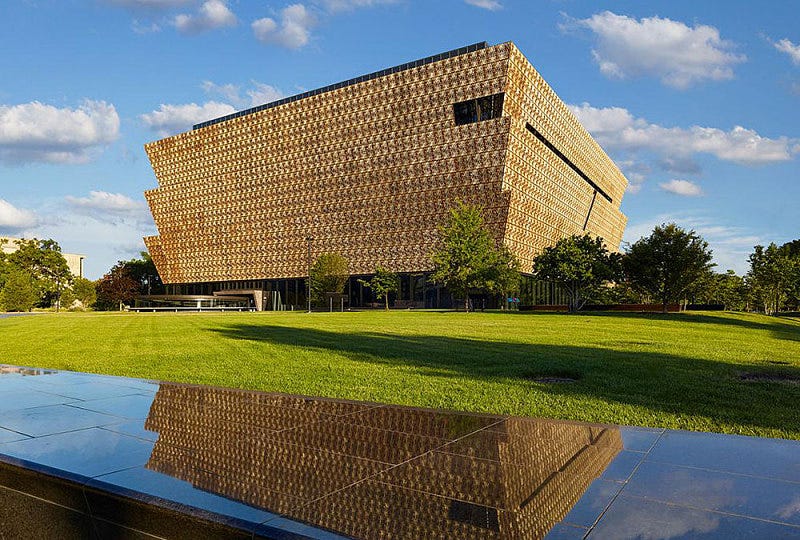
Museum Worthy: Nazi Art Plunder in Postwar Western Europe by Dr. Elizabeth Campbell deftly examines the appropriation of Nazi art plunder by postwar governments and highlights the increasingly successful postwar art recovery and restitution process.
How can we, as individuals, radically expand the work of museums to live up to this potential? How can we more fiercely recognize the meaningful work that museums are doing to enact change around the relevant issues in our communities? How can we work together to build a stronger culture of equity and care within museums? Museums as Agents of Change: A Guide to Becoming a Changemaker is about how people can compel museums take action toward positive social change and bring people together.
What is the future for the museum? In The Museum as a Space of Social Care (Routledge, 2020), Nuala Morse, a Lecturer in Museum Studies at the University of Leicester, rethinks the museum by foregrounding the importance of care.

Tune in to New Books in Museum Studies to learn more about these incredible learning spaces, the work of curators, and much more!
Inside Jobs: NBN Guests
In this edition of Inside Jobs we’ve put together NBN interviews with curators, an archivist, and a novelist. Learn about their individual paths, responsibilities, and what motivates them in their careers.
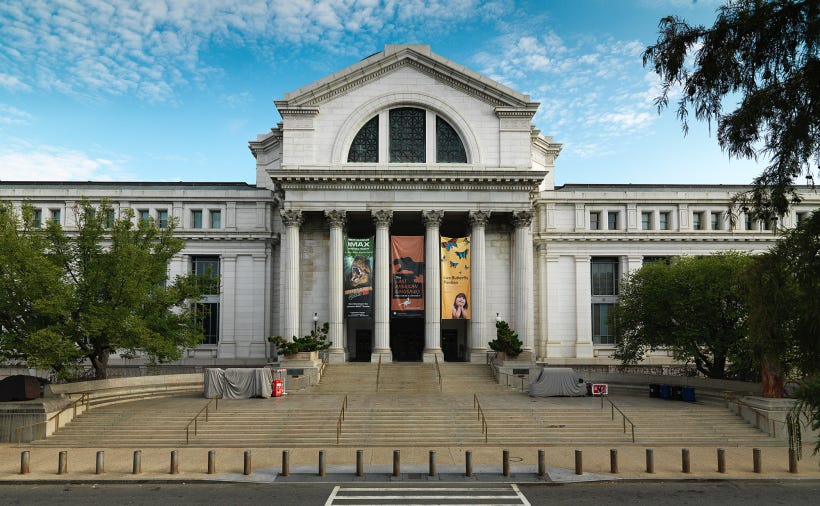
Listen to this wonderful conversation with curators from The Smithsonian! Margaret A. Weitekamp and Michelle Anne Delaney discuss their career paths and work to create a new women’s history museum. They also discuss their book Smithsonian American Women: Remarkable Objects and Stories of Strength, Ingenuity, and Vision from the National Collection. This book offers a panoramic look at women’s history in the United States through the lens of ordinary objects from, by, and for extraordinary women.
Listen to our conversation with Dorothy Berry, Houghton Library’s Digital Collections Program Manager. She discusses why she became an archivist, what digital archivists do, and about the great project she created at Houghton: Slavery, Abolition, Emancipation, and Freedom: Primary Sources from Houghton Library.
Tune in to a career chat with New York Times and USA Today bestselling author Douglas Richards as he shares about his path from working in biotech to becoming a writer.
New Books in Taiwan Studies

We are excited to announce the launch of New Books in Taiwan Studies! Here you will find fascinating interviews with scholars who have written about the history, culture, and politics of Taiwan. Get started with our short playlist, and subscribe to the channel to hear all of our new interviews about Taiwan.
In Good Wife, Wise Mother: Educating Han Taiwanese Girls Under Japanese Rule, female education and citizenship serve as a lens through which Fang Yu Hu examines Taiwan’s uniqueness as a colonial crossroads between Chinese and Japanese ideas and practices.
Chris Horton weaves together figures and events from across Taiwan’s present and history in Ghost Nation: The Story of Taiwan and Its Struggle for Survival. He writes an approachable narrative about how Taiwan came to be the vibrant island nation it is today and the challenges that it faces amidst an increasingly assertive China.
Catherine Lila Chou and Mark Harrison’s book Revolutionary Taiwan: Making Nationhood in a Changing World Order argues that popular tropes dangerously oversimplify Taiwan’s national narrative, especially after its democratization in the late 1980s/early 1990s.
How do we become moral persons? What about children’s active learning in contrast to parenting? What can children teach us about knowledge-making more broadly? Answer these questions by exploring the groundbreaking ethnographic fieldwork conducted by anthropologists Arthur and Margery Wolf in a martial law era Taiwanese village (1958-60), marking the first-ever study of ethnic Han children. In “Unruly” Children: Historical Fieldnotes and Learning Morality in a Taiwan Village, Jing Xu skillfully reinterprets the Wolf’s extensive field notes, employing a unique blend of humanistic interpretation, natural language processing, and machine-learning techniques.

Subscribe to New Books in Taiwan Studies!
Meet a Host: Krzysztof (Chris) Odyniec
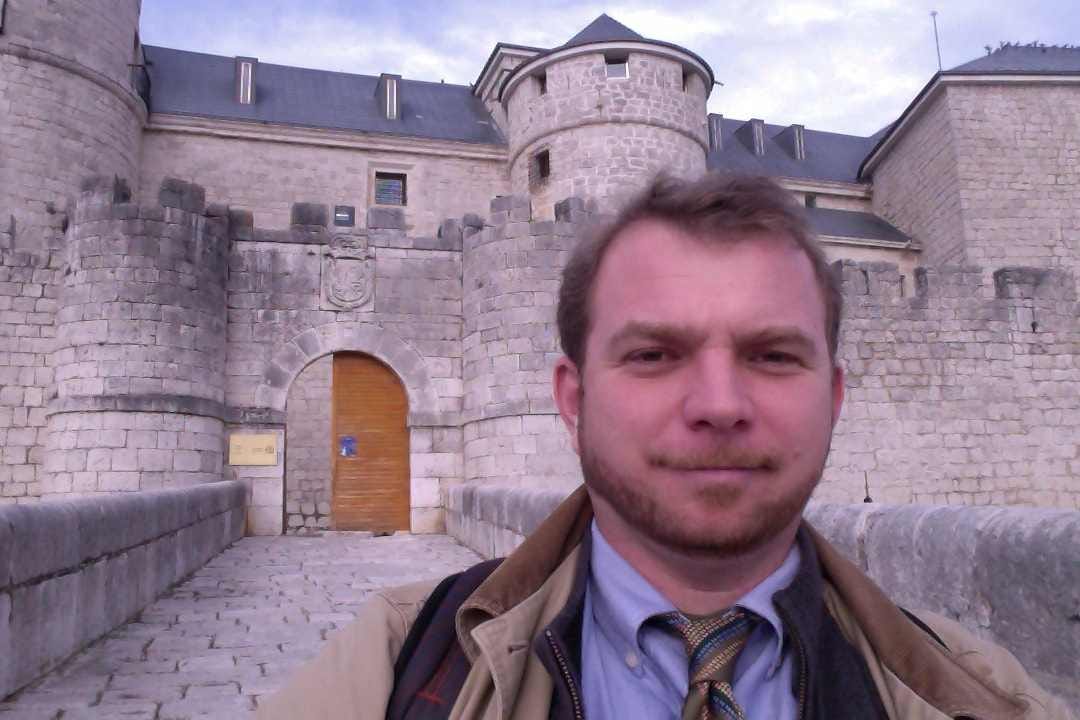
Krzysztof (Chris) Odyniec was born in Poland and emigrated to the United States as a child. He studied history at the University of California at Berkeley, both Medieval (BA, 2001) and Early Modern (PhD, 2017) and Teaching History at the Harvard Graduate School of Education (EdM, 2005). His dissertation was about diplomacy and travel in the sixteenth century and followed the career of Johannes Dantiscus, the first Polish-Lithuanian resident ambassador at the Habsburg court in Spain. It is now a forthcoming book, to be published by Brepols in 2026, as part of a very exciting East Central Europe series, Before Modern Diplomacy: Following Johannes Dansticus across Sixteenth-Century Europe.
He teaches social studies (World History, Political Science, Economics, AP Government, AP Psychology, and Spanish) at John Swett High School in Crockett, California. He has been a regular host of New Books in History, and an occasional host on the New Books in Education channel. And he is the creator and host of the Almost Good Catholics podcast, also part of the New Books Network, which is discusses theology and apologetics, history and culture, and whatever interesting topics come up.
Krzysztof lives with his wife and four children (and a black lab named Millie) in California.
Q: How did you first hear about the New Books Network?
A: Wow! It was more than eight years ago—I was newly-minted PhD and a visiting scholar at UC Berkeley—when I saw Marshall’s email inviting us to practice our history and speaking skills as interviewers on the NBN. It immediately struck me as a good opportunity. In addition to my teaching, I had been finding ways to be a public historian, giving lectures at a church and at a retirement community here in Berkeley. And, now, here was a way to talk to thousands of people around the world about history!
Q: What made you want to be a host for the NBN, and what do you enjoy most about it?
A: My answer is two-fold. First, I always enjoyed those history reading seminars where a dozen graduate students read one book together in week and then talk about it for an hour or two. It confines the discussion to one text that everyone knows and allows us to make connections in dialogue. Often, as I was responding to another student, I found I might have a sudden insight that was only possible from that exchange (as iron sharpens iron, Proverbs 27:17). When I taught my graduate seminar on the crusades, I organized it the same way. So, now, the NBN allowed me to have this same experience, except that I was speaking with the author of the book, someone who had spent not weeks but years thinking about the topic.
Second, I think many of us have had the experience of going to a conference. You get on a plane, you stay in a hotel, you wear a jacket and tie, it takes three or four days and costs hundreds of dollars. But, then you might give your paper to an audience of a dozen people, maybe a half-dozen, some of whom are compelled to listen because they are just waiting to give their talks. On an NBN podcast, you just take an hour of your time at your home or your office, and you end up addressing an audience of hundreds, often thousands, sometimes many thousands, all of whom are genuinely interested in the topic. It’s a miracle of the digital age, a new Republic of Letters.
Q: What episode has been your favorite to record?
A: A couple of years ago I interviewed the late Joe Lieberman about his book on keeping the Sabbath; he was a big political figure in my college days as Senator from Connecticut, candidate for Vice President with Al Gore, and later as a candidate for the presidency himself. I had always admired him for his principles and political independence, and it was a delight to talk with him on a topic important to us both; I found him to be very gracious and fun to talk to. I’ve talked to other famous people, intellectual heroes of mine, but Lieberman was a name everyone knew (not just historians or psychologists) and I enjoyed sharing this exchange with family and friends.
Q: Do you have any interviews coming up that our readers should look out for?
A: In a couple of weeks, I have an interview with the Catholic thinker and writer Father Ronald Rolheiser about his new book, Insane for the Light: A Spirituality for Our Wisdom Years, which is about how we should live as we get older and approach death. It’s an important topic for me because recently I have been going to more funerals than weddings and saying good-bye to the parents of my friends and my beloved professors, and I have been thinking about how we should think about our lives as the qualities we used to define us start to wane and fall away. I know that’s true for academics and professionals, but I’m sure it’s even more true for the (formerly) strong and beautiful. When that starts to go, what’s left? We understand the world less and less, and the younger generations have a vanishing interest in the things we thought were important. I am sure this has been the universal story not only since Sunset Boulevard and King Lear but since Jacob and Esau tricked old Isaac. I really, really want to talk it over with the wise and good Father Ron!
Q: If you could record an NBN interview with anyone, who would it be?
A: Pope Leo of course! I haven’t presumed to ask for that one yet. Every year I email David Brooks and Ross Douthat from the New York Times but neither has ever replied. Others do reply—Jeb Bush was like this—immediately and politely, saying they haven’t time. I appreciate their gracious refusals.
Q: What advice would you give to anyone interested in becoming a host for NBN?
A: Join us! It’s really fun and rewarding in many ways.
Q: What do you have planned for Almost Good Catholics?
A: Okay, I’ll tell you. I think I’d like a cohost. Some of my very favorite podcasts have a regular duo whom we listen to every week. The banter, the back-and-forth, is illuminating, and we learn more about them as they dialogue and spar. Again: iron sharpens iron. My favorite examples are Tom Holland and Dominic Sandbrook on The Rest is History, JD Flynn and Ed Condon on The Pillar podcast, Tamler Sommers and Dave Pizarro on Very Bad Wizards. There are others like this who come to mind.
Interested? Email me at k.odyniec@berkeley.edu.