Meet Us at the On BS Book Talk
Get 70% off on Princeton UP books
In this week’s newsletter
Princeton UP Sale and On BS
Alternative Angles: Memory
Peter Rutland on George Orwell
Meet the Press: Brandeis University Press
Princeton UP Sale and On BS Book Talk
Princeton University Press is having a special sale! Visit their website to get 70% off on over 1,000 books. The sale ends soon, so make sure you take advantage before it’s too late.
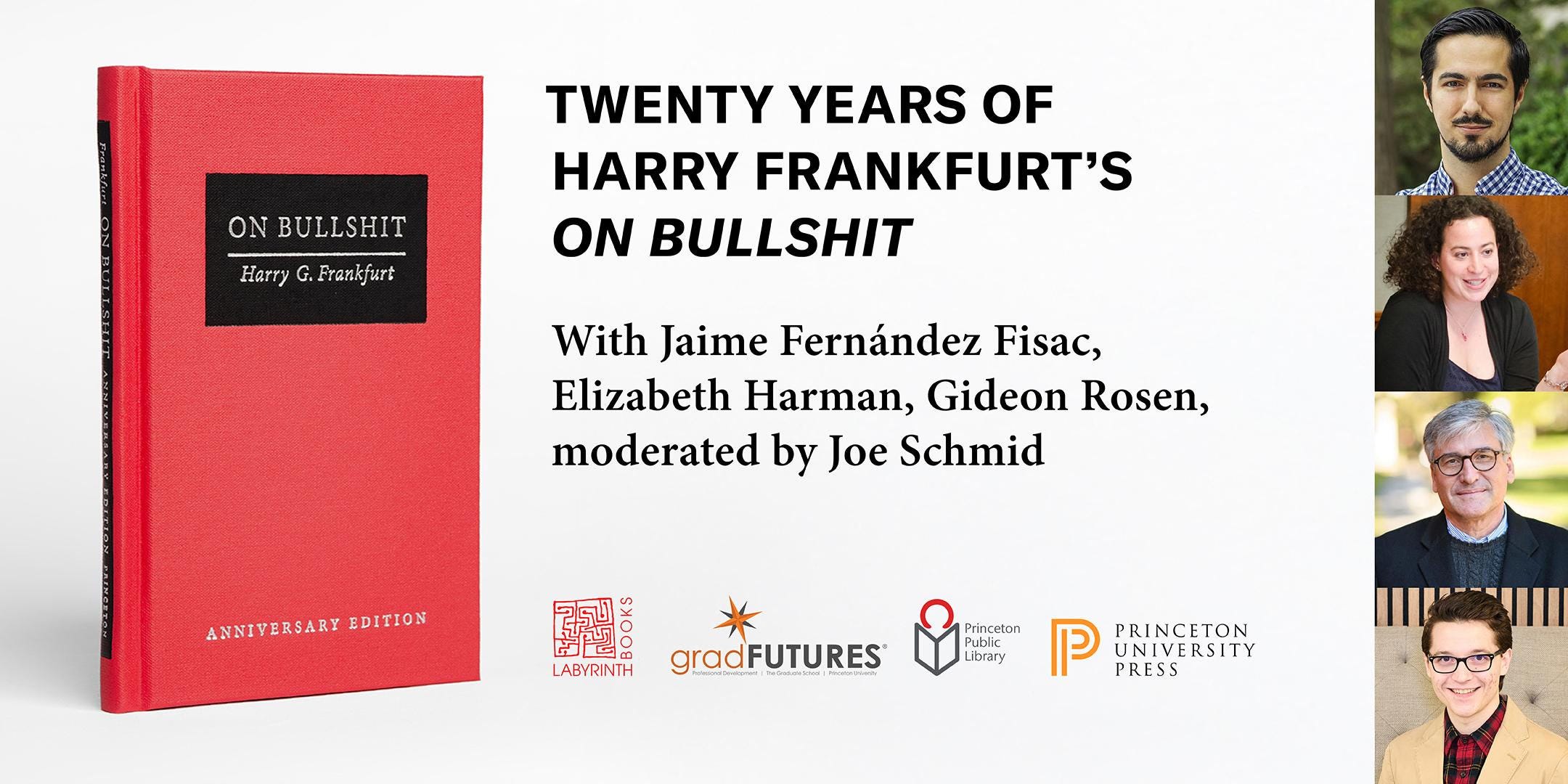
On Thursday, October 30th, from 5-7pm, Princeton UP will host a discussion with panelists Elizabeth Harman, Gideon Rosen, Jaime Fernández Fisac, and moderator Joe Schmid to celebrate the 20th anniversary of Harry Frankfurt’s seminal book, On Bullshit. The event will be in-person at Princeton and live-streamed. If you can attend, come say hi to editor Caleb Zakarin.
To stay up-to-date on new Princeton UP books, subscribe to their Substack!

Alternative Angles: Memory
In Memory Politics After Mass Violence: Attributing Roles in the Memoryscape, political scientist Timothy Williams draws on fieldwork in post-violence Cambodia, Rwanda and Indonesia to explore how political actors draw on memories of violent pasts to generate political power and legitimacy in the present.
Anthropologist Terese Gagnon builds on the notion that seeds, plants and food can act as repositories of memory and identity, countering the alienation caused by displacement. She asks: How does this manifest in the case of Karen refugee communities across the world holding on to a connection to their homeland in Myanmar? And how is the Karen people’s struggle for political sovereignty connected to global biodiversity and climate change issues?
If you’re interested in a scientific perspective on memory and the brain, you’ll love hearing neurobiologist Christian Hansel discuss his book, Memory Makes the Brain: The Biological Machinery That Uses Experiences To Shape Individual Brains. He offers a unique perspective on brain adaptation and plasticity throughout a lifetime, weaving in personal accounts and memories.
Peter Rutland on George Orwell
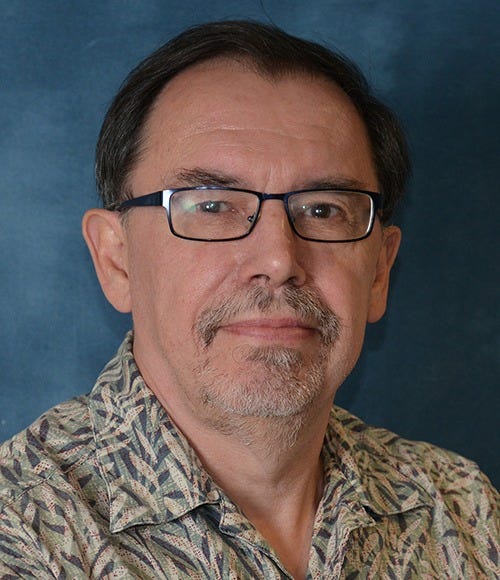
Peter Rutland is Professor of Government at Wesleyan University. He is an expert in contemporary Russian nationalism, politics and the Russian economy, and has studied Russia and the former Soviet Union for over three decades. Peter is the author of two books, The Politics of Economic Stagnation in the Soviet Union and The Myth of the Plan: Lessons of Soviet Planning Experience, and editor of four others.
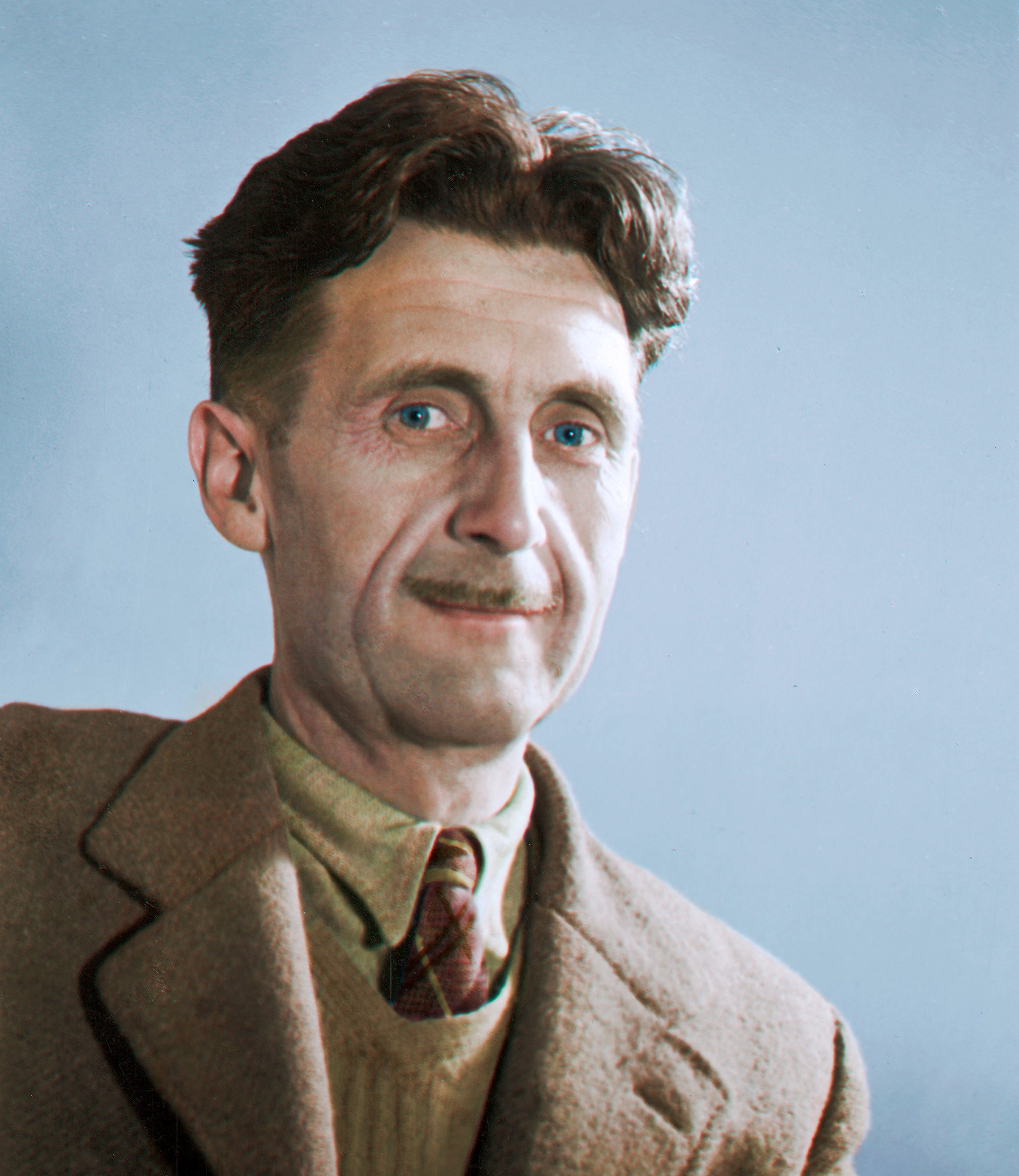
Like many people, I first encountered George Orwell as a teenager when my teacher assigned the novella, Animal Farm. This short fable was my introduction to the destructive force of totalitarianism and the power of literature to describe social realities more vividly than mere facts. Orwell is “arguably the most politically influential English writer of the twentieth century” according to political scientist Peter Rutland. In recent years, Orwell’s life and legacy have been scrutinized and celebrated given the resurgence of authoritarian politics. His works, like 1984, regularly re-appear on bestseller lists, an unusual feat for an author who died 75 years ago. Orwell’s contributions to the English language, with words like “doublethink,” “newspeak,” “big brother,” and the catch-all adjective “Orwellian,” are surpassed only by the likes of William Shakespeare.
Following a wave of recent books on Orwell, including David J. Taylor’s Orwell: The New Life, Bernard Crick’s George Orwell: A Life, Anna Funder’s Wifedom: Mrs. Orwell’s Invisible Life, Laura Beers’ Orwell’s Ghosts: Wisdom and Warnings for the Twenty-First Century, and Masha Karp’s George Orwell and Russia, Peter Rutland published an analysis of the state of Orwell studies for the Slavic Review. Below, you’ll find my conversation with Peter about Orwell and his contemporary relevance.
-Caleb Zakarin
Q: George Orwell was born in British India in 1903. How did his experience of the British Empire shape his early political views?
A: His father was a minor official in British India, but the young George (whose real name was Eric Blair) went to school in England: a miserable experience by his own account. He did not go to college but went to work for the imperial police. His grim experiences in Burma were related in his first novel collection, Burmese Days (1934). He became a resolute critic of the British empire.
Q: How did his study of Stalinism and his experience in Spain shape his thoughts about socialism?
A: Witnessing the poverty and inequality of Britain and France during the 1930s, Orwell became a convinced socialist, a position he maintained throughout his life. However, after he volunteered to fight for the Republican Government in Spain, he witnessed the ruthless persecution of dissent by the Soviet backed police in the Spanish government, and he developed a deep mistrust of Stalinism. He never visited Russia himself but relied on accounts by journalists and defectors to understand the dynamics of life in a totalitarian regime.
Q: What influence did Yevgeny Zamyatin’s We have on 1984?
A: Orwell did read Zamyatin’s We (originally published in 1924) as he was working on 1984, though he claimed that the core ideas of the book were already in place before he read Zamyatin. Whatever the relationship between the two, I think they are both powerful works.
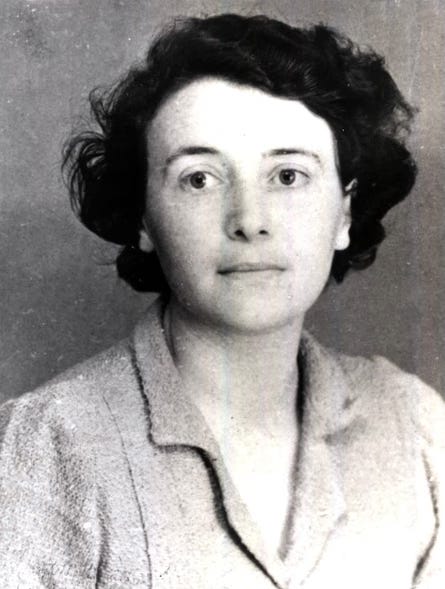
Q: Orwell’s wife, Eileen Blair, was a major influence on his work, though he largely downplayed her role as a writer and editor for some of the most important works attributed to him. How did Orwell diminish Blair, and what were her most significant contributions?
A: Anna Funder argues in her book Wifedom: Mrs. Orwell’s Invisible Life that Orwell’s first wife, Eileen O’Shaughnessy, was of critical importance as a source of intellectual, social and financial support for Orwell. Eileen came from a rich family, graduated from Oxford, and helped introduce Orwell to London literary circles. She did all the arduous housework, including raising farm animals, as Orwell sat around smoking and writing in their rural retreat. Eileen, who died in 1945, typed up and edited all Orwell’s manuscripts. She accompanied him to Spain and effectively saved his life by warning him that the police were looking for him, although she is not mentioned at all in Orwell’s memoir about his time in Spain, Homage to Catalonia. Many readers have argued that Orwell’s contemptuous treatment of women shows up in his novels.
Q: What do we know about the origins of Animal Farm, as far as how Orwell came up with the narrative?
A: This is a controversial issue. The fable structure of Animal Farm is very different from all of Orwell’s other work. At Oxford, Eileen studied fairy tales under John Tolkien, author of Lord of the Rings. Funder argues it is very possible that Eileen came up with the idea of Animal Farm. Polish author Władysław Reymont wrote a book Revolt of the Animals in 1922, a critique of the Bolshevik revolution through the tale of an animal uprising. It is not clear whether or not Orwell was familiar with the work.
Q: Orwell’s books have influenced both the Left (for his commitments to democratic socialism) and the Right (for his searing critiques of Soviet communism). By the end of his life, what were Orwell’s political views?
A: He remained a democratic socialist throughout his life, and he was alarmed that Animal Farm and 1984 were taken by some as criticism of the post-war Labour government in Britain. In the 1950s, the Right picked up Orwell to convey the horrors of Soviet communism: the CIA funded movie versions of Animal Farm and 1984. In 1996 it was revealed that Orwell had submitted in 1949 to the Foreign Office a list of communist sympathizers who he thought should not be used for propaganda work. So Orwell has become even less attractive for socialists.
Q: How relevant are Orwell’s ideas for analyzing Putin’s Russia?
A: This is a tricky question. On one hand, Putin’s Russia has shifted from mild authoritarianism towards totalitarianism in recent years— though it is less repressive than the dystopian world of 1984. On the other hand, Orwell never addressed the question of Russian imperialism. He thought totalitarianism was a universal phenomenon, a product of modern technology that could arise anywhere: Italy, Germany, Russia, or even Britain.
Putin’s motivation in invading Ukraine is driven by traditional Russian imperialism and has nothing to do with Communist ideology.
Q: Why are his books and essays, especially 1984 and Animal Farm, still widely read today when many other classic works by esteemed authors have since been forgotten?
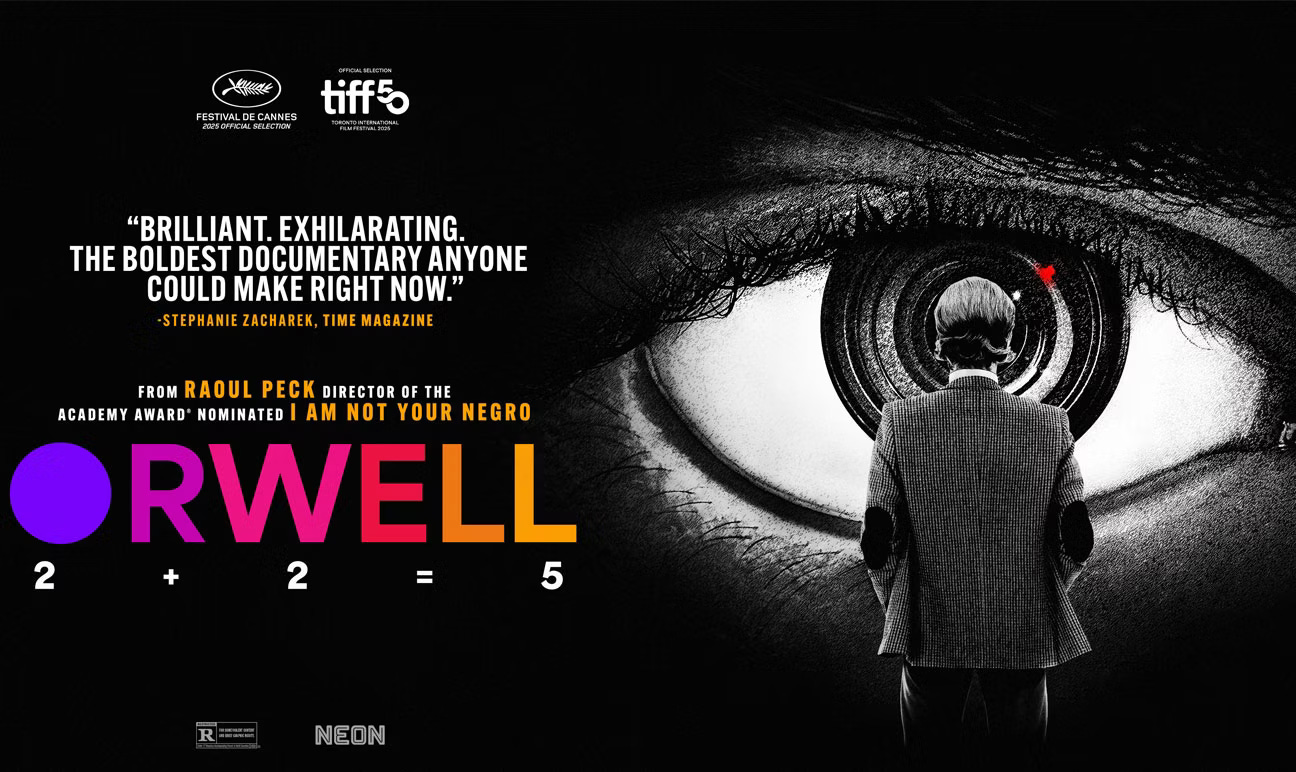
A: Yes, Orwell still seems to be widely read, both in America and abroad. Just last week I asked my first year students: 90% of them had read 1984 in high school, though only a few had also read Animal Farm. There is a new film documentary about Orwell to be released by Raoul Peck. He is a serious political thinker, so I’m interested to see what he says about Orwell.
Q: Besides 1984 and Animal Farm, which of Orwell’s works should everyone read?
A: Homage to Catalonia is a gripping account of when political idealism meets reality, though, having read Funder’s Wifedom, I now realize we are not getting the whole story.
Tune in to New Books in Literary Studies to hear scholars examine the lives and impact of authors like George Orwell!
Meet the Press: Brandeis UP
Brandeis University Press (BUP) was founded in 1971 as an imprint of University Press of England (UPNE) and primarily published scholarly books in Jewish Studies. In 2019, BUP became a stand alone press and expanded to publish in a wider subject area including the humanities and social sciences. The Press also expanded into trade book publishing in subjects including environmental nonfiction, history, biography, architecture, art, and gift books. In addition, BUP acquired and continues to distribute the UPNE and Dartmouth College Press backlists.
The Mission Statement of Brandeis University Press is:
At Brandeis University Press, we are dedicated to publishing rigorously evaluated work that enriches conversations in the humanities, arts, social sciences, and natural sciences. We also strive to uphold the principles of social justice, wide cultural representation, and intellectual integrity in our practices and in the books we bring to our readers.
We support Brandeis University’s mission to uphold the highest standards of academic excellence, inclusivity, and diversity as we promote education, research, and civic engagement.
Academic scholarship is a cornerstone of BUP. The Press recently released a C.L.R. James’ Mariners, Renegades & Castaways with a new foreword by Professor Chanda Prescod-Weinstein—theoretical physicist, advocate for a just science, and James’ granddaughter—and an introduction by Professor Donald E. Pease. This insightful book anticipated many of the concerns and ideas that have shaped the contemporary fields of American and Postcolonial Studies.
In Lessons in Drag, Kareem Khubchandani is in dialogue with his drag persona, LaWhore Vagistan, in this compelling examination of drag as a practice and a celebration of its transformative potential.
Sven-Erik Rose analyzes authors’ explorations of the ghetto in Making and Unmaking Literature in the Warsaw, Lodz, and Vilna Ghettos. He explores how ghetto authors brilliantly meditated on the grotesque incongruities between established literary models and the extreme conditions of ghetto existence.

Other great nonfiction reads include Weimar Under the Palms, which details the history of the Pacific Palisades neighborhood of Los Angeles as a refuge for German and Austrian filmmakers. The Jazz Barn tells the history of the Berkshire Music Barn which hosted musical legends like Duke Ellington, Dave Brubeck and Billie Holiday, as well as jazz roundtables. On James Baldwin is acclaimed Irish novelist Colm Tóibín’s tribute to the incredible James Baldwin.
Interested in the arts? BUP has published incredible books about the arts including poetry, carvings, and architecture. Check out The Prelude: William Wordsworth, a fully illustrated and annotated edition of his masterful autobiographical work that is widely considered the poem at the heart of the Romantic movement. The beautifully illustrated book Portraits in a Nutshell showcases intricately carved snuff boxes and bottles sculpted from the Brazilian coquilla nut between the 17th and mid-19th centuries. Jewish Country Houses is illustrated with beautiful historical images highlighting country houses that were owned, built, or renewed by Jews and tell the complex story of prejudice and integration.
Listen to a few great interviews with authors who have published with Brandeis University Press!
Written by Bruce Davis, the former executive director of the Academy, The Academy and the Award: The Coming of Age of Oscar and the Academy of Motion Picture Arts and Sciences is the first behind-the-scenes history of the organization behind the Academy Awards.
Blanche Bendahan’s nuanced and moving novel Mazaltob is a masterly exploration of the language, religion, and quotidian customs constraining North African Jewish women on the cusp of emancipation and decolonization.
In Beginning to End the Climate Crisis: A History of Our Future Luisa Neubauer, the best-known German climate activist, and the sociologist Alexander Repenning create the history of our future.
Annette Kehnel joins Jana Byars to talk about The Green Ages: Medieval Innovations in Sustainability
In Climate Ghosts: Migratory Species in the Anthropocene, Nancy Langston explores three “ghost species” in the Great Lakes watershed—woodland caribou, common loons, and lake sturgeon.
Sign up for the Brandeis UP newsletter to stay up-to-date and receive a 20% discount off your first purchase!
Connect with fellow readers at Brandeis UP’s Fall events! See Sven-Erik Rose, Thomas Blubacher, John Gennari, and Kareem Khubchandani at events across the country. Other great events include Portraits in a Nutshell at the New Bedford Whaling Museum, The Jazz Barn at Ford Hall Forum, and Weimer Under the Palms: Panel Discussion at Brandeis University. Check out the full event calendar on their website!