

In this week’s newsletter:
New Books Network host Miranda Melcher recently recorded her 1,000th interview! This week’s newsletter is a celebration of this remarkable achievement. She kindly sat down with us for a written and recorded interview, shared her Fast 5 picks, and created a playlist of some highlights from her 1,000 interviews.
Hosting Q&A
Fast Five
Miranda’s Playlist
Hosting Q&A
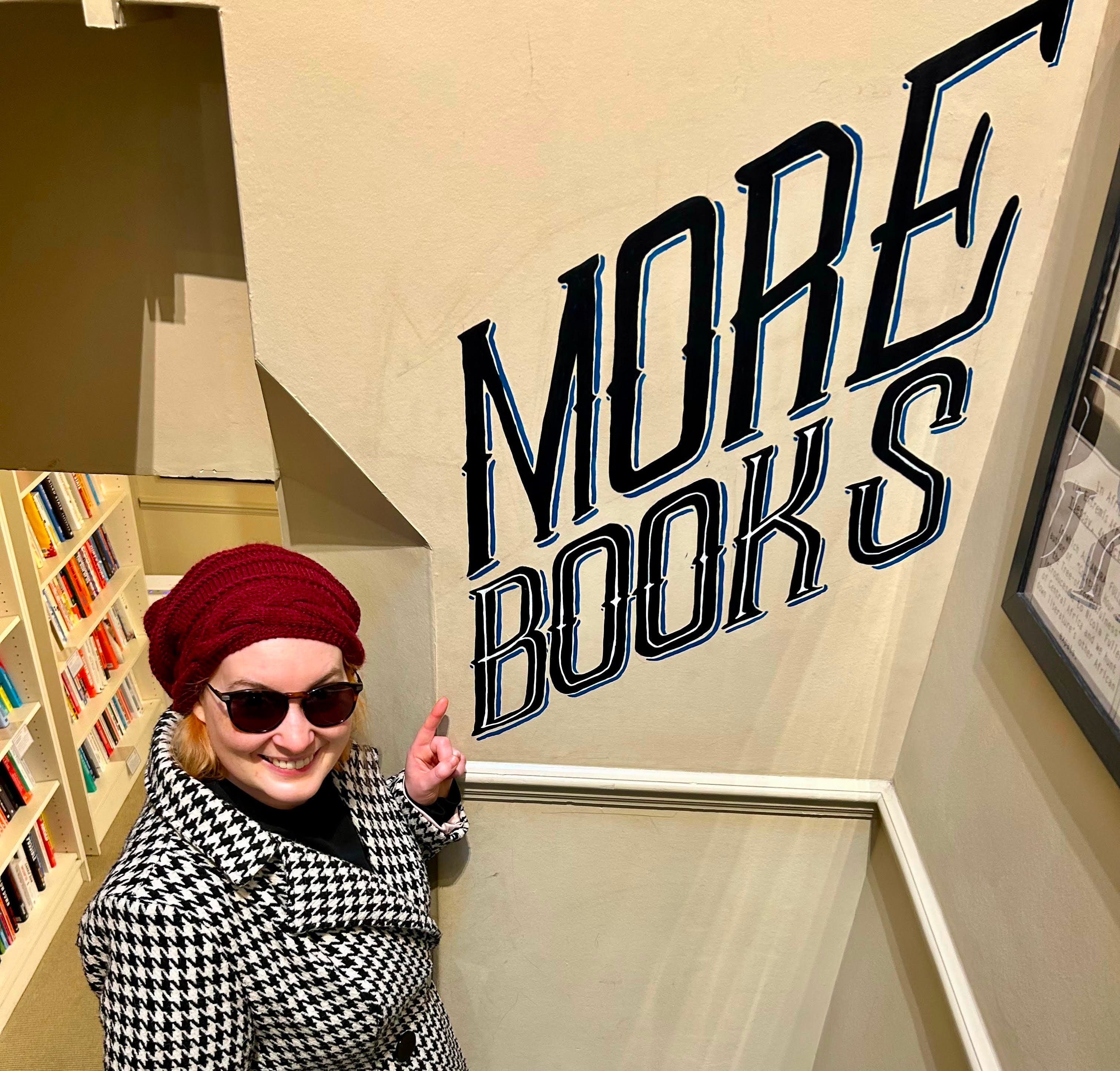
We’re back with another Q&A with Dr. Miranda Melcher, one of our most prolific NBN hosts, as she reaches the milestone of 1,000 NBN episodes! She’s previously told us about her own research, why she enjoys being an NBN host, her approach to hosting, and advice to new and prospective hosts. Listen to our in-depth interview with her and view a special playlist to learn more about her channel, New Books with Miranda Melcher!
Q: First, can you introduce yourself to our readers?
A: Hi! I’m Miranda and I’ve been an NBN host for a few years now, and I’m thrilled to have had the opportunity to interview over 1,000 authors (and counting) on the show! Unsurprisingly, I’ve been a book nerd my whole life, which is one reason I completed a PhD in Defence Studies (following an MA in Intelligence and International Security and a BA in Political Science).
My research (which I’ve been interviewed about on the NBN) focused on how to negotiate, write, and implement peace treaties in civil wars. One aspect of the project I especially enjoyed was that it didn’t sit neatly into one discipline, I had to understand in-depth history, sociology, and political economy of my case study countries, but also the wider political science literature, and then bring that all together to analyse detailed legal documents and systems. Regular listeners to New Books with Miranda Melcher can probably see some of those strands still coming through in the books I choose to interview!
My curiosity has always extended well beyond one research topic, which has drawn me to teaching from a young age. Currently, I pursue my interest in innovation and passion for pedagogy as an educational technologist, learning designer, and project manager.
Q: How do you decide which books to do an interview for?
A: This is one of my favourite parts of being a host—the possibilities! On a practical note, I am on all the publisher newsletters you can imagine, and I’m lucky enough to be in direct touch with publishers and publicists in addition, as well. I also get suggestions from authors I’ve interviewed already and submissions via my website.
I tend to be intrigued by interdisciplinary books and arguments that combine ideas in new ways or are investigating lesser-known times/places/things, especially answering “why” and “how” questions. You can find out more about the topics I tend to cover on my website where I list my books by theme. I love supporting the work of early-career researchers, and take pride in the number of authors I’ve spoken with who have never done anything like a podcast interview before!
Q: If you could record an NBN interview with anyone, who would it be?
A: Actually, I don’t have a particular wish list of authors (there are so many good ones), but rather a list of topics that I’d love to learn about. I literally keep a stack of index cards by my desk as questions occur to me, and I always hope someday that I’ll come across answers to those questions! These questions are obviously not the only things I’m curious about, but some I have written down over the years include:
All sorts of why does X get taught questions, like: How was it decided that Henry VIII and his six wives would be such a focus of the British secondary school education system? I have guesses about why this decision was made, and increasingly narrowed down hypotheses about when this was done, but I’m curious to learn more! Another curiosity: what was the Initial Teaching Alphabet and how did that idea get approved for implementation? Why did minority language suppression seem to be of particular concern for education systems around World War II?
Plenty of how much did event Y influence event Z questions, including: the extent to which the defeat of Napoleon and subsequent demobilisation of troops increased settler colonialism in places like Australia, or investigating links between the Black Death and the War of the Roses.
Potential comparisons (even if they might be more fun as conference panels than books), including: Patrice Lumumba and Alexander Hamilton (both their real biographies and their media portrayals); or the 17th Scottish covenanters and the 1980s Taliban; or the rise and post-WWII fall of Liverpool and San Francisco; or the psychological, social, and political impact of the destruction of 9/11 and the destruction of the monastery at Lindisfarne.
What were the negotiations like with the US military to make both of the Top Gun films? What did the Navy want, what didn’t they get?
Is there any link between how a war is going and when a genocide happens within it? Given that many genocides happen during wars, is it coincidence that a number of recent ones have happened towards the end of the conflict, i.e. is it a tactical decision to achieve one’s political ends before “time runs out”?
How did the People’s Republic of China take over the “China” UN seat from Taiwan? Was this done quietly? Was it an extended campaign? Taiwan was the founding “China” member of the UN, not the PRC, how did this change happen in the 1970s?
I’ve been lucky enough to interview a number of books that discuss it to various degrees, but I’m still fascinated to understand more of the why of the Great Male Renunciation when clothing for men went from flamboyant (think Regency) to grey suits (think Victorians).

Q: What advice do you have for authors? What do you think makes for a great interview?
A: Honestly, speaking with over 1,000 authors on so many topics has made one thing very clear to me: the single best thing an author can do to enable a successful interview is to sound enthusiastic and excited about their work.
Perfect English won’t save an interview where the author sounds bored of their own research area. Likewise, enthusiasm crosses language barriers, and if you’ve written a book in English, even if it’s not your first language, your English is absolutely “good enough” to do a great NBN interview. Writing a book is much harder!
As I remind all my authors: our audience knows we’re human! If they want AI summaries of books, they wouldn’t come to the NBN. Enthusiasm and excitement are (not yet) areas AI can do as well as we can, so showcase the passion that got you invested enough in your topic to devote years of study to it. That’s the best way to succeed in doing an interview.
Q: Other than your own, do you have any episodes, hosts, or channels you’d like to recommend?
A: Definitely! I am always impressed by the dedication and thoroughness that Susan Liebell brings to her episodes. I learn so much from the guests she chooses and the way she takes them through their work. She’s also the person who told me to get my own channel to have all my episodes easily in one place—thank you Susan!
I also enjoy learning about different parts and ways of thinking about the US from Kelly Spivey’s episodes and Stephen Hausmann’s episodes too. Jana Byars often chooses books I might have looked into myself, and ends up with fascinating conversations. Otherwise, I listen to all sorts and topics and episodes and enjoy hearing a range of hosts (including new hosts!).
To learn more about Miranda, listen to the recent interview she did with NBN’s Jessie Cohen here. Miranda shares how she became an NBN host, how she approaches choosing books and interviews, provides some advice for authors, and shares some fascinating facts she has learned over 1,000 interviews.
Fast 5 with Miranda
I am lucky enough to get to read a lot of books for NBN interviews, but I do read “just for fun” too! Some of my favourite kinds of non-NBN reads include:
Exploring intricate worlds that are not our own, from Tamora Pierce’s Tortall to Mercedes Lackey’s Valdemar to Lois McMaster Bujold’s Barrayar, NK Jemisin’s The Fifth Season or Raymond Feist and Jenny Wurt’s Kelewan
Adding dragons to otherwise known places like in Naomi Novik’s Temeraire series, or in Kelly Barnhill’s When Women Were Dragons or Patrick Ness’ Burn
Going back in time with revived novels from the publisher Persephone, including Frances Hodgson Burnett’s The Shuttle, Rachel Ferguson’s Alas, Poor Lady, and Rose Allatini’s Despised and Rejected
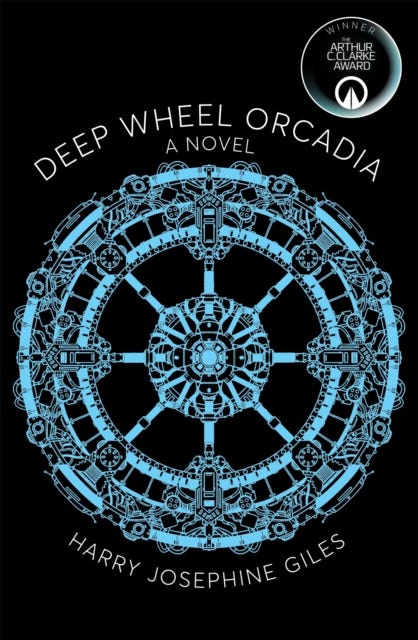
Scots language poetry and fiction, such as Harry Josephine Giles’ Deep Wheel Orcadia, Alhierd Backhervic’s Alindarka’s Children translated by Jim Dingley and Petra Reid, or the poetry of recent Makar Jackie Kay
Food history magazines like Vittles and Eaten

Miranda’s Recommendations
I can never pick favourite interviews; one of the best aspects of being an NBN host is I get to choose the books I want to interview. The goal is for them all to be my favourites! But with over 1,000 interviews completed, here are some I’ll highlight in particular as especially great episodes that give entry points into New Books with Miranda Melcher across a range of interest areas.
If you’re interested in how history can help us explain our present, check out:
Elizabeth Ingleson’s useful history of how US-China trade relations started
CJ Pascoe on why Nice Is Not Enough in US secondary education today
Erin Lee Mock’s argument for how gender norms changed in response to the reintegration of soldiers back into post-World War II US society may explain some of today’s flashpoints about gender roles
John Schofield’s argument for how archaeology can tackle wicked problems like climate change
Emily Mitchell-Eaton’s investigation into why so many people from the Marshall Islands have moved to Springdale, Arkansas
Eva Payne’s Empire of Purity: The History of Americans’ Global War on Prostitution that shows how religiously-motivated concerns about prostitution help explain US interventionist foreign policies
Hallie Frank’s analysis of how more modern interpretations of ancient art explains our current beauty standards for women
Francesca Stavrakopoulou’s excavation of how we got to a point of imagining the Abrahamic God as a disembodied voice in the sky, in God: An Anatomy or Faith Tibble’s explanation of how the Crown of Thorns imagery became embedded and Azzan Yadin-Israel’s similar analysis of how the forbidden fruit became an apple
Tom Scott-Smith’s Fragments of Home: Refugee Housing and the Politics of Shelter on why shelter remains such a tricky political problem to solve.
Chiara Fagella’s exploration of how Italy became a couture powerhouse amidst and despite the devastation of World War II

History is endlessly fascinating regardless of whether or not it links to the present. My curiosity has led me to interview authors about why Western Europe and the US had a massive craze for orchids at the end of the 19th century, how the law has regulated fashion over the centuries, failed efforts to build roads across colonial Africa, fascinating developments in fairy tales across time and space, what daily life was like in ancient Mesopotamia, how historically accurate the videogame Red Dead Redemption is, how people learned to make and use notebooks as learning technologies, what witchhunts were concerned with in early modern Spain (hanging toads was one fear), and what sorts of curses nerds through the ages have thought would be effective to prevent people from stealing their books!
If you want to learn more about how ideas become real technologies that are so woven into our daily lives we take them for granted, listen to Matthew Jordan explain the history of car horns, or Jordan Frith on the development of barcodes, or Daniel Jütte on the evolution of ideas (and practices) of transparency. If you’re curious about how fashion history is really societal history, check out Susan Curruther’s Making Do about the impact of rationing in the years after World War II. Finally, I love food (who doesn’t), and learning about its history; two places to start in my catalogue would be Diane Purkiss’ English Food: a People’s History and Fuchsia Dunlop’s Invitation to a Banquet.
Interested in listening to all of Miranda’s picks? Check out the Spotify playlist we made with all of her recommendations!
Subscribe to New Books with Miranda Melcher so you don’t miss any of Miranda’s new interviews!
